Tanzania Rewilded

Arusha · Tanzania
Est. 2015
Chapter I
A decade in the bush
Founded in 2015 by guides who grew up tracking leopards on foot. Built for travellers who know the difference.
Read our story
Chapter II
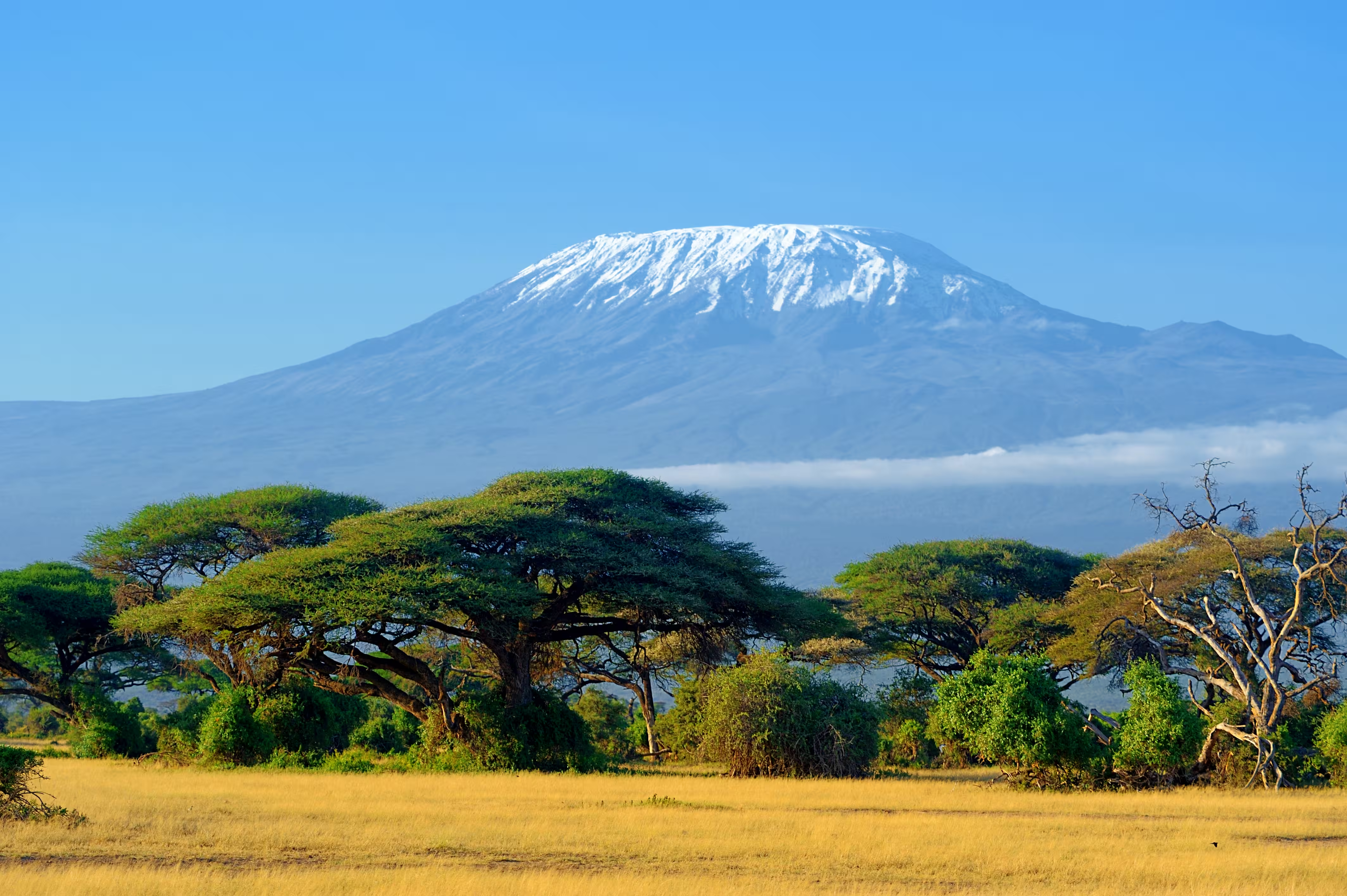
Summit on foot
Africa's highest peak, summited with our most experienced climbing guides. No shortcuts, full preparation.
Plan my summit
Chapter III
Authored for you
Every journey custom-built. Browse the most-requested shapes or begin with a blank page.
Begin your journey
Chapter IV
Every season, every region
From Serengeti plains to Zanzibar reefs — we work only in regions we know by foot, by season, by name.
Explore Tanzania
Chapter V
The practical book
Seasons, visas, vaccinations, weather, tipping. Nothing glossed over. Written by people who live here.
Read the guide
Ngorongoro Conservation Area
3°10'S · 35°35'E
Caldera formed 2.5M years ago
Destination

Insidethe Crater

A collapsed volcano 260 km² wide and 610 metres deep. Holding the densest population of wildlife in Africa — and some of the last thirty black rhinos in northern Tanzania.

Descend with us
260
km²
Crater floor area
610
m
Depth from rim to floor
~30
rhinos
Last black rhino sanctuary
25,000
animals
On the crater floor
Crater anatomy

From Rim to Floor

Ngorongoro isn't one ecosystem — it's five, stacked vertically across 600 metres of elevation. Each supports different wildlife.
RIM 2286m RIM 2286m FLOOR 1700m · -586m LAKE MAGADI ~20km WIDTH
01
2,286m

Crater Rim

Montane forest and mist. Elephants climb the forested slopes; bushbuck and colobus monkeys live here. Temperature drops to 5°C at night.

02
2,000m

Forested Slopes

Wild olive, yellowwood, and candelabra trees. Leopards prowl here. The steep 600m descent starts from the rim road.

03
1,700m

Short-grass Floor

Open savannah where most game viewing happens. Large wildebeest and zebra herds, plus the largest resident lion density on earth.

04
1,700m

Lake Magadi

A shallow alkaline lake at the crater's heart. Flamingos in thousands, hippos, buffalo, elephants coming to drink.

05
1,700m

Lerai Forest

Yellow-fever acacia forest on the crater floor. Elephant herds shelter here. One of the few places you'll see tuskers at close range.

Wildlife encounters

Six Animals of the Crater

The density here is unlike anywhere else in Africa. Most travellers see every one of these in a single morning on the floor.
Black Rhino Endangered 01

Black Rhino

~30The last survivors

Once numbering 108 in 1966. Now around thirty are all that remain — a rhino sighting here is a privilege, not a given. Best spotted on the northern floor.

Lion Resident 02

Lion

60–80Densest on earth

Four resident prides, each about 20 strong. Lions here have adapted to hunting wildebeest and buffalo in the open — dramatic daylight kills are not uncommon.

Elephant Tuskers 03

Elephant

100+Old tuskers

Older males dominate the crater — younger herds stay on the rim. The crater's elephants are known for their exceptionally long tusks.
Flamingo Seasonal 04

Flamingo

40,000On Lake Magadi

Lesser flamingos stain Lake Magadi pink. Numbers fluctuate with water levels — spectacular in the dry season when the water concentrates.

Buffalo Herds 05

Buffalo

7,000+In resident herds

Enormous herds graze the central plains. Old 'dagga boys' — bachelor males — are often seen around Lake Magadi, caked in dried mud.

Wildebeest Resident 06

Wildebeest

10,000+Year-round

Unlike the Serengeti herds, Ngorongoro's wildebeest don't migrate — the crater floor has year-round water, making it a permanent haven.

A day in the crater

From Rim to Rim, 5:30 to 17:00

An early start, the descent, a long day on the floor, the climb back out. Slide through the hours below.
0107
05:30
01 — 07

Rim-side breakfast

Coffee and pastries at your lodge as the first light catches the crater floor 600m below. Layer up — dawn temperatures are close to freezing.

06:30
02 — 07

Descent via Seneto Road

The steep 4×4 descent road winds through montane forest. Roof pops up on the way down — first game viewing often within ten minutes of reaching the floor.

07:00
03 — 07

Dawn on the floor

First hours are prime time. Predators active, light low and golden, mist rising off Lake Magadi. Large herds of wildebeest and zebra moving to water.

10:30
04 — 07

Lerai Forest elephants

Mid-morning the crater's tuskers gather under the yellow-fever acacias for shade. Close encounters with some of Tanzania's largest elephants.

12:30
05 — 07

Lunch at Ngoitokitok Springs

A designated picnic site by a spring-fed pool. Hippos at the water's edge. Yellow-baboons occasionally try to steal sandwiches.

14:00
06 — 07

Afternoon on the Munge Stream

Explore the northern floor. Best area for rhino sightings, plus serval, golden jackal, and spotted hyena on the hunt.

16:30
07 — 07

Ascent via Lerai Road

Climb out via the alternative exit road. Last-light views of the crater rim. Back at the lodge by sunset for sundowners.

Where to stay

Rim or Karatu

Two choices define every Ngorongoro stay — either the rim itself, or the coffee country below it. Both work. Here's the tradeoff.

Crater Rim Lodges

Year-round

Built into the forested edge of the crater with direct views of the floor below. The iconic Ngorongoro experience.

Pros
  • Spectacular views
  • Close to crater entry
  • Easy morning starts
  • Historic lodges
Considerations
  • Can be cool/misty
  • Rim roads busy
  • More expensive

Karatu / Outside the NCAA

Year-round

Coffee-country lodges 30–45 minutes from the crater gate. Warmer, quieter, generally better value.

Pros
  • Better value
  • Warmer climate
  • Quieter mornings
  • Karatu village access
Considerations
  • Earlier departure needed
  • Longer drive to gate
  • No crater views from lodge
Beyond the crater

Six Days' Worth of Things to Do

Most travellers give Ngorongoro one night and one crater day. Those willing to stay two or three nights unlock the wider conservation area — and these are its six headline experiences.
Crater descent Signature
01

Crater descent

The headline experience. Descend 600m into the caldera by 4×4, spend six hours on the floor with elephants, lions, rhinos, and flamingos. Ascend by a different route.

Olduvai Gorge Archaeology
02

Olduvai Gorge

The 'Cradle of Mankind' — where the Leakeys found 1.8-million-year-old hominid fossils. Museum visit plus a short walk to the excavation site. Usually combined with Ngorongoro nights.

Empakaai Crater hike Half-day trek
03

Empakaai Crater hike

A smaller neighbouring crater, less visited, containing a soda lake. A 4-hour guided hike down into the caldera and back. Flamingos, forest, genuine remoteness.

Maasai boma visits Cultural
04

Maasai boma visits

Ngorongoro is a conservation area — Maasai pastoralists share the land with the wildlife. Curated visits to genuine homesteads (not tourist-built villages) offer real cultural depth.

Walking safaris Conservation area
05

Walking safaris

Permitted outside the crater itself, in the wider highlands. Walk with a Maasai guide through acacia woodland, across craters, past waterfalls. A quieter, grounded day.

Shifting Sands Natural wonder
06

Shifting Sands

A crescent-shaped dune of black volcanic sand that migrates 17 metres per year across the plain, held together by its own magnetic iron. A strange, beautiful geological curiosity.

Practical info

What You Need to Know

Crater fee
$295 USD per vehicle (6-hour limit on crater floor)
Best time
Jun – Oct for clearest conditions; Jan – Feb for photography
Altitude
2,286m at the rim — expect cool nights, altitude-sensitive travellers take note
Crater access
4×4 only; Seneto descent, Lerai or Lemala ascent
Combining
Typically done as 1–2 nights en route between Serengeti and Arusha
Conservation
UNESCO World Heritage; home to Maasai pastoralists who coexist with the wildlife
— Your crater day

One Day, One Crater, Everything.

Most itineraries include two nights at Ngorongoro. Tell us where it fits in your wider trip — we'll design around it.

Loading itinerary…
Saved Trips