Tanzania Rewilded

Arusha · Tanzania
Est. 2015
Chapter I
A decade in the bush
Founded in 2015 by guides who grew up tracking leopards on foot. Built for travellers who know the difference.
Read our story
Chapter II
Summit on foot
Africa's highest peak, summited with our most experienced climbing guides. No shortcuts, full preparation.
Plan my summit
Chapter III
Authored for you
Every journey custom-built. Browse the most-requested shapes or begin with a blank page.
Begin your journey
Chapter IV
Every season, every region
From Serengeti plains to Zanzibar reefs — we work only in regions we know by foot, by season, by name.
Explore Tanzania
Chapter V
The practical book
Seasons, visas, vaccinations, weather, tipping. Nothing glossed over. Written by people who live here.
Read the guide
Kilimanjaro · The route decision
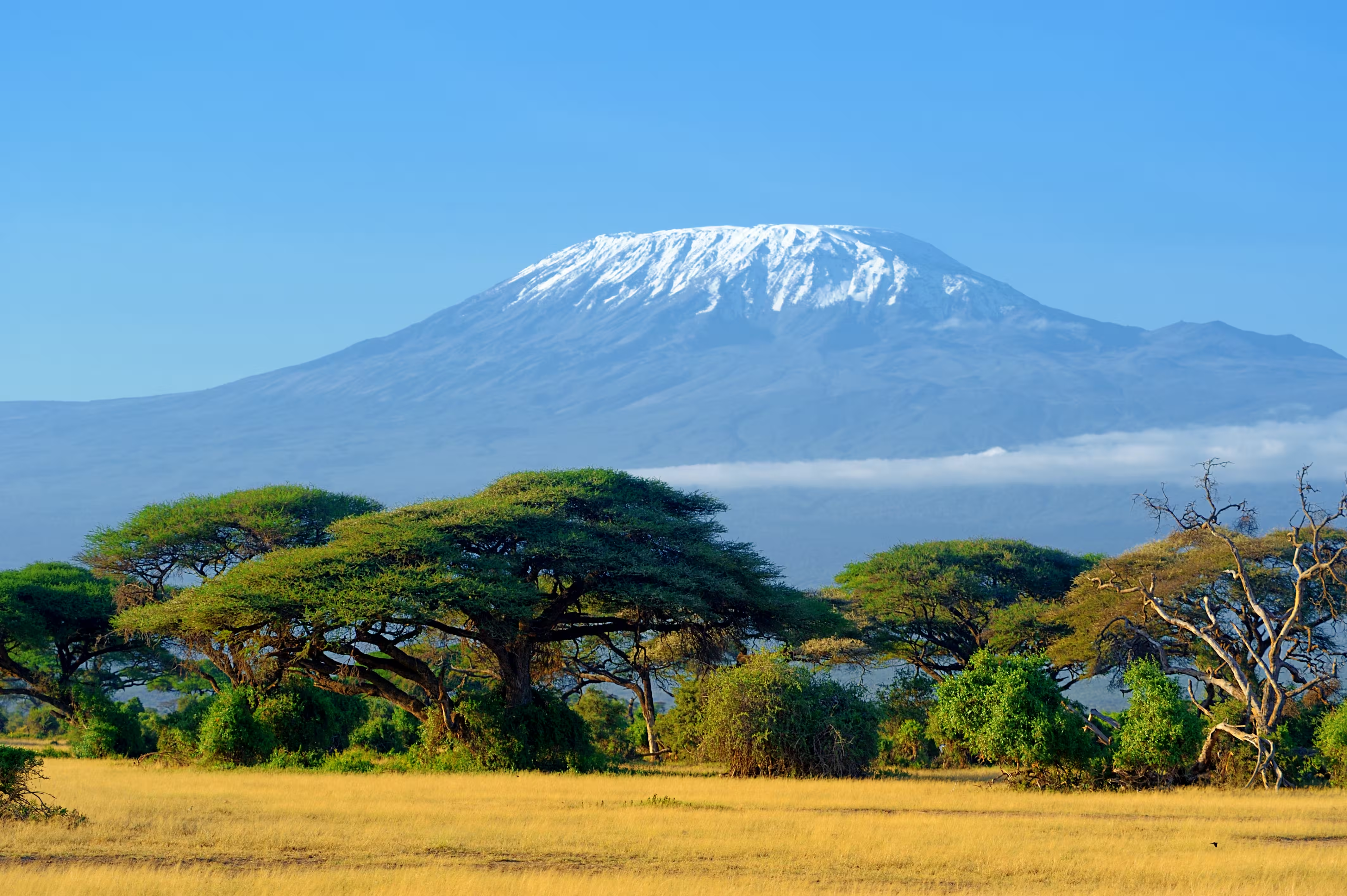
5,895m · Uhuru PeakBased on 800+ guided climbs

Seven Routes,One Summit.

The mountain gives you seven paths to the top. Each has a different profile — different acclimatization, different scenery, different crowds, different success rates. Here's the honest comparison.

7
official routes
From 6 to 9 days
89%
average success
Our Lemosho 8-day success rate
-15°C
summit night
Expect at Stella Point
~45%
route selection impact
On summit success
The three questions

How Routes Actually Differ

Terrain is similar across all routes — they all go up. The real variables are these three.
01

Scenery & landscape

Forest, moorland, alpine desert, glacier — some routes hit all four vividly, others cross a narrow slice. Lemosho and Northern Circuit give the fullest ecological journey.

02

Acclimatization profile

The single biggest factor in summit success. Longer routes with climb-high-sleep-low patterns (Lemosho, N. Circuit) give 85-95% success; rushed routes (Marangu, Umbwe) hover at 40-60%.

03

Crowds & pace

Machame and Marangu handle most of the mountain's traffic. Rongai, N. Circuit and Umbwe see a fraction. Solitude matters more on a multi-day physical challenge than it does on a safari.

The seven paths up

Route by Route

Honest appraisal of each — what it costs you, what it gives back, and who it suits.
Machame02The 'Whiskey Route'

Machame

South approach
Days
6-7
Difficulty
Moderate-Hard
Success
75%
Crowds
High

The most popular route. Shorter, cheaper, and scenic — but busier and with a tougher acclimatization profile than Lemosho.

Pros

  • Cheaper (fewer days)
  • Scenic variety
  • Good infrastructure
  • Climb-high-sleep-low pattern

Cons

  • Very busy first 3 days
  • Summit-night sleep deprivation
  • Lower success rate vs Lemosho
Marangu03The 'Coca-Cola' route

Marangu

Southeast approach
Days
5-6
Difficulty
Easiest terrain
Success
60%
Crowds
High

The only route with hut accommodation. Cheapest and easiest terrain — but crowded, scenically limited, and with the lowest success rate of all the routes.

Pros

  • Sleep in huts (not tents)
  • Cheapest option
  • Easiest terrain underfoot
  • Same route up and down

Cons

  • Lowest success rate (60%)
  • Crowded throughout
  • Limited scenic variety
  • Poor acclimatization profile
Rongai04The dry-side route

Rongai

North approach
Days
6-7
Difficulty
Moderate
Success
80%
Crowds
Low

Approaches from the drier, quieter northern side. Feels genuinely remote. Best choice during the rainy season shoulder (Mar/Nov) when southern routes are wettest.

Pros

  • Least crowded route
  • Drier approach (rain shoulder)
  • Good for older climbers
  • Genuine wilderness feel

Cons

  • Less scenic variety
  • Longer drive to start point
  • Descends via Marangu (crowded)
Northern Circuit05Highest success rate

Northern Circuit

West-North approach
Days
9
Difficulty
Moderate
Success
95%
Crowds
Very low

The longest and best-acclimatization route. Follows Lemosho approach, then circles the mountain's northern flank. If time isn't a constraint, this is the most success-likely option.

Pros

  • Highest success rate (95%)
  • Spectacular 360° mountain views
  • Extremely remote — very few climbers
  • Best acclimatization of any route

Cons

  • Most expensive (9 days)
  • Longest time off work
  • Need sustained motivation
Umbwe06Experts only

Umbwe

South-Southwest approach
Days
6-7
Difficulty
Very hard
Success
40-60%
Crowds
Very low

The steepest, fastest, most technically demanding route. Only for experienced mountaineers already acclimatized to altitude. We rarely recommend it — only when the climber has a compelling case.

Pros

  • Dramatic forest ascent
  • Very quiet
  • Quickest to altitude
  • Strong bragging rights

Cons

  • Poor acclimatization
  • Steep scrambles
  • Low success rate
  • Not for first-timers
Shira07Legacy route

Shira

West approach
Days
7-8
Difficulty
Moderate
Success
70%
Crowds
Low

Similar to Lemosho but starts higher by 4WD shuttle. Saves one day of walking but compromises acclimatization — lower success rate. Mostly replaced by Lemosho for that reason.

Pros

  • Starts at 3,600m (saves a day)
  • Quieter than Machame
  • Scenic plateau crossing

Cons

  • Weaker acclimatization
  • Altitude without build-up
  • Becoming obsolete
Matchmaker

Pick by Goal

Don't have time to compare all seven? Find your situation below — we'll point you to the right route.
If you want

First-time climber, time-rich

Pick: Lemosho 8-day

The default best choice. Excellent acclimatization, spectacular scenery, reasonable crowds, 90% success rate in our records.

If you want

Highest-possible success rate

Pick: Northern Circuit 9-day

Longer acclimatization, the highest success rates in Tanzania, extraordinary scenic payoff, zero crowds.

If you want

Tight budget, short trip

Pick: Machame 7-day

The most popular route for a reason — scenic, affordable, 7 days is workable. Be prepared for crowds.

If you want

Climbing in Mar/Nov shoulder

Pick: Rongai 7-day

Drier north-side approach. When other routes are getting rained on, Rongai is often still clear. Quiet, too.

If you want

Older climbers or knee issues

Pick: Marangu 6-day (only)

Only route with huts (no camping). Easier terrain. But — accept the 60% success rate and the crowds. Consider Rongai if able to camp.

If you want

Experienced mountaineer, short trip

Pick: Umbwe 6-day

Steep, technical, quick. Only if you're already altitude-acclimatized and want a short hard route. Not a first Kilimanjaro.

All routes, one view

Full Comparison

12 dimensions across 6 most-climbed routes. Shira is omitted (rarely optimal vs Lemosho).
DimensionLemoshoMachameMaranguRongaiN. CircuitUmbwe
Typical days7-86-75-66-796-7
DifficultyModerateModerate-HardEasiest terrainModerateModerateVery hard
Average success90%75%60%80%95%40-60%
AcclimatizationExcellentGoodPoorGoodExcellentPoor
CrowdsModerateHighHighLowVery lowVery low
Scenic varietyExceptionalExcellentLimitedRemoteExceptionalDramatic
AccommodationTentsTentsHutsTentsTentsTents
Cost relative$$$$$$$$$$$$$$
Same route downNo (Mweka)No (Mweka)YesNo (Marangu)No (Mweka)No (Mweka)
Approach sideWestSouthSoutheastNorthW→NSouthwest
First-timer friendlyYesYesNoYesYesNo
Best forOverall bestBudget + scenicComfort seekersShoulder seasonMax successExperienced only
Ready when you are

Let's match you to the right route.

Tell us your timeline, fitness level, and what matters most (success rate, scenery, budget, solitude). We'll recommend one specific route and build the itinerary.

Plan my climb
Loading itinerary…
Saved Trips