
Gombe National Park: Tanzania’s Chimpanzee Forest on the Shore of Lake Tanganyika
Gombe National Park, where Jane Goodall’s research began, covers 52 square kilometers of rugged terrain along the eastern shore of Lake Tanganyika. This narrow strip of land represents Tanzania’s smallest protected sanctuary. The landscape rises sharply from the water’s edge to elevations reaching 1,606 meters.
Thirteen permanent streams descend through the primary forest canopy. These waters carve steep valleys into the escarpment before meeting the world’s longest freshwater lake. Traversing this environment requires physical effort because tracking occurs entirely on foot.
In the 1960s, Jane Goodall initiated her landmark research on wild chimpanzees here. This project established the world’s longest-running study of animal behavior in a national park setting. The site remains a vital hub for scientific discovery and primate conservation today.
Key Takeaways
- The sanctuary is Tanzania’s smallest, covering 52 square kilometers of rugged terrain.
- It hosts the longest continuous study of wild primates in scientific record.
- The boundary consists of the 675-kilometer long waters of Lake Tanganyika.
- Thirteen permanent streams flow from the escarpment down to the sandy beaches.
- Visitors explore the steep forested slopes on foot without using motor vehicles.
What Makes Gombe National Park Special
Gombe National Park offers a distinct landscape where vertical forest ridges meet the deep waters of the world’s longest freshwater lake. This gombe national treasure operates on a scale of precision. Thirteen permanent streams flow from the high ridgeline down to the shore, creating natural corridors for wildlife.
Jane Goodall's Groundbreaking Research Legacy
In 1960, jane goodall arrived at the shores of the gombe stream to begin a study that would redefine human understanding of primates. She initiated the habituation of chimpanzees, establishing rigorous research protocols that have continued for over six decades. This long-term effort transformed primatology into a data-driven field science.
The legacy of jane goodall allows for close encounters today. Habituated chimpanzee communities remain comfortable in the presence of researchers and visitors within the gombe stream boundaries. This gombe stream national site represents the longest-running wild primate study in existence.
Tanzania's Smallest Park on the World's Longest Lake
While most Tanzanian reserves cover thousands of miles, this stream national park is defined by its compact boundaries. The park functions as an isolated ecological island. It sits between steep mountains and the vast lake expanse.
| Feature | Measurement | Significance |
|---|---|---|
| Total Land Area | 52 Square Kilometers | Tanzania’s smallest national park |
| Altitude Range | 767m to 1,606m | Compressed ecological zones |
| Shoreline Boundary | 675 Kilometers (Total Lake) | Access to lake tanganyika |
52 Square Kilometers of Pristine Wilderness
Measuring just 52 square kilometers, gombe stream national concentrates its primate populations within a trackable range. The vertical terrain rises sharply from the shore to the ridgeline. Because no roads lead to this national park, the primary forest remains remarkably pristine.

Lake Tanganyika: The World's Second-Deepest Freshwater Lake
The waters of lake tanganyika serve as the western boundary of the stream national park. As the world’s second-deepest freshwater body, its clarity supports many endemic fish species. Boat access across these deep waters replaces the dusty vehicle safaris found elsewhere in the national park system.
Wildlife Encounters at Gombe National Park
Gombe provides a rare opportunity to observe complex social interactions among wild primates in their natural environment. The rugged terrain supports a high density of mammals and birds within a narrow rift valley corridor. Discerning observers value this area for its concentrated wildlife and historical scientific significance.
Habituated Chimpanzee Communities
The chimps of this region remain calm in the presence of humans due to long-term habituation protocols. Trained guides lead visitors to see these chimpanzees from a distance of just a few meters. This proximity allows for the observation of natural behaviors without causing distress to the animals.
The World's Longest-Running Wild Animal Study
Field staff at Gombe Stream continue to document social structures and tool use in the forest daily. This ongoing research represents the longest continuous study of any wild animal population on Earth. It provides deep insights into primate hunting behaviors and inter-group conflicts within Stream National boundaries.
Observing Our Closest Genetic Cousins
Humans share 98.7% of their genetic makeup with these primates. This shared heritage becomes evident when watching their complex emotional expressions and social hierarchies. An hour-long observation provides a profound experience for those seeking to understand our own biological origins.
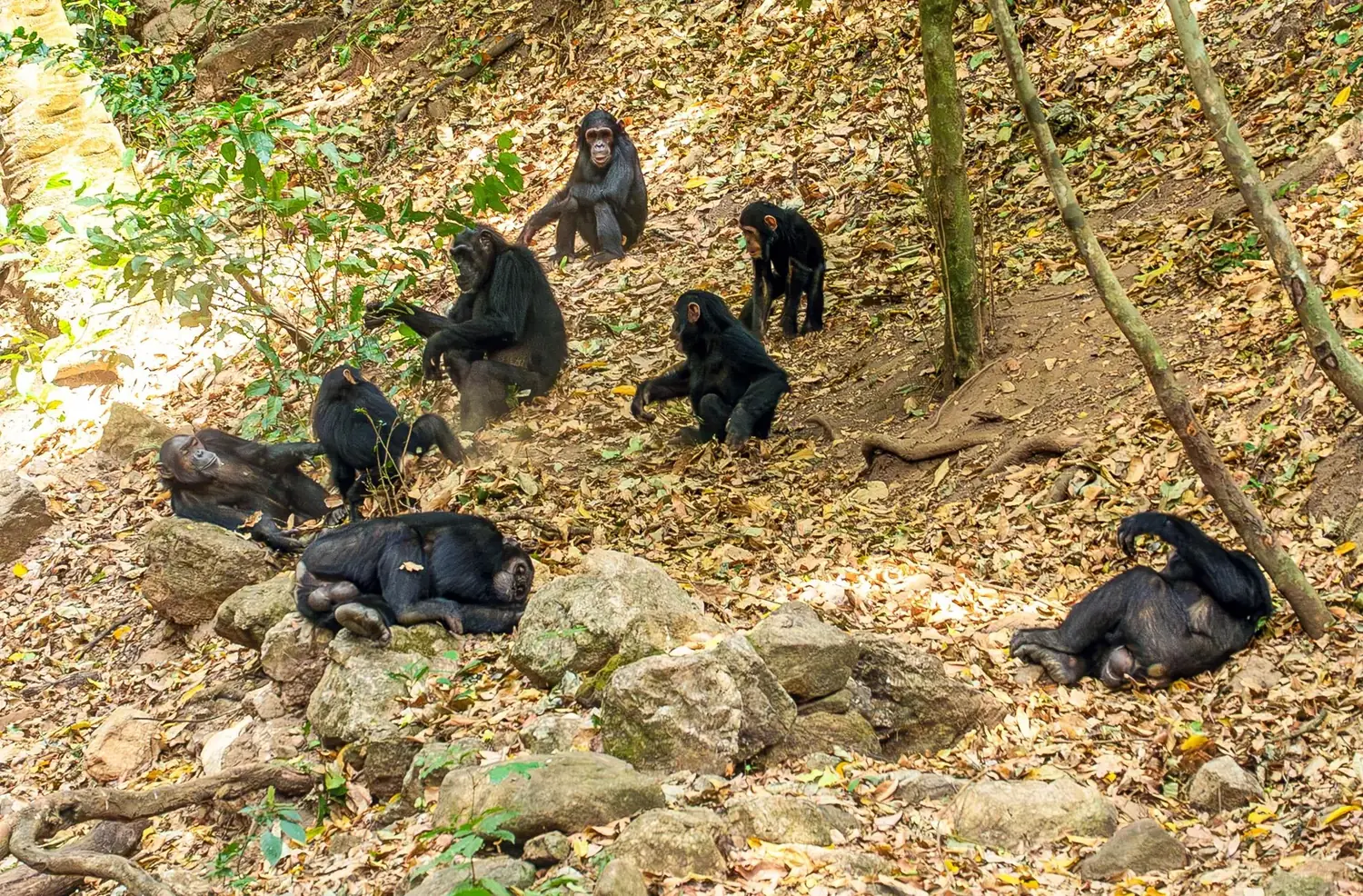
Olive Baboon Troops Along the Lakeshore
A habituated troop of olive baboons typically occupies the areas near the Lake Tanganyika shoreline. These olive baboon populations have been monitored since the 1960s alongside the local ape communities. They frequently forage for insects and vegetation on the beaches during the morning and evening hours.
Endangered Ugandan Red Colobus and Other Primates
The national park serves as a vital habitat for the endangered Ugandan red colobus. These monkeys reside mostly in the upper canopy to avoid predators. However, they often face coordinated hunts by parties of chimps seeking meat to reinforce social bonds.
| Species Name | Canopy Level | Primary Diet |
|---|---|---|
| Chimpanzee | Ground & All | Fruit, Insects, Meat |
| Red-Tailed Monkey | Middle Canopy | Fruit, Leaves |
| Ugandan Red Colobus | Upper Canopy | Young Leaves |
Red-Tailed Monkeys and Primate Diversity
The red colobus is not the only primate species found in the dense gallery forests. Red-tailed monkeys also inhabit the middle canopy, though their cryptic coloring makes them harder to spot. Visitors often hear their distinct alarm calls during a walk through Stream National woods.
Bird Species: From Crowned Eagles to Livingstone's Turaco
Avian wildlife in the national park includes over 200 distinct types of birds. The forest canopy hosts the predatory Crowned eagle, which often hunts smaller monkey species. Both Livingstone’s and Ross’s turaco add metallic plumage and vibrant colors to the colobus habitat.
Chimpanzee Tracking and Park Activities
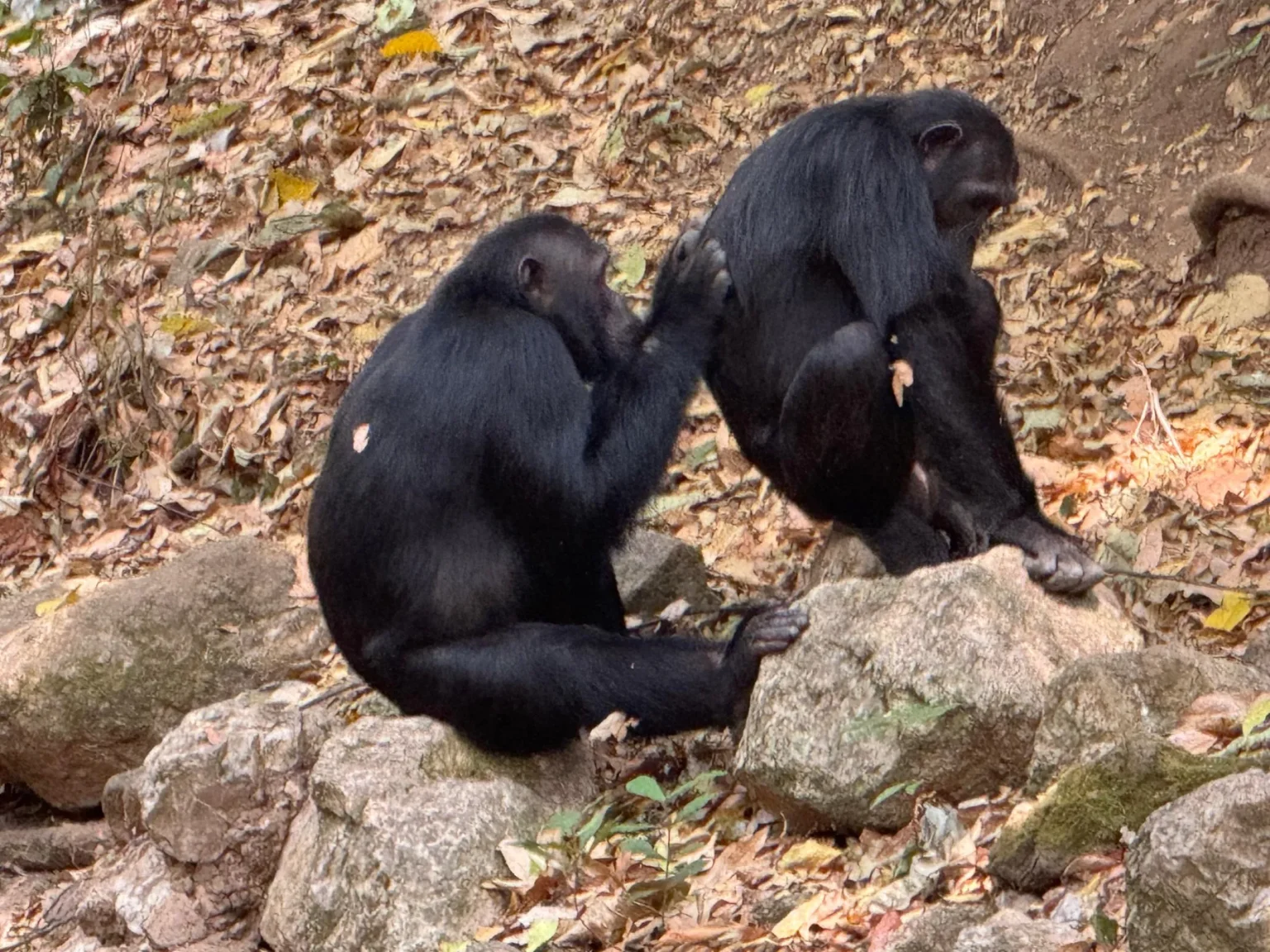
Ask us about chimpanzee tracking
The daily schedule at Gombe Stream National Park revolves around the movements of habituated primate communities. These activities demand physical readiness and a deep respect for the rugged terrain of the Tanzanian wilderness.
The Chimp Tracking Experience
The core experience begins at 0730 hours following a mandatory field briefing. Guides lead visitors into specific forest zones based on intelligence gathered by specialized tracking teams.
Early Morning Departures and Tracker Teams
Two dedicated trackers patrol the 52 square kilometers of the stream national park daily. They depart one hour before guests to locate groups and communicate positions via radio to the lead guides.
Spending an Hour with Wild Chimps
Once the chimp groups are located, the park permits exactly one hour of observation. This strict limit preserves the natural behavior of the community and reduces human impact on the habituated animals.
Guided Forest Walks Through 13 Stream Valleys
Guided walks traverse the 13 stream valleys that dissect the steep Rift Valley escarpment. Each drainage supports unique vegetation and serves as a vital corridor for various gombe stream primates.
Kakombe Waterfall and Jane's Peak Viewpoint
The hike to Kakombe Waterfall offers a shaded retreat and a distinct photographic view. For those seeking a wider perspective, Jane’s Peak provides a vantage point over the lake and the primary research sites.
Swimming and Beach Activities on Lake Tanganyika
After several hours of trekking, many visitors utilize the sandy beach for rest. The clear water of the lake allows for swimming, provided guests remain alert to the movements of local olive baboon troops.
This immersion in the landscape ensures a comprehensive understanding of Gombe’s unique ecosystem.
Best Time to Visit Gombe Stream National Park
Planning the journey to Gombe requires an understanding of the seasonal cycles that dictate chimpanzee movement and trail accessibility. The best time visit Gombe Stream National Park is largely determined by how easily one can navigate the steep, forested terrain.
Dry Season (July to October): Prime Chimp Tracking Conditions
The dry season represents the best time for most researchers and travelers. During this period, which lasts until October’s end, the forest floor remains stable and the air is clear.
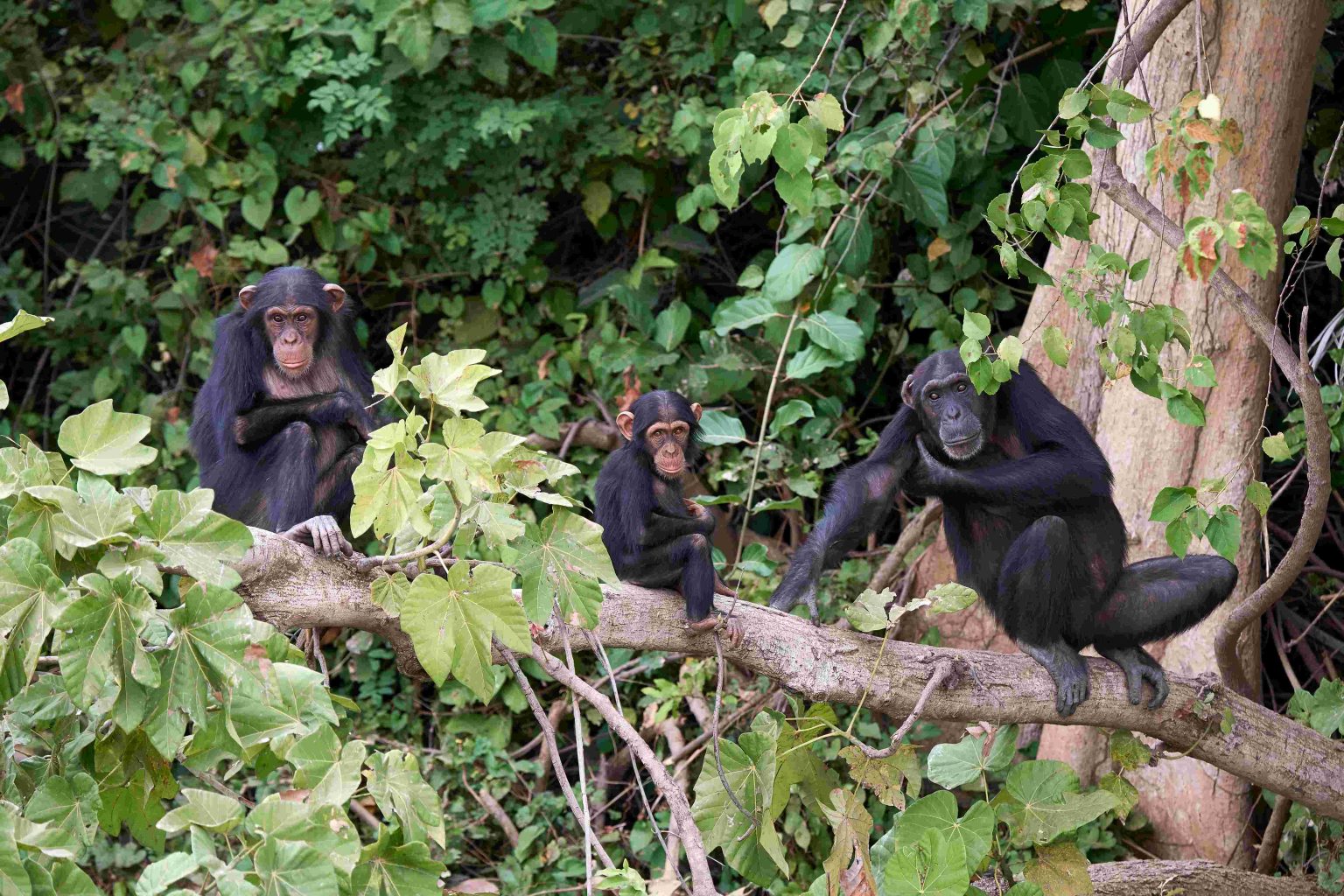
Chimps on Lower Slopes and Firm Trails
Chimpanzees typically congregate on the lower slopes between 800 and 1,200 meters. This makes the time visit efficient, as groups stay near water sources and fruiting trees. Tracking usually takes between two to three hours during this time.
Pleasant Weather with Minimal Rainfall
Skies remain clear from mid-year through the late months. This dry season provides reduced humidity and excellent light for photography through the canopy. We observe that minimal rainfall keeps the trails firm and safe for steep climbs.
“The rhythm of the forest is set by the rains, yet the chimpanzees remain the masters of the slope regardless of the month.”
Wet Season (November to April): Challenging but Rewarding
The wet season creates a different dynamic within Gombe Stream National Park. While the landscape is vibrant, the logistics of a time visit become more complex for the average hiker. The best time to see the forest in full bloom is during these months.
Slippery Trails and Harder Chimp Locations
Rain transforms the clay soils into slick surfaces. In this national park, primates often move to higher ridges above 1,400 meters. This requires a longer tracking effort of four to five hours compared to the dry months.
Year-Round Temperatures Around 26°C
Thermal conditions at the stream national park are remarkably consistent. Daylight highs stay near 26°C, while nights cool to roughly 18°C. This equatorial positioning ensures that gombe stream national park avoids extreme seasonal temperature shifts.
Rain usually arrives in the late afternoon. These storms are brief and typically clear before evening. This allows for morning activities to proceed without significant weather delays.
| Factor | Dry Season (July-Oct) | Wet Season (Nov-April) |
|---|---|---|
| Chimp Location | Lower Slopes (800m+) | High Ridges (1,400m+) |
| Trail Grip | Firm and Dry | Slippery and Muddy |
| Tracking Time | 2 – 3 Hours | 4 – 5 Hours |
| Visibility | High (Clear Skies) | Moderate (Lush Foliage) |
| Park Status | Peak Accessibility | Challenging Terrain |
Getting to Gombe and Accommodation Options
Accessing the remote shores of Gombe Stream is only possible by navigating the water of Lake Tanganyika from Kigoma. This logistical requirement preserves the isolation of the national park and its resident primates.
How to Reach Gombe from Kigoma
Travelers must arrive at Kibirizi Port to secure passage. No road infrastructure connects the town to this protected shore.
Private Boat Charters ($100+)
Private vessels offer the most flexibility for those who visit gombe. These charters cost a minimum of $100 and allow for specific departure times to maximize forest light.
Public Boat Schedule and Budget Option
The “lake taxi” serves local people and backpackers for 5,000 TZS. It departs Kibirizi at 12:30 PM and arrives at the beach roughly three hours later.
Journey Time: 3 Hours from Kibirizi Port
The 25-kilometer trip takes three hours. Morning water conditions are typically calm, while afternoon winds can agitate the lake surface.
Where to Stay in Gombe National Park
Securing accommodation within the gombe national boundaries requires early planning. Most facilities sit near the forest edge, providing a temporary home for researchers.
Park Guesthouses and Rest Houses
The national park operates basic guesthouses and rest houses. These rooms provide the most practical choice for those staying multiple days.
Camping Regulations and Alternatives
Authorities discourage camping due to safety concerns and higher operational costs. Travelers with tents usually move to indoor accommodation at the end of the day.
Budget Options in Nearby Mwamgongo Village
Mwamgongo Village offers local accommodation 30 minutes north of the park. A public boat reaches the village for 1,000 TZS, providing a cultural alternative.
Park Fees and Costs
Financial precision is essential to visit gombe successfully. All gate transactions require a credit card for payment processing.
24-Hour Entry Permits and Tracking Fees
Permits operate on a strict 24-hour cycle. Timing boat arrivals carefully prevents visitors from paying for extra park entrance fees during their stay.
Total Budget Expectations for Your Visit
Two people should expect to pay roughly $311.40 for 24 hours. This includes gombe national park entry, chimpanzee tracking, and basic accommodation for two days.
Conclusion: Plan Your Gombe National Park Adventure
Visiting the wild chimpanzees of gombe stream national park requires physical stamina and careful logistical planning. The gombe national park experience provides a rare chance to track primates on foot through primary habitat. This remote forest serves as the home for habituated chimps who conduct their daily routines within a short view of travelers.
The combination of the steep escarpment and the lake tanganyika shoreline defines this protected area. Travelers should prepare for multi-hour treks through the stream national wilderness. While the park remains open throughout the year, the dry season is the best time for firm trails.
The gombe stream ecosystem supports other wildlife, including colobus monkeys and olive baboons. Local people often assist with transport via the water from Kigoma. Planning your days near the lake requires coordination of boat schedules and permits for the stream national park.
Successful trips require physical preparation for the rugged escarpment and realistic budgeting for daily fees. In the thick forest, the sight of diverse species in the wild remains a powerful experience. At the end of the journey, call +255 764 060 268 for assistance with the lake and the lake tanganyika region.
| Requirement | Recommendation |
|---|---|
| Primary Activity | Guided chimpanzee tracking on foot |
| Best Tracking Months | July to October (Dry Season) |
| Logistics Hub | Kigoma (Boat access only) |
| Expert Contact | +255 764 060 268 for itinerary planning |
FAQ
What is the typical duration for tracking primates?
Tracking usually takes two to four hours. Rangers monitor the troop locations daily to assist visitors. Travelers should prepare for steep terrain on the Rift Valley escarpment. Most people find the experience rewarding but physically demanding.
Besides chimps, which other animals inhabit this forest?
This habitat serves as a home for the Ugandan red colobus and olive baboons. These colobus monkeys live high in the canopy. Over 200 bird species inhabit the area. This wildlife variety makes the remote shore unique for a safari.
When is the best time to visit the stream area?
The dry season from July to October offers the best view. During this time, primates frequent the lower slopes near the beach. By the end of the year, seasonal rains make the walks more strenuous for guests.
What activities are available near Lake Tanganyika?
Travelers typically spend three days exploring the region. You can swim in the clear water or hike through the valley. We suggest booking forest accommodation early to secure your stay near Gombe Stream National Park.
Why is Jane Goodall associated with Gombe?
She began her research on chimpanzees here in 1960. Her study of the local chimp groups changed science forever. Her legacy of conservation and discovery continues at the research center today.