Tanzania Rewilded

A day to spare on the 6-day Marangu route
 
 
 Kilimanjaro climb · 6 days on the mountain
Marangu Gate
 
Zebra Rocks
 
Gilman’s Point
The hut route, with

A Day to Spare

The 6-day Marangu route follows the hut trail, with a full rest day at Horombo Hut to help your body adjust. You sleep in huts every night on the mountain, cross the Saddle to Kibo and aim for Uhuru Peak on the morning of Day 6.

8days
7 nights, 8 days total
6
Days on the mountain
5,895m
Uhuru Peak
 MoshiDay 1
 MandaraDay 2
 HoromboDays 3–4
 Kibo HutDay 5
 Uhuru PeakDay 6
Climbing permit
TR · MR07
Marangu Route Extended
 
Duration
8 days · 7 nights
6 days on the mountain, 2 nights in Moshi
Start / finish
Kilimanjaro Airport
Hotel in Moshi before and after
Summit
Uhuru Peak · 5,895 m
Via Gilman’s Point on the crater rim
Difficulty
Challenging
Gentle trail, hard summit night
Style
Private · Huts
Your own guides, cook and porters
Best months
Jan – Mar · Jun – Oct
The two dry seasons

The 6-Day Marangu Route:Why the Extra Day Helps

This is the Marangu Route with one extra night at Horombo Hut. The trail is the same and so are the huts, but you get a full day at 3,720 m to rest and take a short walk higher before you go on to Kibo.

That day makes a real difference. Walking up to Zebra Rocks and coming back down to sleep is the climb-high, sleep-low pattern that helps most people cope with altitude. It is the version of Marangu we suggest to most first-time climbers.

The climb

Six Days, With a Pause

Each point is where you sleep. Look for the small bump on Day 4: the walk to Zebra Rocks and back. Tap a hut to see where it sits on the climb.

FarmlandRainforestHeath & moorlandAlpine desertArctic summit1,0002,0003,0004,0005,0006,000m 12345Uhuru Peak5,895 m67
Trail altitudeVegetation zones
  1. 01

    Moshi

    915 m · Hotel before and after the climb

    2 nights
  2. 02

    Mandara Hut

    2,700 m · First night, in the forest

    1 night
  3. 03

    Horombo Hut

    3,720 m · Two nights on the way up, one on the way down

    3 nights
  4. 04

    Kibo Hut

    4,700 m · High hut for the summit night

    1 night
Trek ≈ 72 kmHighest 5,895 mRest day Horombo, 3,720 m
Day by day

The Journey

✦

This is how the trip usually runs. Your guide will adjust each day around the weather, the trail and how the group is acclimatising.

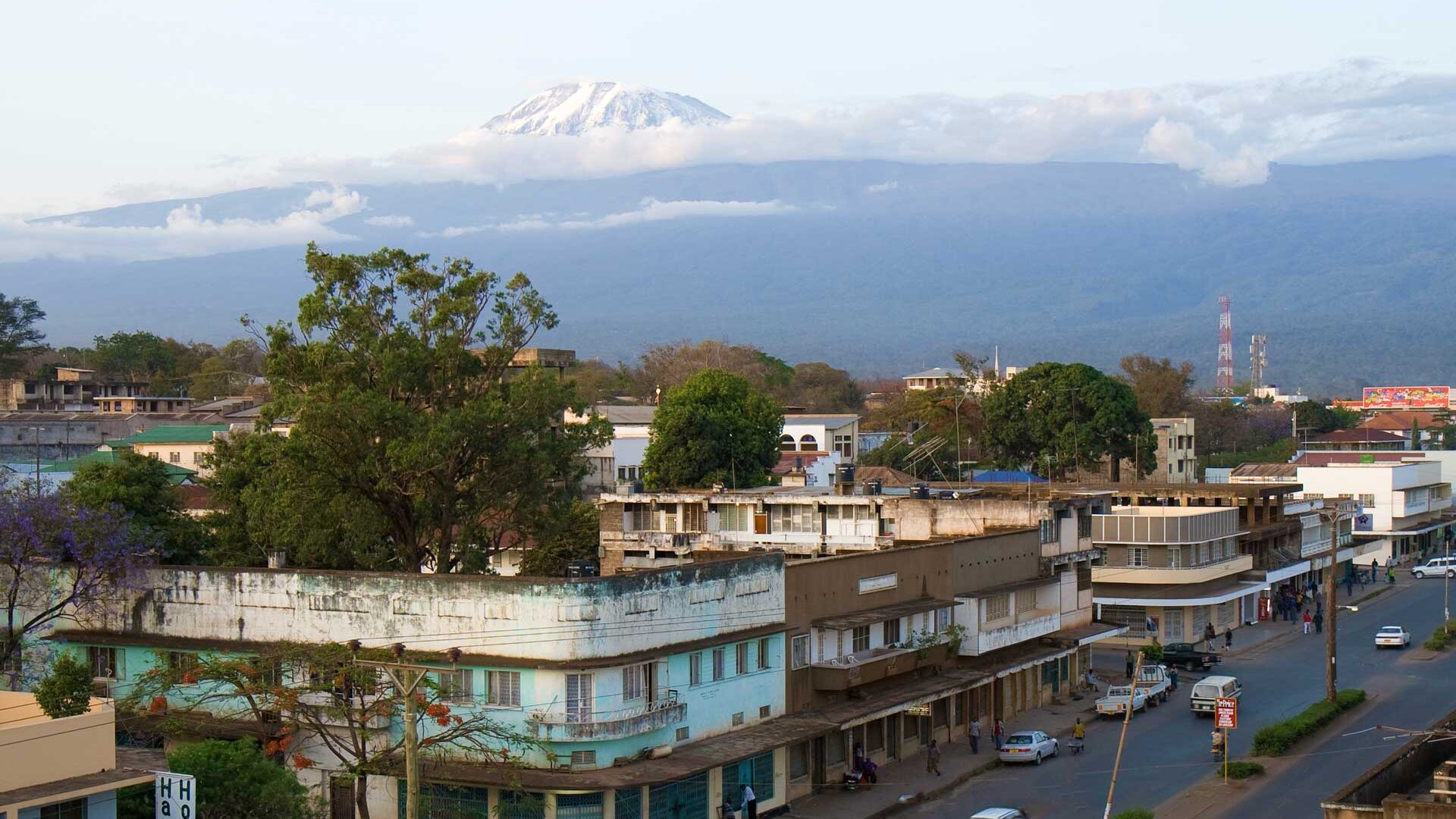
Moshi town with Kilimanjaro's snow cap above the clouds
Moshi, with Kibo behind
Day01
Kilimanjaro Airport → Moshi

The Town Below the Snow

Your driver meets you at Kilimanjaro International Airport for the one-hour drive to Moshi, a busy, friendly town of coffee farms and bicycles at the foot of the mountain.

In the evening your lead guide goes through the plan with you: how the huts work, what happens on the rest day, how we watch for altitude sickness, and a check of your gear.

  • Transfer45 km · about 1 hr
  • OvernightKibo Palace Hotel, Moshi
  • Meals
    BreakfastLunchDinner
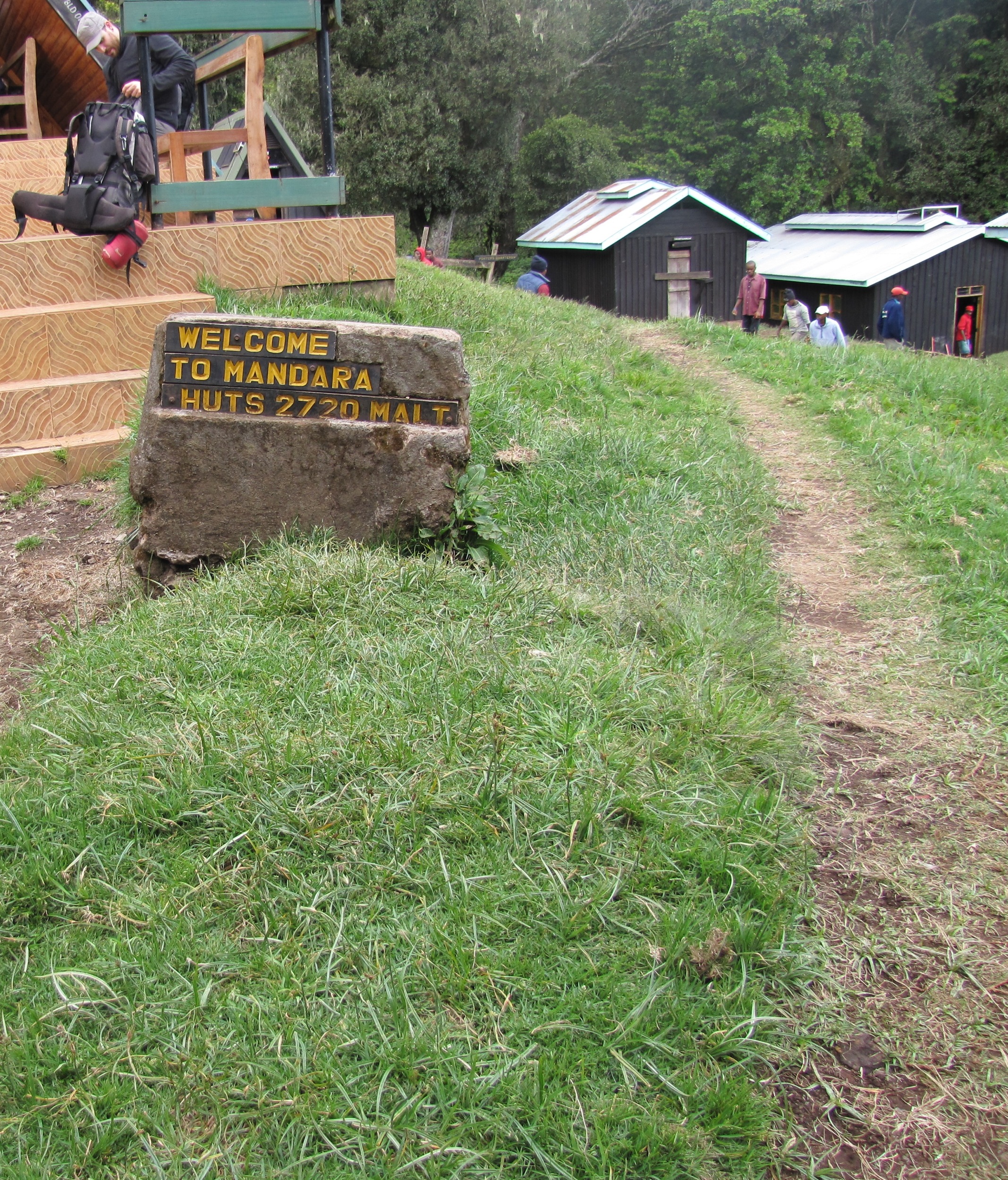
A stone sign reading Welcome to Mandara Huts beside a grassy path
Welcome to Mandara
Day02
Moshi → Marangu Gate → Mandara Hut

Colobus Country

After breakfast you drive to Marangu Gate, register with the park and meet the porters. The first steps are on a wide path under tall, mossy trees, with small streams running beside the trail.

It is warm and humid in the forest. Keep an eye on the branches for black-and-white colobus monkeys. Mandara’s A-frame huts sit in a grassy clearing, and there is time before dinner to rest or walk up to the Maundi Crater viewpoint.

  • Trek8 km · 4–5 hrs
  • Altitude1,830 → 2,700 m
  • OvernightMandara Hut
  • Meals
    BreakfastLunchDinner
Heather & Moorland
Day03
Mandara Hut → Horombo Hut

Kibo and Mawenzi

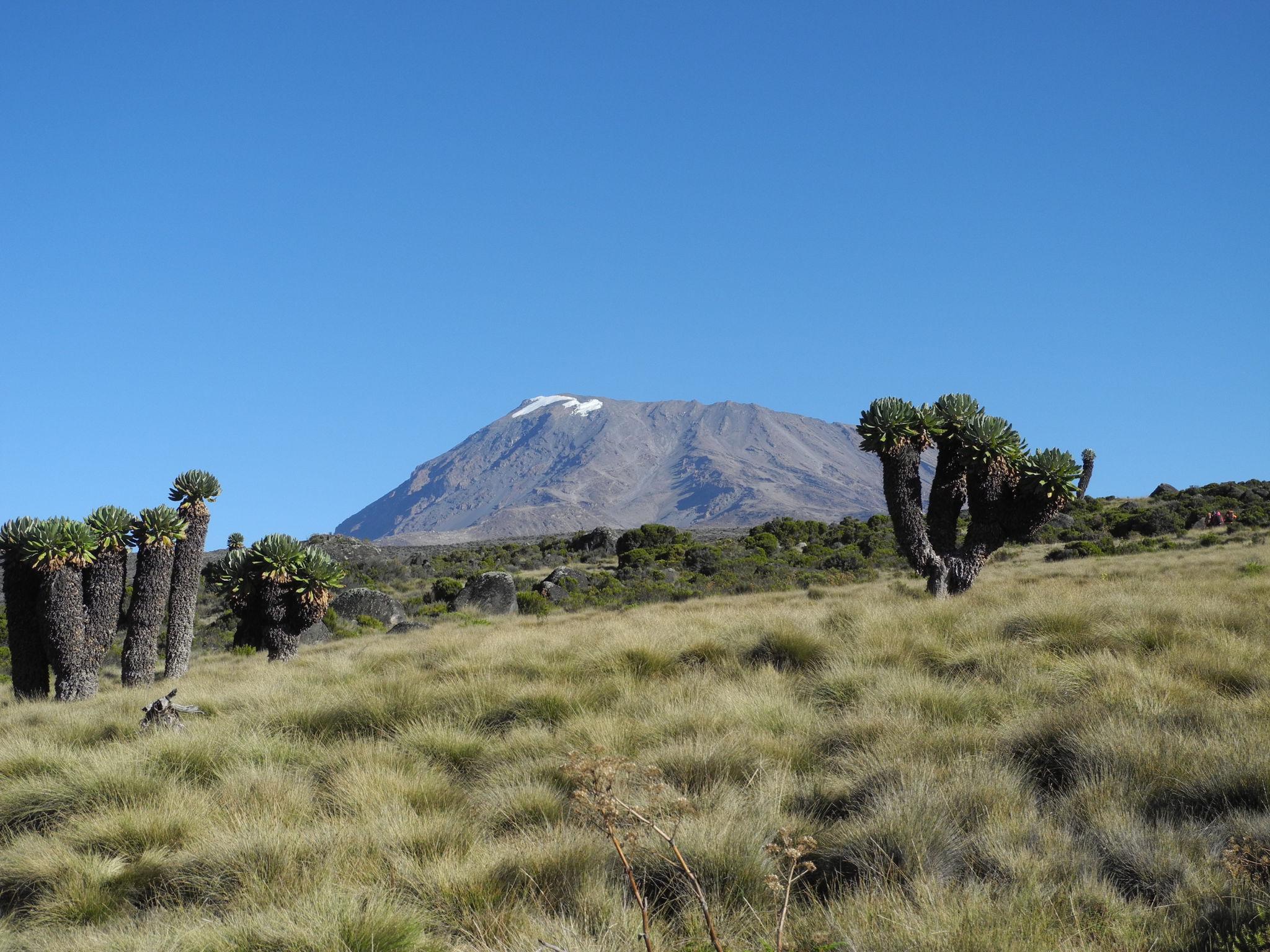
Above Mandara the trees get shorter and then stop. You walk out into open moorland of giant heather, grasses and everlasting flowers, and for the first time you can see both of Kilimanjaro’s peaks: the snow cap of Kibo and the jagged rock of Mawenzi.

The trail is long but not steep. You reach Horombo Hut in the afternoon, and this time you can unpack properly, because you are staying two nights.

  • Trek12 km · 5–6 hrs
  • Altitude2,700 → 3,720 m
  • OvernightHorombo Hut
  • Meals
    BreakfastLunchDinner
Mawenzi's rocky peak above the bare Saddle, with a rock outcrop in front
Mawenzi and the Saddle
Day04
Horombo Hut → Zebra Rocks → Horombo Hut

Climb High, Sleep Low

Today you do not move on. After a slow breakfast you walk for a couple of hours up to Zebra Rocks, a cliff striped black and white, at about 3,980 m. Some groups carry on a little towards Mawenzi for a view over the Saddle.

Then you come back down to Horombo for lunch and a lazy afternoon. Going higher and sleeping lower gives your body a gentle push without asking too much of it, and it pays off on summit night.

Pole pole

Rest days can feel boring. Use this one well: read, nap, drink water and keep eating, even if you are not hungry.

  • TrekOptional walk to Zebra Rocks
  • Altitude3,720 m · Zebra Rocks at 3,980 m
  • OvernightHorombo Hut
  • Meals
    BreakfastLunchDinner
The Saddle
Day05
Horombo Hut → the Saddle → Kibo Hut

Into the Alpine Desert

You leave Horombo and climb gently past the last water point. Soon the plants disappear and you walk out onto the Saddle, a wide plain of red-brown gravel between Mawenzi and Kibo. It is dry, windy and very quiet.

Kibo Hut sits at 4,700 m at the foot of the summit cone. Your guide goes through the summit plan, you eat an early dinner and go to bed by about 7 pm.

Good to know

Get everything ready before you sleep: headtorch with fresh batteries, water bottles inside your sleeping bag so they don’t freeze, and your warmest layers on top of the pile.

  • Trek10 km · 5–6 hrs
  • Altitude3,720 → 4,700 m
  • OvernightKibo Hut
  • Meals
    BreakfastLunchDinner
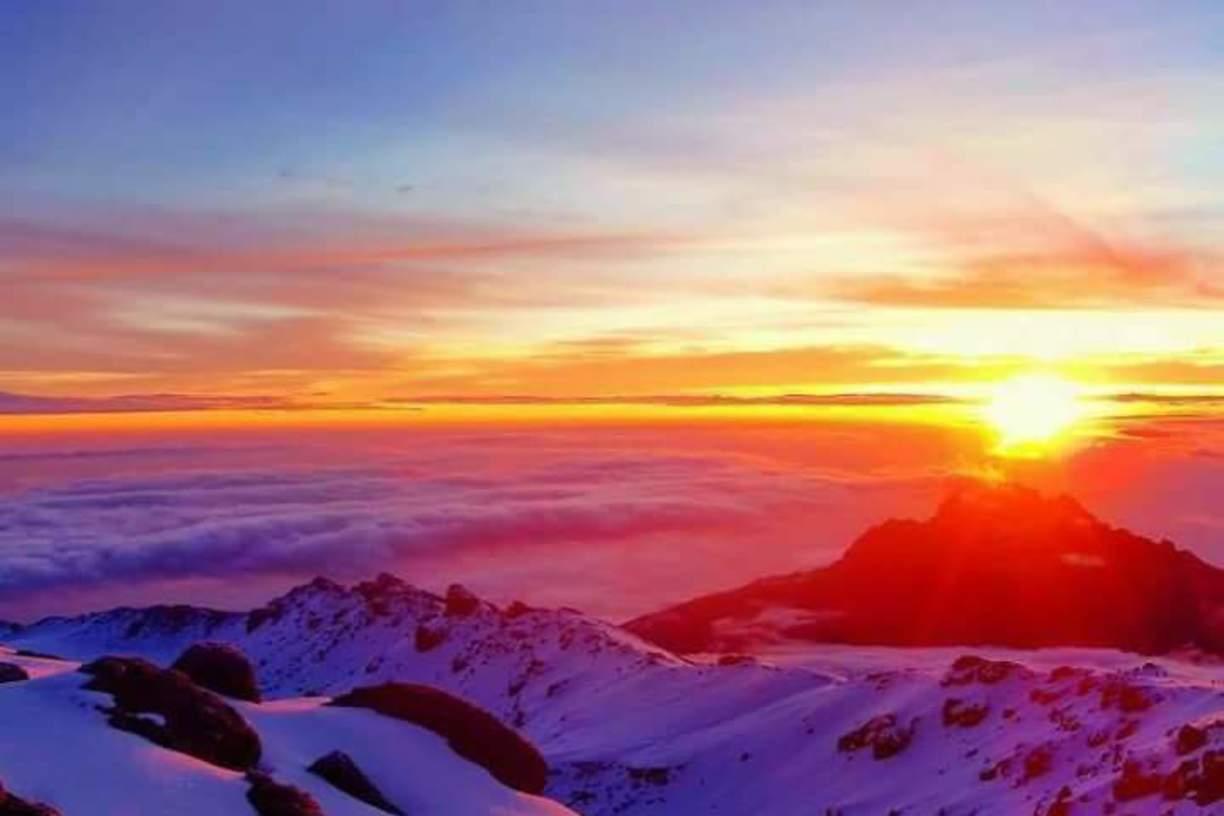
Sunrise above the clouds from high on Kilimanjaro, with snow in the foreground
First light from high on the mountain
Day06
Kibo Hut → Uhuru Peak → Horombo Hut

Sunrise from the Rim

Around midnight you set off up the steep scree above Kibo Hut, one slow step at a time, with a short stop at Hans Meyer Cave. It is dark, cold and quiet except for your breathing.

At Gilman’s Point (5,685 m) you are on the crater rim, usually around sunrise. Another 1.5 to 2 hours along the rim, past the ice cliffs, brings you to Uhuru Peak, 5,895 m. Then you walk all the way back down, via Kibo Hut, to Horombo for the night.

Honest note

The rest day helps, but summit night is still very hard: 12 to 15 hours on your feet, most of it above 4,700 m. Your guides decide when someone must turn back, and that decision is always about your health, not the summit.

  • Trek22 km · 12–15 hrs
  • Altitude4,700 → 5,895 → 3,720 m
  • OvernightHorombo Hut
  • Meals
    BreakfastLunchDinner
Asante sana
Day07
Horombo Hut → Marangu Gate → Moshi

Down Through the Forest

The last walk follows the path you came up, past Mandara and through the forest to Marangu Gate. Your legs will feel it, but the air is thick and warm again.

At the gate you collect your summit certificate and say goodbye to the crew, then drive an hour back to your hotel in Moshi.

Good to know

The crew is usually tipped at the gate. We send guideline amounts before the climb, so you can bring the right cash.

  • Trek20 km · 6–7 hrs
  • TransferAbout 1 hr to Moshi
  • OvernightKibo Palace Hotel, Moshi
  • Meals
    BreakfastLunchDinner
Safari njema
Day08
Moshi → Kilimanjaro Airport

Onward or Home

After breakfast you are driven to Kilimanjaro International Airport. If you have time, the mountain pairs well with a few days on safari in the northern parks or on the beach in Zanzibar.

Where you sleep

Three Huts, Five Nights

A hotel in Moshi at each end, and three of the park’s hut stops on the mountain. You spend three nights at Horombo, which soon starts to feel like home.

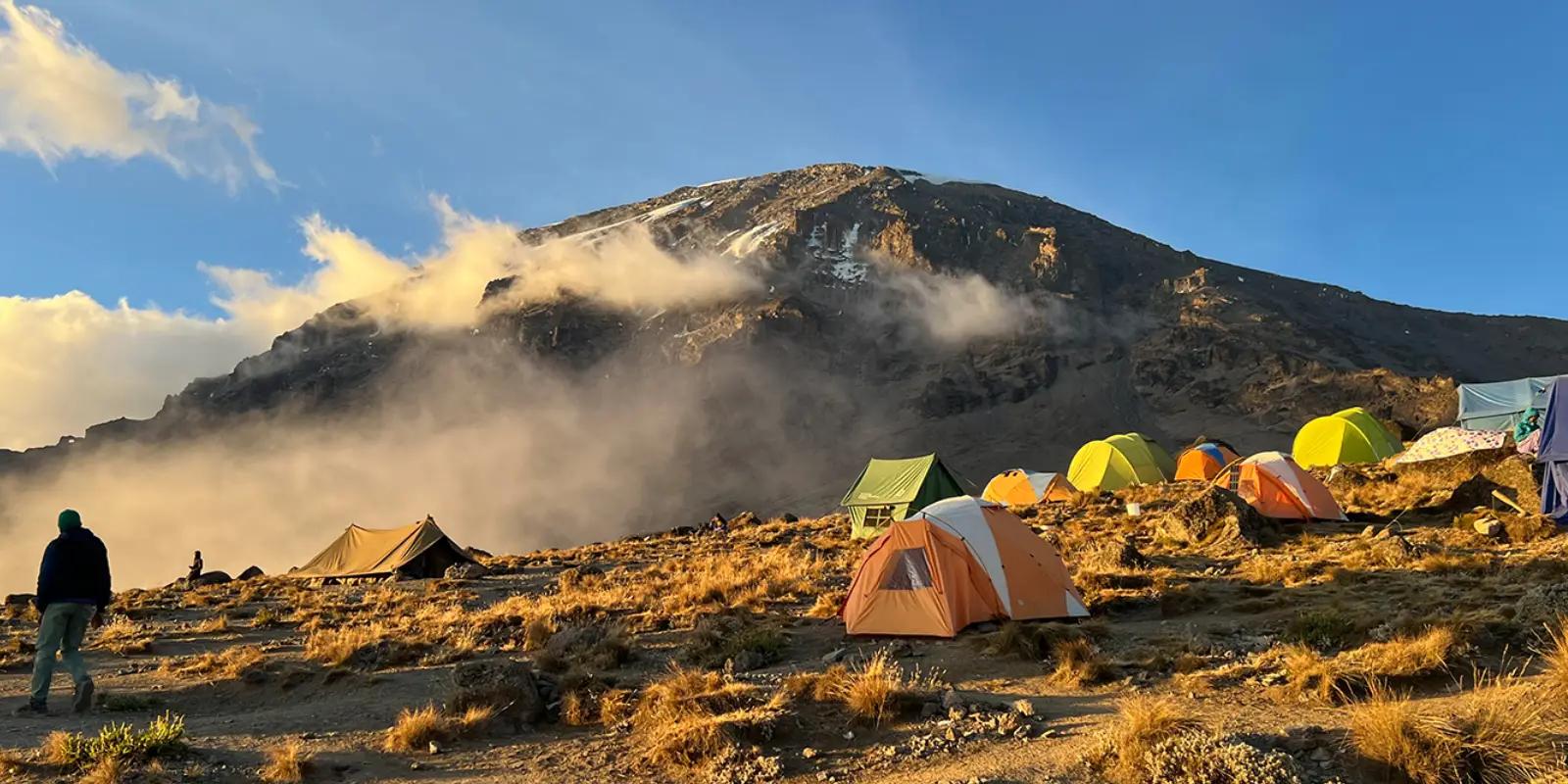
A camp on Mount Kilimanjaro
On the mountain

Nights on the mountain: Mandara Hut, Horombo Hut, Kibo Hut.

2nights

Kibo Palace Hotel

Moshi · 915 m

A comfortable hotel in Moshi with a swimming pool, a garden, a bar and a restaurant. You stay here before the climb and after it.

PoolGardenBar
1night

Mandara Hut

Rainforest · 2,700 m

Wooden A-frame cabins with bunk beds in a forest clearing, often full of birdsong and monkeys. The warmest night on the mountain.

Forest clearing
3nights

Horombo Hut

Moorland · 3,720 m

Bigger huts with bunk beds, communal dining halls and shared washrooms, with wide views of Mawenzi. Your base for the rest day.

Rest dayMawenzi views
1night

Kibo Hut

Alpine desert · 4,700 m

Dormitory bunks and a shared dining space, basic and functional. You sleep a few hours here before the summit climb.

Summit base

Hotels are shown “or similar”. On the mountain you stay in the park’s huts, in shared bunk rooms. Your own crew still cooks every meal and brings you hot water for washing.

Timing & price

When to Climb

Kilimanjaro can be climbed all year. January to March and June to October are the driest months. Horombo is at its busiest in July and August, so book early for those dates.

Climbing Kilimanjaro, month by month Highlighted: best months to climb
MonthSeasonOn the mountainClimbing
JanuaryDryWarm & clearOne of the best months. Warm days, clear summit mornings and fewer climbers than in August.Best
FebruaryDryWarm & clearVery good climbing. Clear skies, and snow on the summit is possible after a cold night.Best
MarchDry → wetWarm, some showersStill good early in the month. Showers start to build towards the end.Good
AprilLong rainsWet & cloudyThe wettest month. Muddy trails and cloud; very few climbers.Wet
MayLong rainsWet, clearing lateRain eases later in the month. Quiet trails, but expect wet days.Wet
JuneDryCold & clearThe dry season starts. Cold nights up high, and the trails get busier.Good
JulyDryCold & clearPeak season. Cold, clear and dry, with the most climbers of the year.Best
AugustDryCold & clearPeak season. Very reliable weather; book early for this month.Best
SeptemberDryMild & clearExcellent conditions. Slightly warmer and a little quieter than August.Best
OctoberDryMild & clearGood weather and quieter trails before the short rains.Best
NovemberShort rainsShowersShort afternoon showers, mostly lower down. Possible, with good rain gear.Good
DecemberShort rains → dryMixedRain clears through the month. Busy over Christmas and New Year.Good
Price per personYour groupAll yearPrivate climbAny start date
1solo climber$2,239USD per person
2–5climbers$2,019USD per person
6–10climbers$1,903USD per person
11+climbers$1,845USD per person
 Check dates →
18%

Climb as a group and pay less. A group of 11+ pays about 18% less per person than a solo climber.

Prices are in US dollars, per person, for a private climb with two hotel nights in Moshi. Temperatures on the summit are well below freezing in every month. We send a full kit list when you book.

No surprises

What's Included

Included / 12

  • Airport transfers on arrival and departureKilimanjaro International Airport (JRO)
  • 2 nights at Kibo Palace Hotel in Moshi, before and after the climbSharing a double or triple room. The first night includes breakfast; the last night includes dinner and breakfast
  • Professional mountain guides and support crew
  • Wages for guides, porters, cook and waiter
  • National park entry fees
  • Hut fees on the mountain
  • Cooking gear, plates and cutlery
  • Park rescue fees
  • Pulse oximeter checks and a full first aid kit
  • All meals on the mountainBreakfast, lunch and dinner
  • Boiled drinking water on the mountain
  • Park fees and lodging for the crew on the mountain

Not included / 11

  • International and domestic flights
  • Tanzania visaSee our visa guide
  • Travel insuranceRequired, and it must cover climbing to 6,000 m. See our insurance guide
  • Single room supplement at Kibo Palace Hotel
  • Tips for guides, porters, cook and waiter
  • Personal mountain gear, such as a sleeping bagSome items can be hired. Ask us for the hire price list
  • Emergency oxygenNot part of the standard package
  • Meals and drinks not listed in the itinerary
  • Extra hotel nights beyond the two included
  • Optional trips, such as a waterfall walk or a village visit
  • Personal expenses, such as souvenirs, laundry and phone calls
Good questions

Before You Book

For most people, a lot. It gives your body a full day at 3,720 m plus a short walk higher, which is how acclimatisation works. It also breaks up the long days before summit night. No route comes with a guaranteed summit, but more time is the best thing you can give yourself. See our altitude safety guide.

The trail itself is gentle, and a hut is easier than a tent in bad weather. But summit night from Kibo Hut is steep and cold on every route; Rongai climbers use the same path. Machame and Lemosho have more variety but steeper sections lower down. Compare them in our routes guide.

Horombo is the busiest, because climbers going up and coming down both stay there. You share bunk rooms with other climbers, and in July, August and over Christmas the dining halls are lively. Earplugs help.

You should be able to walk 5 to 7 hours on several days in a row, including long uphill stretches. Regular hill walks with a loaded daypack in the months before are the best training. Our preparation guide has a simple plan.

Take the slow way to

Uhuru Peak

Tell us your dates and who is climbing. We’ll reply within 24 hours with availability and a full price.

Private climb & crewReply within 24 hrsYour dates, your pace
Marangu Route Extended
8 days · from $1,845 pp
Loading itinerary…
Saved Trips