Tanzania Rewilded

Uhuru Peak, the summit of the 5-day Marangu route
 
 
 Kilimanjaro climb · 5 days on the mountain
Marangu Gate
 
Horombo Hut
 
Uhuru Peak
The hut route to

Uhuru Peak

The quickest way up Kilimanjaro: the 5-day Marangu route on the old hut trail, sleeping in wooden huts instead of tents. You go up and come down the same side, through rainforest, moorland and the Saddle, and aim for the summit on Day 5.

7days
6 nights, 7 days total
5
Days on the mountain
5,895m
Uhuru Peak
 MoshiDay 1
 MandaraDay 2
 HoromboDay 3
 Kibo HutDay 4
 Uhuru PeakDay 5
Climbing permit
TR · MR05
Marangu Route
 
Duration
7 days · 6 nights
5 days on the mountain, 2 nights in Moshi
Start / finish
Kilimanjaro Airport
Hotel in Moshi before and after
Summit
Uhuru Peak · 5,895 m
Summit push from Kibo Hut at midnight
Difficulty
Demanding
A fast ascent with no rest day
Style
Private · Huts
Bunk beds in mountain huts, your own crew
Best months
Jan – Mar · Jun – Oct
The two dry seasons

Why peopleChoose the 5-Day Marangu Route

Marangu is the oldest trail on Kilimanjaro, and the only one where you sleep in huts, not tents. The path is wide and well-graded, it climbs the south-east side of the mountain, and you come down the same way. People call it the “Coca-Cola Route” because it has a name as the easy one.

The honest truth is that five days is the shortest climb on the mountain. You gain height quickly and there is no spare day to adjust, so it suits fit walkers who have been to altitude before, or who are really short of time. If you can spare one more day, look at the extended Marangu climb in our routes guide.

The climb

Five Days, Three Huts

Each point is where you sleep. The line climbs in steady steps from the forest to Kibo Hut, then up to the summit and back down to Horombo on the same day. Tap a hut to see it on the profile.

FarmlandRainforestHeath & moorlandAlpine desertArctic summit1,0002,0003,0004,0005,0006,000m 1234Uhuru Peak5,895 m56
Trail altitudeVegetation zones
  1. 01

    Moshi

    915 m · Hotel before and after the climb

    2 nights
  2. 02

    Mandara Hut

    2,700 m · Wooden A-frame huts in the rainforest

    1 night
  3. 03

    Horombo Hut

    3,720 m · On the way up, and again on the way down

    2 nights
  4. 04

    Kibo Hut

    4,700 m · Stone hut at the foot of Kibo, for the summit night

    1 night
Trek ≈ 72 kmHighest 5,895 mDescent Same trail, via Horombo
Day by day

The Journey

✦

This is how the trip usually runs. Your guide will adjust each day around the weather, the trail and how the group is acclimatising.

Karibu Moshi
Day01
Kilimanjaro Airport → Moshi

Arrive in Moshi

We meet you at Kilimanjaro International Airport and drive about an hour to Moshi. On a clear evening the snow on Kibo shows above the rooftops.

At Kibo Palace Hotel your lead guide gives you a full briefing: how the huts work, the daily routine, altitude and a check of your gear. Anything you are missing can be hired in Moshi.

Good to know

Five days leaves little room to adjust, so arrive rested and start drinking plenty of water today. Pack your boots and daypack in your hand luggage in case a checked bag is delayed.

  • Transfer45 km · about 1 hr
  • OvernightKibo Palace Hotel, Moshi
  • Meals
    BreakfastLunchDinner
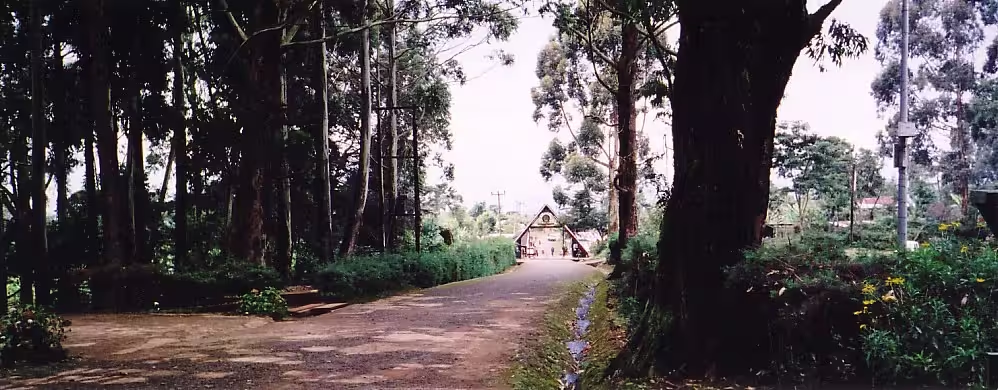
The tree-lined road leading to the Marangu Gate buildings
Marangu Gate, 1,830 m
Day02
Moshi → Marangu Gate → Mandara Hut

Into the Rainforest

A one-hour drive through villages and banana and coffee farms takes you to Marangu Gate at 1,830 m. You sign in with the park while the porters weigh their loads, and then you start walking.

The path is wide and shaded by tall, mossy trees. Look for black-and-white colobus monkeys in the canopy. You reach Mandara Hut in the afternoon; if you still have energy, a short walk to the rim of the Maundi Crater gives you a first view over the plains.

  • Trek8 km · 4–5 hrs
  • Altitude1,830 → 2,700 m
  • OvernightMandara Hut
  • Meals
    BreakfastLunchDinner
Into the Heather
Day03
Mandara Hut → Horombo Hut

Out of the Trees

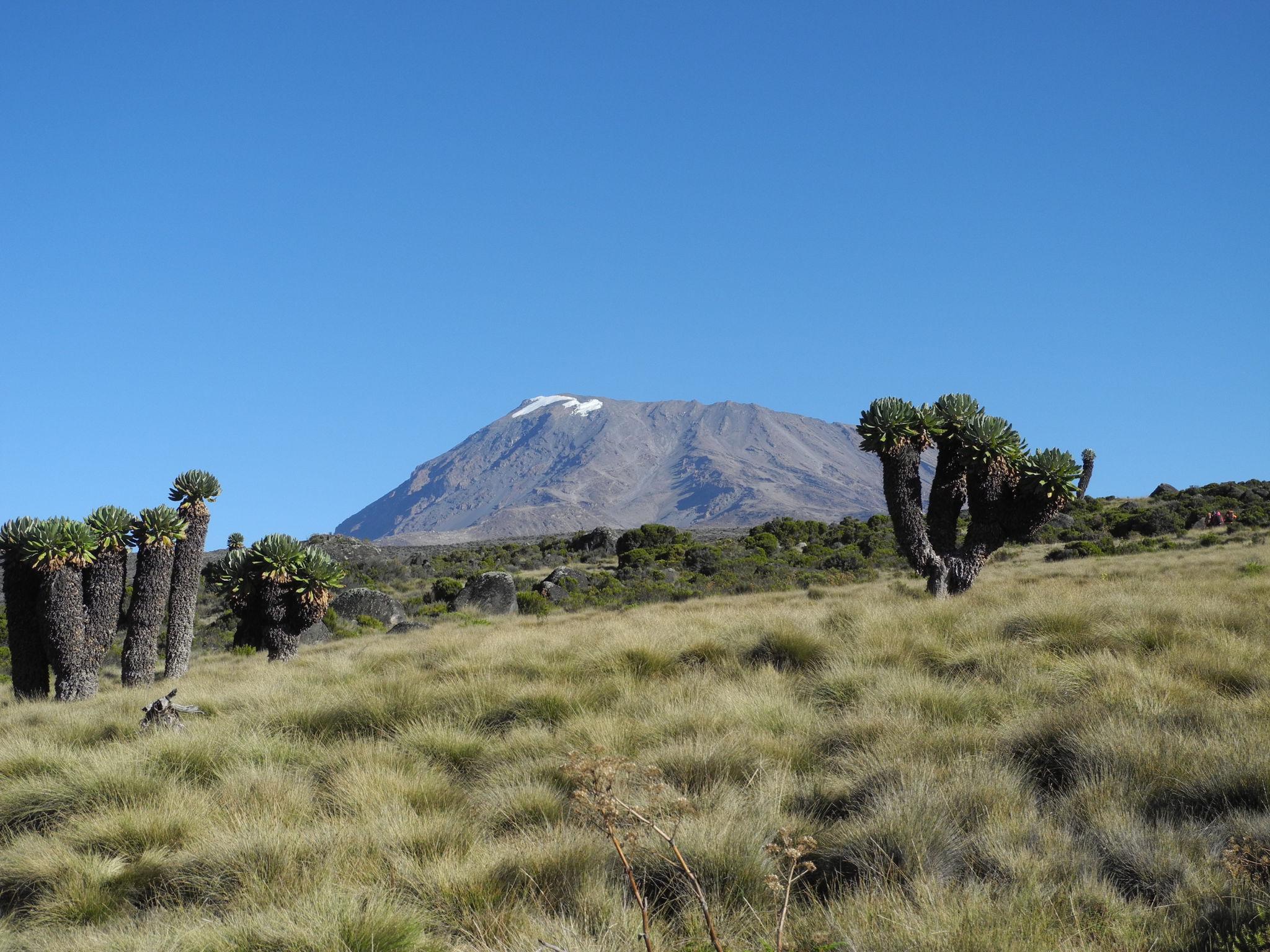
The forest thins quickly above Mandara, and soon you are walking through giant heather and open moorland. The air is cooler and the views open up: Kibo’s snow ahead, and the jagged peak of Mawenzi to the right.

It is a long day but a gentle one. Horombo is a small village of huts on a grassy slope, and it is busy: climbers going up and coming down both stay here, so the dining hall is full of stories from the summit.

Pole pole

“Slowly, slowly.” On a fast climb like this one, walking slowly matters even more. Let your guide set the pace, even when it feels too easy.

  • Trek12 km · 5–6 hrs
  • Altitude2,700 → 3,720 m
  • OvernightHorombo Hut
  • Meals
    BreakfastLunchDinner
The Saddle
Day04
Horombo Hut → the Saddle → Kibo Hut

Across the Saddle

Above Horombo you pass the last water point, and then the plants give way to bare gravel and rock. This is the Saddle, a wide, empty plateau between Mawenzi and Kibo. The sun and wind are strong up here, so wear a hat and sunscreen.

Kibo Hut is a stone building at the foot of the summit cone. You arrive in the afternoon, eat an early dinner and try to sleep by 7 pm. Your guide wakes you just before midnight.

  • Trek10 km · 5–6 hrs
  • Altitude3,720 → 4,700 m
  • OvernightKibo Hut
  • Meals
    BreakfastLunchDinner
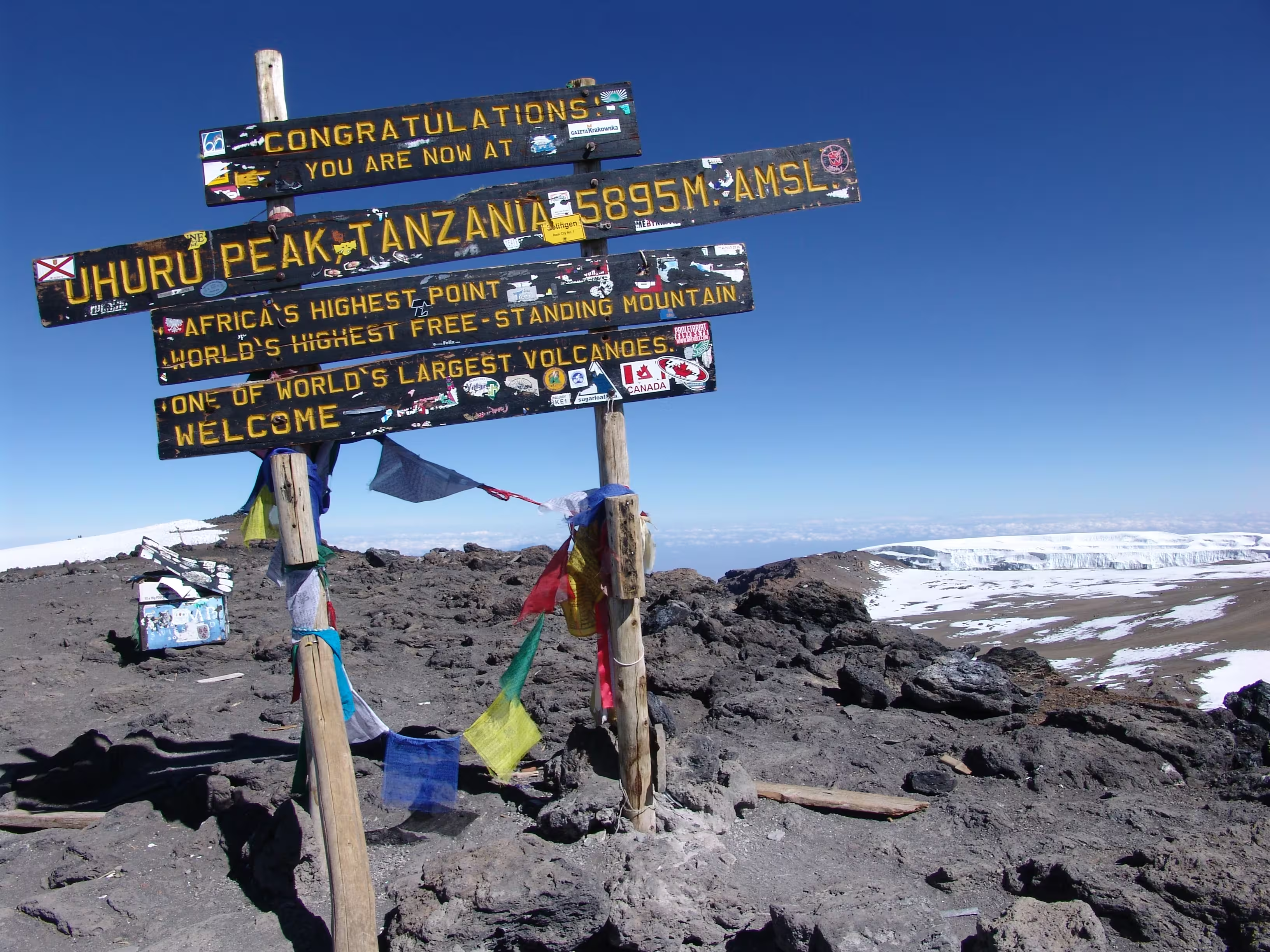
The wooden Uhuru Peak summit sign with prayer flags and glacier ice behind
Uhuru Peak, 5,895 m
Day05
Kibo Hut → Uhuru Peak → Horombo Hut

The Top of Africa

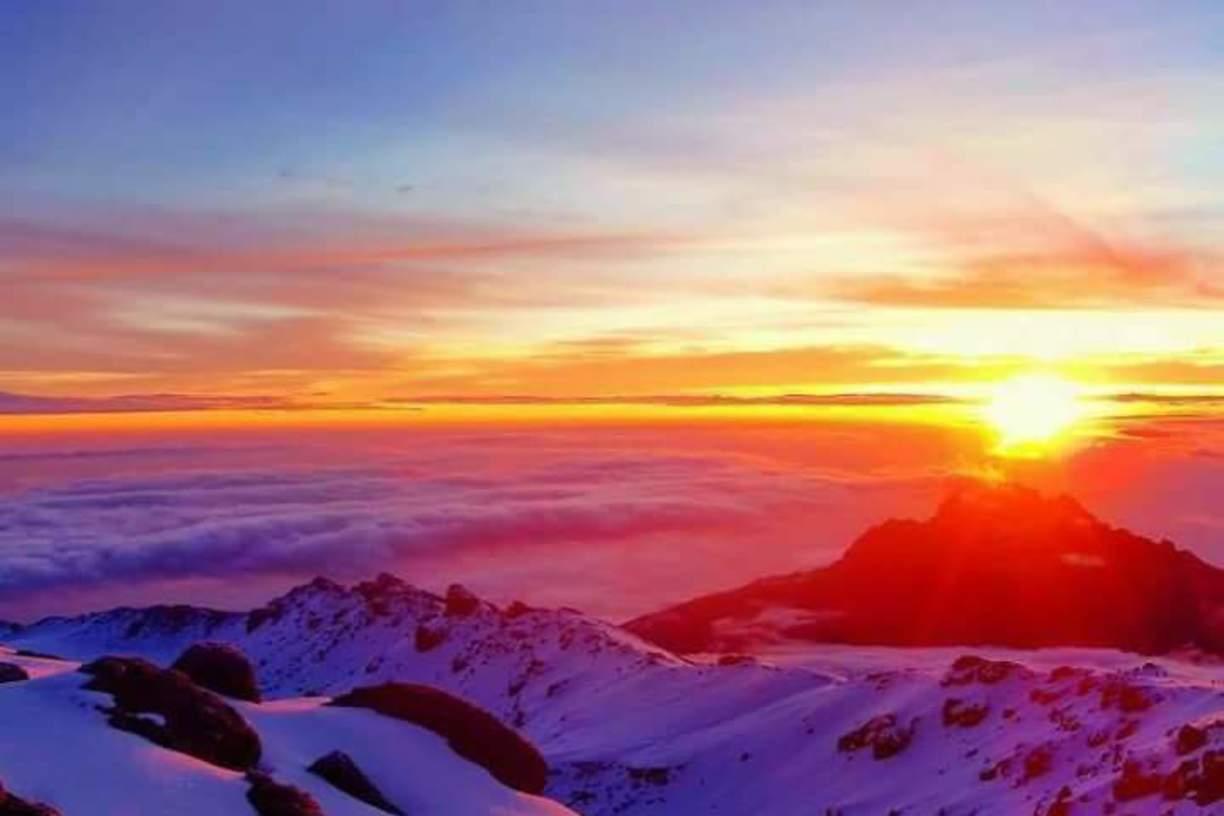
You leave Kibo Hut around midnight and climb a long series of zigzags up loose scree by headtorch. You rest at Hans Meyer Cave, about halfway, and reach Gilman’s Point on the crater rim at 5,685 m, often just as the sky starts to glow.

From Gilman’s Point it is another 1.5 to 2 hours along the rim, past the glaciers, to Uhuru Peak. After photos at the sign you go back down to Kibo Hut for a rest and a drink, then carry on to Horombo, almost 2,200 m lower, for the night.

Honest note

This is the hardest day of the climb: 12 to 15 hours of walking, and on a five-day climb your body has had the least time to adjust. Your guides check you all the way up and will turn you around if it is not safe. Your health always comes before the summit.

  • Trek22 km · 12–15 hrs
  • Altitude4,700 → 5,895 → 3,720 m
  • OvernightHorombo Hut
  • Meals
    BreakfastLunchDinner
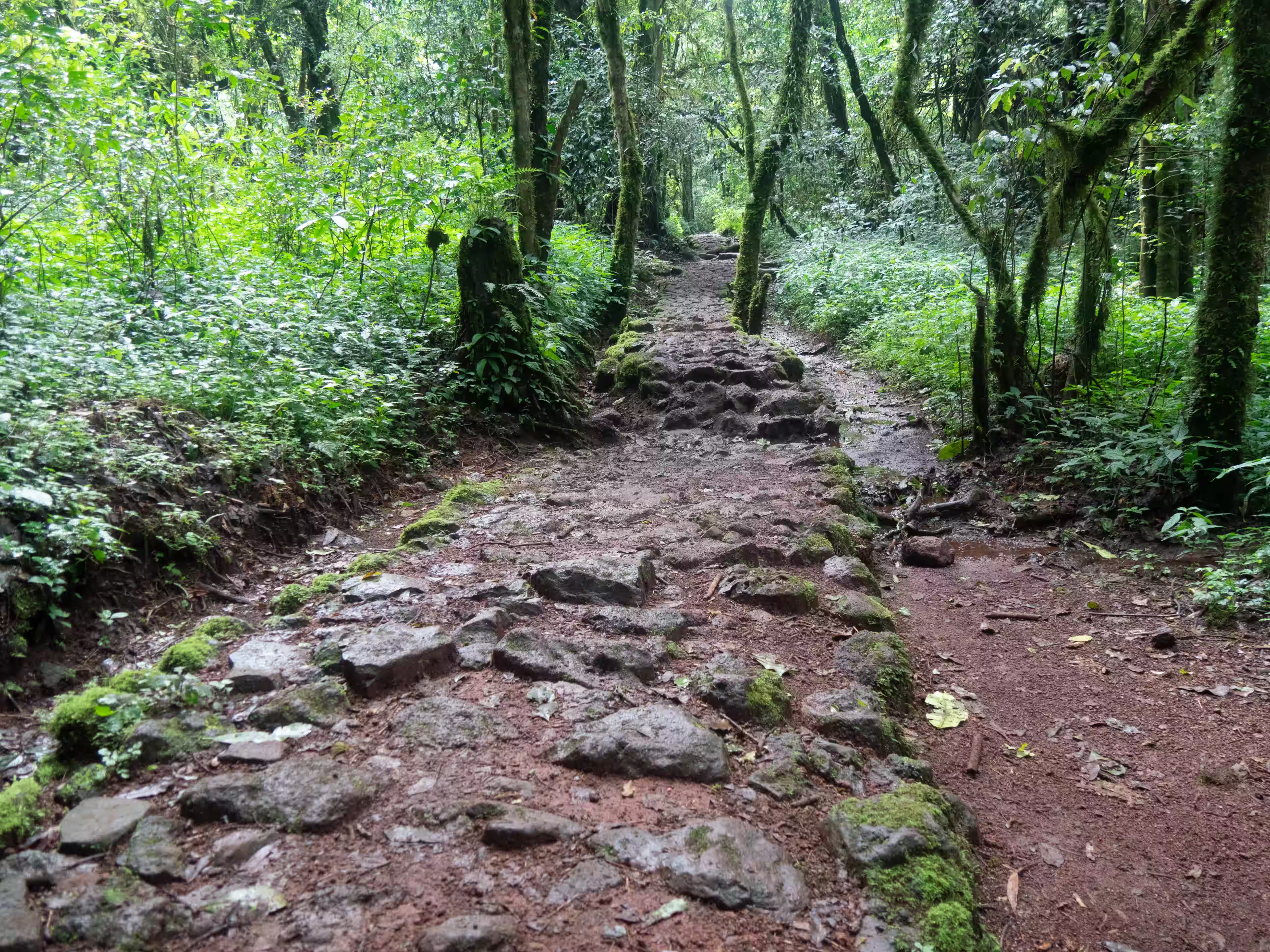
A stone path through green rainforest on the lower slopes of Kilimanjaro
The forest path down to the gate
Day06
Horombo Hut → Marangu Gate → Moshi

Down to Marangu Gate

The walk down is long, 20 km, but every step brings thicker air. You pass Mandara Hut and drop back into the rainforest, which feels warm and green after the Saddle.

At Marangu Gate you sign out and collect your summit certificate. Then it is an hour’s drive to Moshi for a hot shower, a real bed and a celebration dinner.

Good to know

Your knees do most of the work today, and walking poles help a lot on the steep forest steps. The crew is usually thanked and tipped at the gate; we send guideline amounts before the climb.

  • Trek20 km · 6–7 hrs
  • TransferAbout 1 hr to Moshi
  • OvernightKibo Palace Hotel, Moshi
  • Meals
    BreakfastLunchDinner
Kwaheri
Day07
Moshi → Kilimanjaro Airport

Kwaheri, Kilimanjaro

After breakfast you have time to rest before the drive to Kilimanjaro International Airport. Plenty of climbers carry on instead, to a few days on safari in the northern parks or on the beach in Zanzibar.

Where you sleep

Three Huts, Two Hotel Nights

A comfortable hotel in Moshi at each end, and the park’s huts on the mountain. You sleep in bunk beds and eat in shared dining areas, and our cook makes every meal.

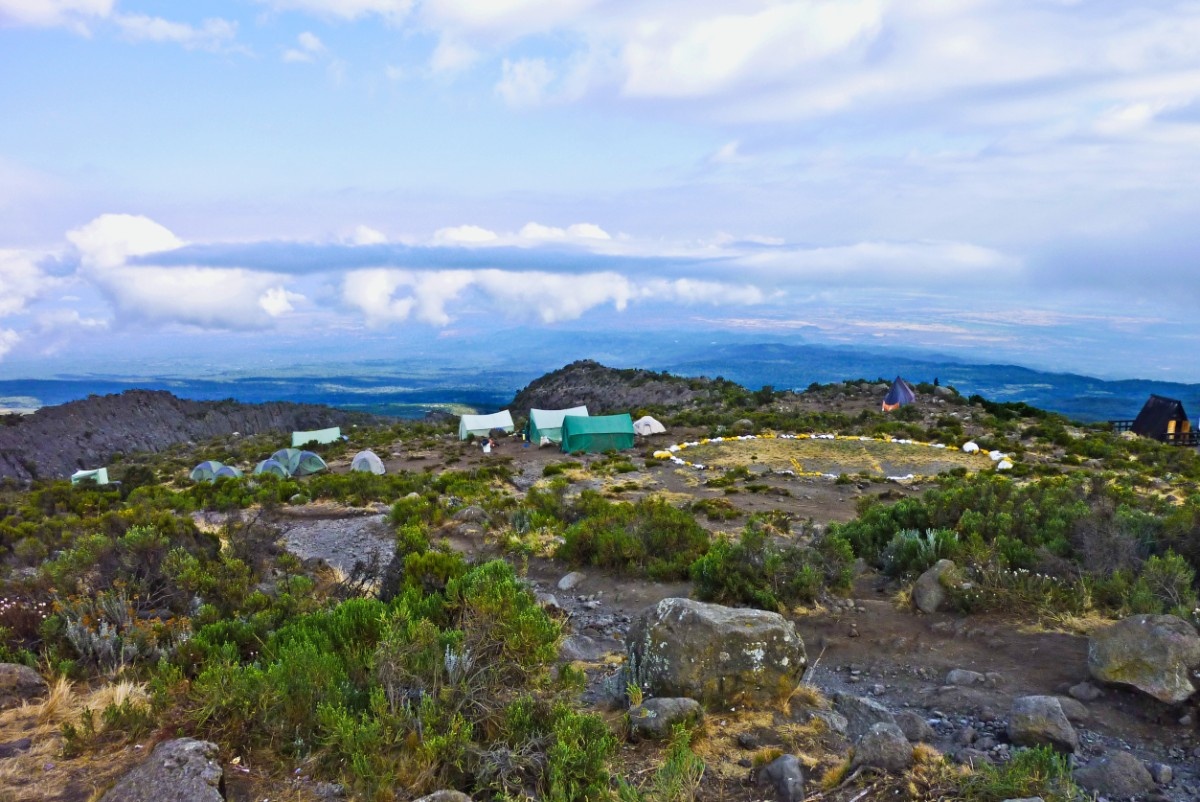
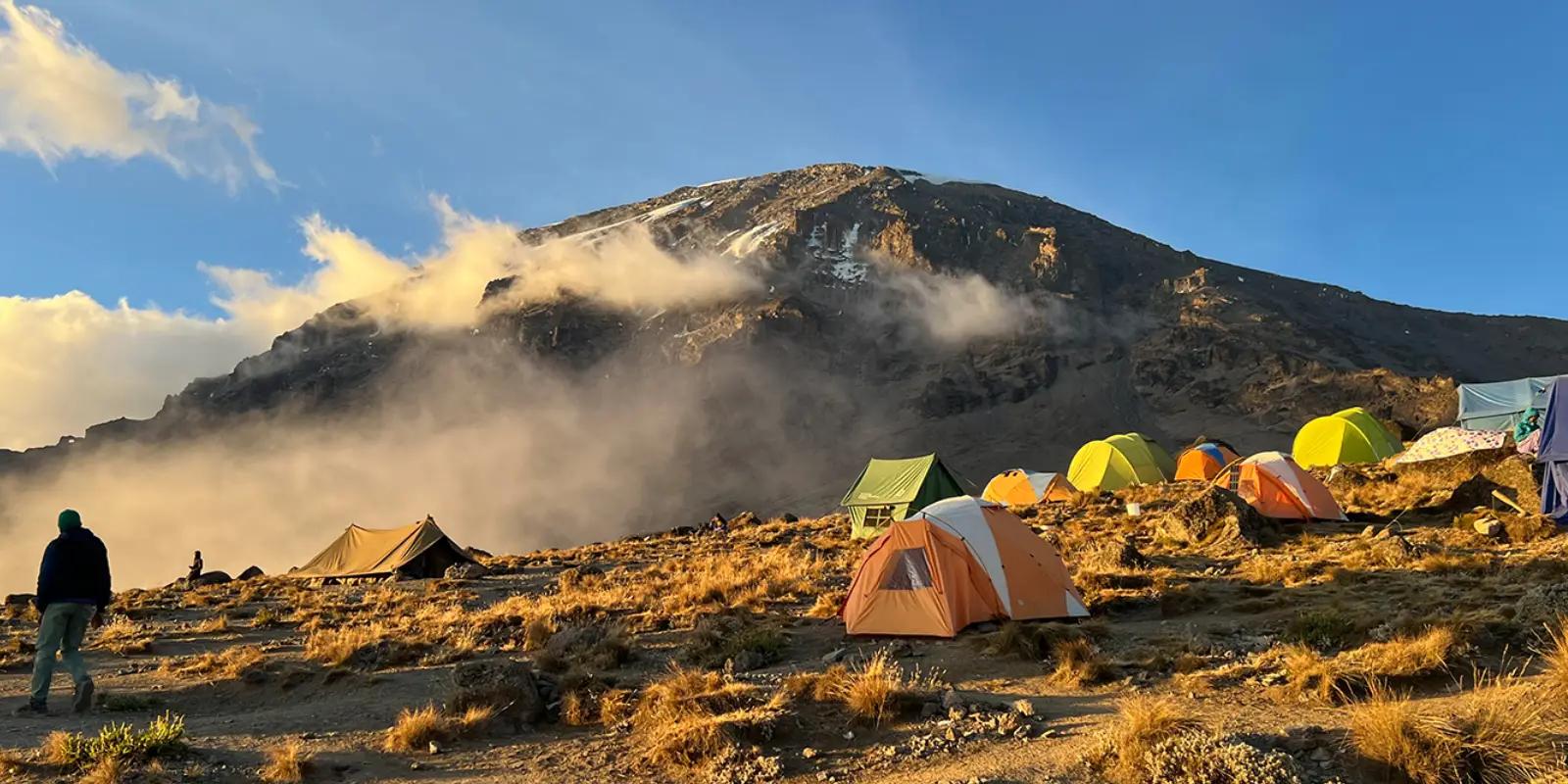
A camp on Mount Kilimanjaro
On the mountain

Nights on the mountain: Mandara Hut, Horombo Hut, Kibo Hut.

2nights

Kibo Palace Hotel

Moshi · 915 m

A comfortable hotel in Moshi with a swimming pool, a garden, a bar and a restaurant. You stay here before the climb and after it.

PoolGardenBar
1night

Mandara Hut

Rainforest · 2,700 m

Simple wooden A-frame huts with bunk beds, a shared dining area and basic washrooms. The mildest night on the mountain.

Rainforest
2nights

Horombo Hut

Moorland · 3,720 m

Larger huts with bunk beds and a communal dining hall, looking out at Mawenzi. You sleep here on the way up and again after the summit.

Mawenzi viewsUp and down
1night

Kibo Hut

Alpine desert · 4,700 m

A basic hut with dormitory bunks, cold and dry. You rest here for a few hours before the summit climb.

Summit base

Hotels are shown “or similar”. On the mountain you sleep in the park’s huts, in shared rooms with bunk beds, not in tents. Bring a warm sleeping bag, or hire one in Moshi.

Timing & price

When to Climb

Marangu can be climbed all year. The two dry seasons give the clearest skies, and July and August are the busiest months. In the long rains the forest is very muddy, but the huts do keep you out of the wet at night.

Climbing Kilimanjaro, month by month Highlighted: best months to climb
MonthSeasonOn the mountainClimbing
JanuaryDryWarm & clearOne of the best months. Warm days, clear summit mornings and fewer climbers than in August.Best
FebruaryDryWarm & clearVery good climbing. Clear skies, and snow on the summit is possible after a cold night.Best
MarchDry → wetWarm, some showersStill good early in the month. Showers start to build towards the end.Good
AprilLong rainsWet & cloudyThe wettest month. Muddy trails and cloud; very few climbers.Wet
MayLong rainsWet, clearing lateRain eases later in the month. Quiet trails, but expect wet days.Wet
JuneDryCold & clearThe dry season starts. Cold nights up high, and the trails get busier.Good
JulyDryCold & clearPeak season. Cold, clear and dry, with the most climbers of the year.Best
AugustDryCold & clearPeak season. Very reliable weather; book early for this month.Best
SeptemberDryMild & clearExcellent conditions. Slightly warmer and a little quieter than August.Best
OctoberDryMild & clearGood weather and quieter trails before the short rains.Best
NovemberShort rainsShowersShort afternoon showers, mostly lower down. Possible, with good rain gear.Good
DecemberShort rains → dryMixedRain clears through the month. Busy over Christmas and New Year.Good
Price per personYour groupAll yearPrivate climbAny start date
1solo climber$2,450USD per person
2–5climbers$2,450USD per person
6–10climbers$2,450USD per person
11+climbers$2,450USD per person
 Check dates →

Prices are in US dollars, per person, for a private climb with two hotel nights in Moshi. Temperatures on the summit are well below freezing in every month. We send a full kit list when you book.

No surprises

What's Included

Included / 12

  • Airport transfers on arrival and departureKilimanjaro International Airport (JRO)
  • 2 nights at Kibo Palace Hotel in Moshi, before and after the climbSharing a double or triple room. The first night includes breakfast; the last night includes dinner and breakfast
  • Professional mountain guides and support crew
  • Wages for guides, porters, cook and waiter
  • National park entry fees
  • Hut fees on the mountain
  • Cooking gear, plates and cutlery
  • Park rescue fees
  • Pulse oximeter checks and a full first aid kit
  • All meals on the mountainBreakfast, lunch and dinner
  • Boiled drinking water on the mountain
  • Park fees and lodging for the crew on the mountain

Not included / 11

  • International and domestic flights
  • Tanzania visaSee our visa guide
  • Travel insuranceRequired, and it must cover climbing to 6,000 m. See our insurance guide
  • Single room supplement at Kibo Palace Hotel
  • Tips for guides, porters, cook and waiter
  • Personal mountain gear, such as a sleeping bagSome items can be hired. Ask us for the hire price list
  • Emergency oxygenNot part of the standard package
  • Meals and drinks not listed in the itinerary
  • Extra hotel nights beyond the two included
  • Optional trips, such as a waterfall walk or a village visit
  • Personal expenses, such as souvenirs, laundry and phone calls
Good questions

Before You Book

It is the shortest option on the mountain. It can work for fit walkers, especially people who have been above 4,000 m before, but there is no rest day and your body has the least time to adjust. If you can add a day, we recommend the extended version with a second night at Horombo. Read more in our altitude safety guide.

Because it has huts, and because it has a name as the easy way up. The lower trail really is gentler than other routes, but the summit night from Kibo Hut is just as steep and cold as anywhere else, and a fast schedule makes the altitude harder, not easier.

Marangu is the only route with huts every night, and you come down the same path you walk up, so some of the scenery repeats. Machame has more variety and a climb-high, sleep-low day at the Lava Tower. Rongai is quieter and drier, starting from the north. See our routes guide.

A sleeping bag rated to about -15°C, because nights at Horombo and Kibo are cold. Add a headtorch, earplugs for a shared room, warm layers, a down jacket and good broken-in boots. We send a full kit list when you book, and our preparation guide has more.

Sleep in huts,

Stand on Uhuru

Tell us your dates and group size. We’ll reply within 24 hours with availability and a full price for your Marangu climb.

Private climb & crewReply within 24 hrsYour dates, your pace
Marangu Route
7 days · from $2,450 pp
Loading itinerary…
Saved Trips