Tanzania Rewilded

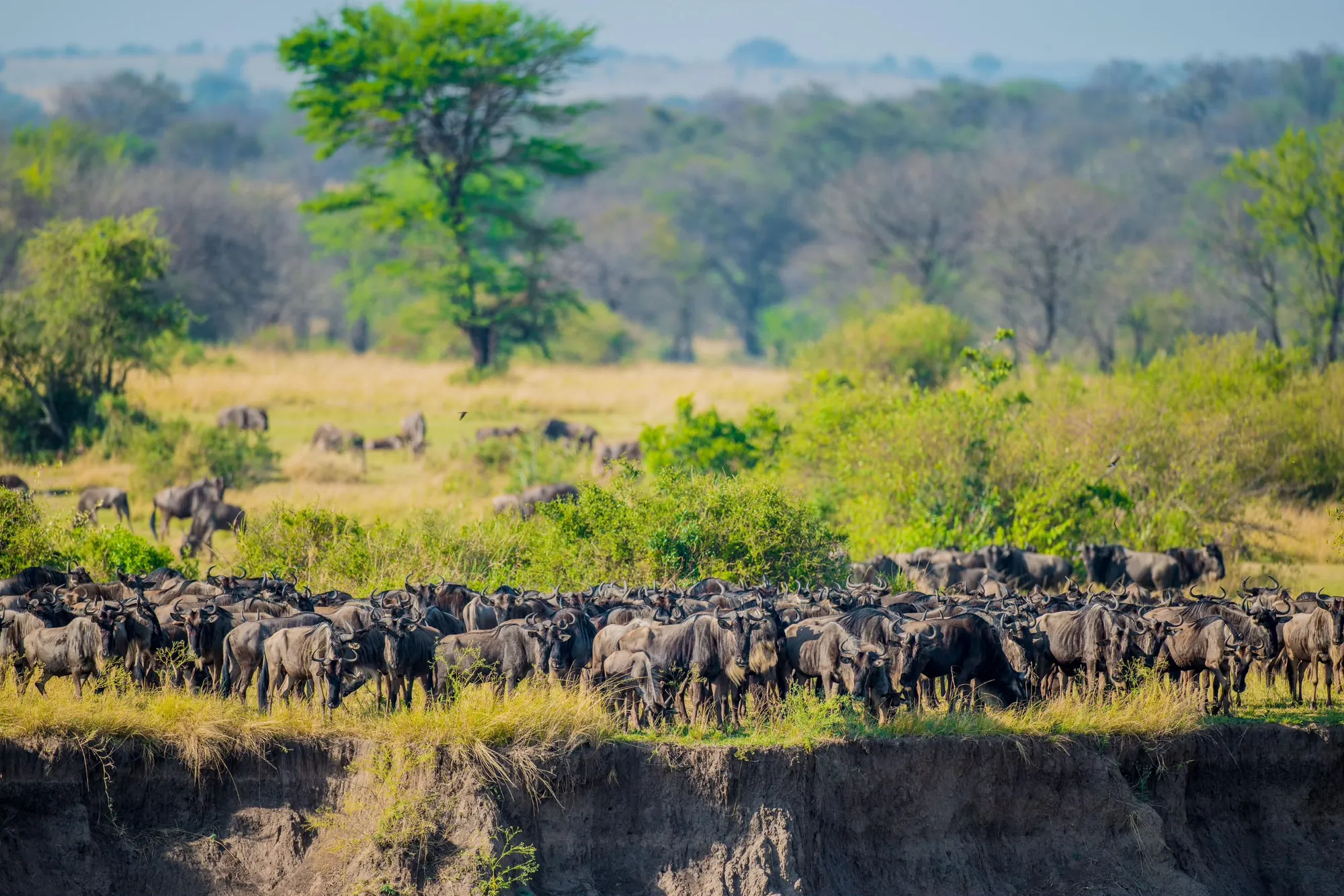
A wildebeest herd gathered on a riverbank in the Serengeti
 
 
 Private mid-range safari · 8 days
Tarangire
 
Serengeti
 
Ndutu
 
Ngorongoro Crater
 
Lake Manyara
Follow the herds

Birth of the Herds

Every year the wildebeest come south to the Ndutu plains to have their calves. On this 8-day calving season safari you sleep three nights in a migration camp set up near the herds, and see Tarangire, the Central Serengeti, the Ngorongoro Crater and Lake Manyara on the way there and back.

8days
7 nights
4
Parks
$2,905
From, per person
 ArushaDay 1
 TarangireDay 2
 SeroneraDay 3
 NdutuDays 4–6
 CraterDay 7
 ManyaraDay 8
Safari permit
TR · CV08M
Calving Season Camps
 
Duration
8 days · 7 nights
Departures 15 Dec – 30 Apr
Start / finish
Kilimanjaro Airport
Ends in Arusha on Day 8
Best months
Late Jan – early Mar
Most calves are born in this window
Travel style
Private · Mid-range
Guest house, farm lodges & migration camps
Group
1 – 6 guests
Your own 4×4 & guide, never shared
Pace
Moderate
Longest drive ≈ 4 hrs, with game en route

Why this 8-Day Calving Season Safari Works

The calving is the part of the Great Migration you can plan for most easily. From about January to March the herds stay on the short-grass plains of the south for weeks, rather than moving every few days as they do later in the year. That makes Ndutu a good bet for a first migration safari.

Instead of a fixed lodge, you stay in a mobile migration camp, a tented camp that moves through the year to stay near the herds. It is a simpler, closer-to-the-bush way to sleep, and it keeps the price of this trip well below our luxury version, with the same vehicle, guide and route.

The route

Out to Ndutu and Back

About 900 km in your own 4×4, out to the southern Serengeti and back through the crater. Tap a stop to see where it sits on the map.

  1. 01

    Arusha

    Pick-up at the airport and a night in a guest house

    1 night
  2. 02

    Tarangire National Park

    A day in the park, then a farm lodge in Karatu

    Night in Karatu
  3. 03

    Central Serengeti

    Big cats along the Seronera River

    1 night
  4. 04

    Ndutu plains

    Three nights in a migration camp near the herds

    3 nights
  5. 05

    Ngorongoro Crater

    Down to the crater floor, then Karatu

    Night in Karatu
  6. 06

    Lake Manyara National Park

    Forest, lake shore and the road to Arusha

    Day visit
Road ≈ 900 kmParks 4Ends Arusha
Day by day

The Journey

✦

This is how the trip usually runs. Your guide will adjust each day around the weather, the wildlife and what you most want to see.

Welcome to Arusha
Day01
Arusha

Arrive and Rest

Your guide will be waiting at Kilimanjaro International Airport. After a quick briefing on the week, you drive about an hour to Arusha, the town at the start of every northern safari.

Tonight is in a small guest house with a garden. Take it easy, have an early night and get ready for the road.

Good to know

Meals and drinks today are not included, as arrival times vary so much. Your host can point you to a good place to eat nearby.

  • Transfer≈ 1 hr by road
  • OvernightKahawa House or Arusha Villa Karamu Coffee
  • Meals
    BreakfastLunchDinner
Big grey giants
Day02
Arusha → Tarangire National Park → Karatu

A Day Among the Baobabs

It is about three hours from Arusha to Tarangire National Park. The park has one of the biggest elephant populations in northern Tanzania, and even in the green months, when there is water everywhere, you are likely to meet family groups feeding among the baobabs.

You game drive through the day and stop for a picnic lunch in the park. Look out for lions, giraffes, buffalo and the tiny dik-dik antelope under the bushes. In the evening you drive two hours to your lodge in the farmland around Karatu.

  • Drive≈ 3 hrs to park · 2 hrs to Karatu
  • OvernightMarera Valley Lodge or Marera View Lodge
  • Meals
    BreakfastLunchDinner
The big cats
Day03
Karatu → Central Serengeti

The Road to Seronera

Today’s drive takes you over the crater highlands and down onto the open Serengeti plains. It is about four hours to the centre of the park, and you game drive as you go. In calving season you may already see scattered herds of wildebeest and zebra near the road.

The Seronera River runs through the middle of the park, and its trees and kopjes are home to some of the Serengeti’s best-known lion prides and leopards. You spend the afternoon looking for them before reaching your tented camp.

Field note

The rocky kopjes act like islands in the grass. Lions use them as lookouts, and you’ll often see rock hyraxes and agama lizards sunning on the stones.

  • Drive≈ 4 hrs, with game en route
  • OvernightEmbalakai Authentic Camp or Into Wild Africa Luxury Tented Camp
  • Meals
    BreakfastLunchDinner
Southern plains
Day04
Central Serengeti → Ndutu

Into Calving Country

After breakfast you drive south for about three hours to the Ndutu area, on the border of the Serengeti and the Ngorongoro Conservation Area. Two lakes, Ndutu and Masek, sit here among acacia trees, and wide plains of short grass run out from them in every direction.

Your mobile camp is set up in this area for the calving season. After lunch you head out on your first afternoon drive, looking for the herds and the animals that follow them. Even when the wildebeest are further out, the woodland around the lakes has elephants, giraffes and resident lions.

Honest note

Calving depends on rain, and the herds can shift many kilometres in a few days. We can’t promise you’ll see a birth or where exactly the herds will be, but three nights here gives you a real chance to find them.

  • Drive≈ 3 hrs, with game en route
  • OvernightNyikani Migration Camp or Ang’ata Migration Camp
  • Meals
    BreakfastLunchDinner
A lion resting in the grass, seen on a 8-Day Calving Season Safari
Where the herds are, the predators follow
Days05–06
Ndutu plains

Dawn and Dusk With the Herds

You leave camp at about 6 am on both days, while it is still cool. This is when the herds are on the move and lions and cheetahs are most likely to be hunting. Your guide will scan the plains around Lake Ndutu and Lake Masek for groups of wildebeest with young calves, which stay close to their mothers from the first hour.

You come back to camp for breakfast, then lunch and a rest in the midday heat. In the late afternoon you go out again and stop on the plains for a sundowner as the light turns gold, before dinner in camp.

Field note

Hyenas are the most common hunters of wildebeest calves here, not lions. Watch for them trotting along the edges of the herds, especially in the early morning.

  • ActivityMorning and late afternoon game drives
  • OvernightNyikani Migration Camp or Ang’ata Migration Camp
  • Meals
    BreakfastLunchDinner
A boy looking through binoculars from a safari jeep
Searching the crater floor
Day07
Ndutu → Ngorongoro Crater → Karatu

One Day in the Caldera

You say goodbye to the plains and drive up to the Ngorongoro Crater. From the rim you go down the descent road to the floor, 600 metres below, where the grassland, swamps and soda lake support buffalo, zebras, wildebeest, lions and hyenas all year.

Keep your binoculars ready for black rhino, which are rare and often far away. You have a picnic lunch at the hippo pool, then drive out of the crater and down to Karatu for the night.

  • Drive≈ 3 hrs Ndutu to Karatu, via the crater
  • ActivityCrater game drive, about 5 hrs
  • OvernightMarera Valley Lodge or Marera View Lodge
  • Meals
    BreakfastLunchDinner
Last game drive
Day08
Karatu → Lake Manyara National Park → Arusha

Monkeys, Birds and the Lake

Lake Manyara National Park is just below Karatu, 30 minutes away. It starts in a shady forest fed by springs from the escarpment, full of baboons and blue monkeys, and opens onto grassy flats by the lake where elephants, buffalo and giraffes feed.

After a picnic lunch and your final game drive, you drive about three hours to Arusha, where your safari ends.

Where you sleep

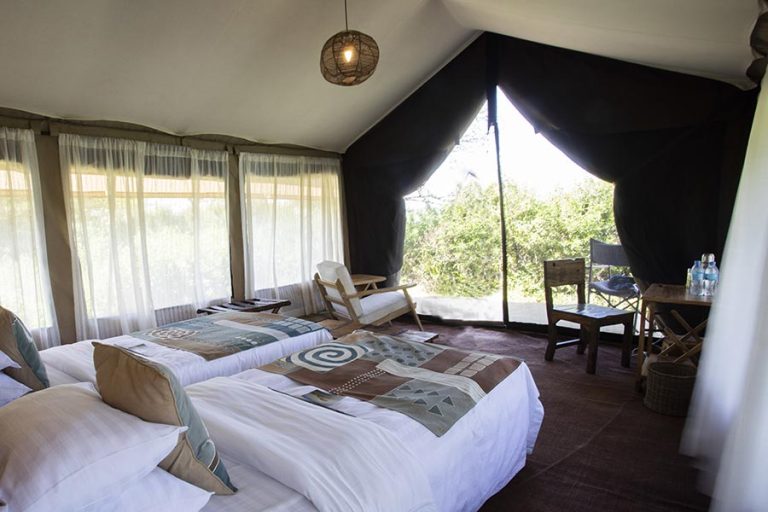
Tents Close to the Herds

Comfortable, simple places to sleep, with three nights in a seasonal camp on the Ndutu plains at the centre of the trip.

Nyikani Migration Camp

Southern Serengeti · Mobile camp · 3 nights on this trip.

1night

Kahawa House

Arusha · Guest house

A friendly, comfortable guest house with a garden, good home cooking and an easy drive to the airport. Or Arusha Villa Karamu Coffee, same standard.

GardenHome cooking
1night

Marera Valley Lodge

Karatu · Crater highlands

A comfortable lodge in the green farming valley below the crater, with good food and a quiet garden. Or Marera View Lodge, same standard.

GardenValley views
1night

Embalakai Authentic Camp

Central Serengeti

A proper safari tented camp, simple and comfortable, with the sounds of the plains at night. Or Into Wild Africa Luxury Camp, same standard.

Tented campBush dinners
3nights

Nyikani Migration Camp

Southern Serengeti · Mobile camp

A mobile camp that follows the herds, so in calving season it sits on the southern plains. Or Ang’ata Migration Camp, same standard.

Mobile camp
1night

Marera Valley Lodge

Karatu · Crater highlands

A comfortable lodge in the green farming valley below the crater, with good food and a quiet garden. Or Marera View Lodge, same standard.

GardenValley views

Lodges are shown “or similar”. If one is full we’ll swap in a lodge of the same standard in the same area, and you’ll approve it first.

Timing & price

Only in Calving Season

This itinerary runs from 15 December to 30 April, while the herds are in the south. Late January to early March is usually the busiest time for births. December and April are wetter, and in April the herds often start to drift north towards the central Serengeti.

Where the herds are, month by month This itinerary: mid-December – April
MonthWhere the herds areWhat’s happeningThis trip
JanuarySouthNdutu plainsThe herds graze the short, rich grass of the southern plains.This trip
FebruarySouthNdutu plainsCalving season. Thousands of calves are born every day.This trip
MarchSouthNdutu plainsCalves grow stronger while lions and cheetahs hunt close by.This trip
AprilSouth → CentralMoru & SeroneraThe long rains start and the columns begin to move north.This trip
MayCentralSeroneraMating season. Long lines of wildebeest head west.—
JuneWestGrumeti RiverFirst river crossings, with big crocodiles in the Grumeti.—
JulyNorthKogatendeThe first Mara River crossings of the year.—
AugustNorthMara RiverPeak season. Crossings happen almost every day.—
SeptemberNorthMara River & LamaiHuge herds cross back and forth over the river.—
OctoberNorthLobo & MaraThe last crossings, then the herds turn south.—
NovemberCentralLobo → SeroneraThe short rains arrive and the herds stream south.—
DecemberSouthNdutu plainsThe herds are back on the green southern plains.This trip
Price per personYour groupOnly datesCalving season15 Dec – 30 Apr
1solo guest$5,071USD per person
2guests$3,435USD per person
3guests$3,175USD per person
4–6guests$2,905USD per person
 Check dates →
15%

Travel as a bigger group and save. A group of 4–6 pays up to 15% less each than two, because you share the vehicle and guide.

Prices are in US dollars, per person, sharing one private vehicle and guide. This itinerary runs only on dates between 15 December and 30 April. Outside those months, ask us about our other Serengeti safaris.

No surprises

What's Included

Included / 08

  • Private 4×4 Land Cruiser with pop-up roofCharging points, cool box and binoculars on board
  • Your own professional English-speaking safari guide
  • All park, crater and conservation fees on the route
  • Game drive inside the Ngorongoro Crater
  • Accommodation as listed, or similar, including camp concession fees
  • All meals as shown in the day-by-day
  • Drinking water, coffee and tea on safari
  • Airport transfers on arrival and departure

Not included / 07

  • International flights to Kilimanjaro (JRO)
  • Tanzania visaSee our visa guide
  • Travel insuranceRequired. See our insurance guide
  • Optional activities and sightseeing not on the itinerary
  • Tips for guides and lodge staff
  • Laundry, drinks not listed and personal items
  • Local and domestic flights
Good questions

Before You Book

It is a tented camp that moves during the year to follow the herds, so in calving season it is set up on the southern plains. It is simpler than a lodge, and at night you hear the plains around you. Ask us and we’ll send photos and details of the camp you’ll be staying in.

No. Tens of thousands of calves are born in the peak weeks, but each birth is quick, and the herds move with the rain. Most guests on this trip see very young calves and predators near the herds. Seeing a birth itself takes luck.

The route, the days and your private vehicle and guide are the same. The difference is where you sleep: guest houses, farm lodges and seasonal camps here, and more polished lodges with drinks included on the luxury trip.

A light rain jacket, a warm layer for the crater highlands and early drives, and a dust or rain cover for your camera. Showers are usually short and in the afternoon, so most game drives stay dry.

Out on the plains,

The Year Begins

Tell us when you’d like to travel and we’ll reply within 24 hours with availability and a tailored quote.

Private vehicle & guideReply within 24 hrsTailor-made route
Calving Season Camps
8 days · from $2,905 pp
Loading itinerary…
Saved Trips