Cheetah Speed: The Science Behind the World's Fastest Land Animal
The documented cheetah speed represents a peak in biological evolution on the African nyika. In 1965, field measurements in Kenya clocked a record at 63.7 mph (102.5 km/h). These findings established the feline as a premier predator through measurable data rather than simple claims.
Recent GPS tracking studies in Botswana show that a wild cheetah can reach 58 mph (93 km/h) during a chase. However, average hunting runs usually clock in at a lower 33 mph (53.7 km/h). This animal can accelerate from zero to 60 mph in under three seconds, rivaling modern supercars.
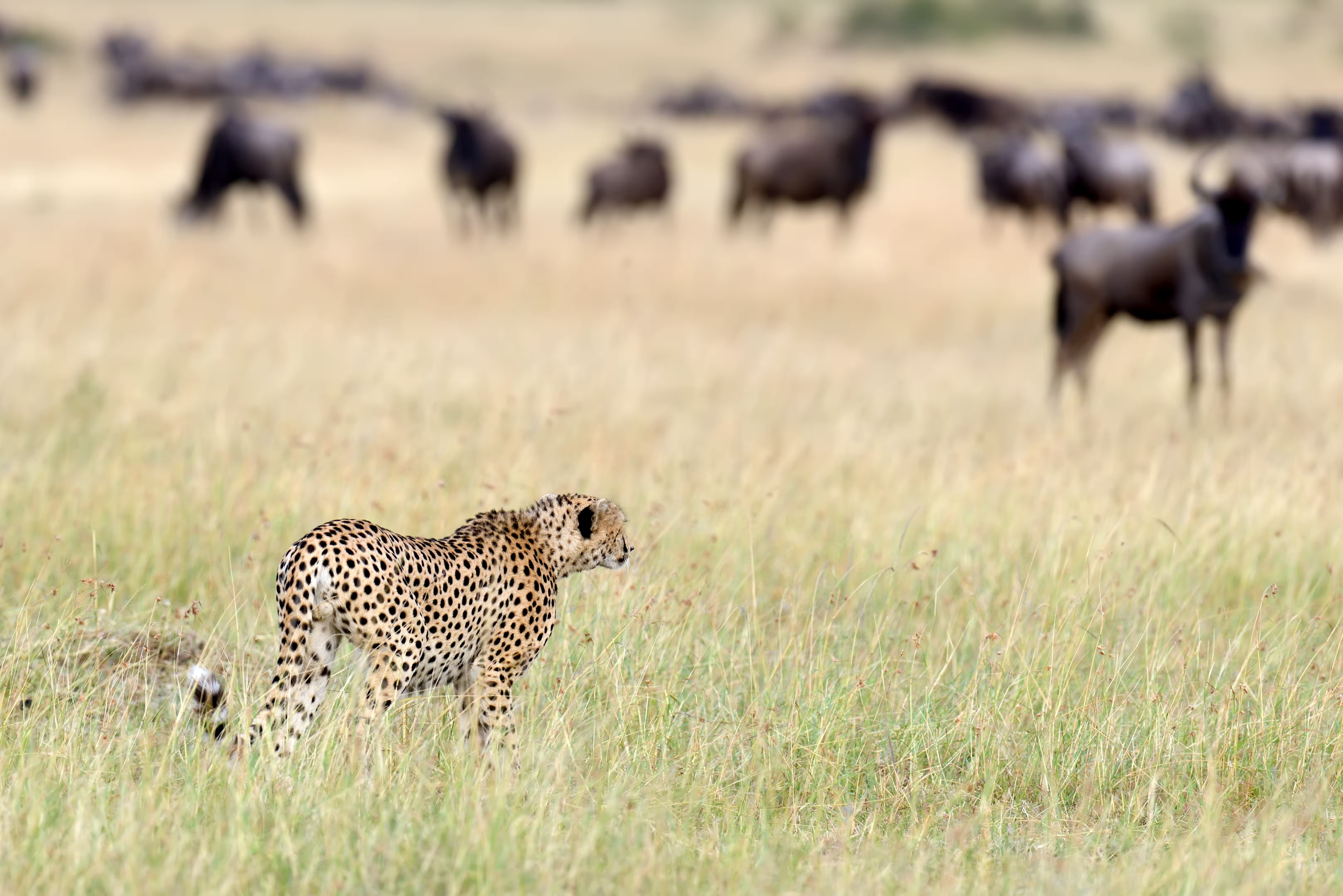
A single stride at full velocity spans seven meters. This massive distance allows the predator to cover terrain with incredible mechanical efficiency. We analyze the specific anatomical traits and physiological systems that support these intense bursts of power and movement.
Key Takeaways
- The highest reliably recorded velocity was 63.7 mph measured in Kenya in 1965.
- Modern GPS tracking in Botswana reveals wild maximums of 58 mph.
- Average hunting maneuvers occur at a sustainable 33 mph pace.
- Acceleration from 0 to 60 mph is achieved in less than three seconds.
- A single stride covers seven meters when the predator reaches top velocity.
What Makes the Cheetah the World's Fastest Land Animal
The cheetah, or Acinonyx jubatus, represents a singular lineage among cats, built entirely for speed. It is the only member of its genus, which distinguishes it from all other felids through unique physical traits. This species lacks the raw power of lions but excels as the fastest land animal through refined biological engineering.
The cheetah features a lightweight skeletal architecture that reduces mass while maintaining structural integrity. Its body includes a narrow waist and deep chest to minimize wind resistance during a sprint. Large nostril apertures facilitate rapid oxygen intake during a high-velocity pursuit on land.
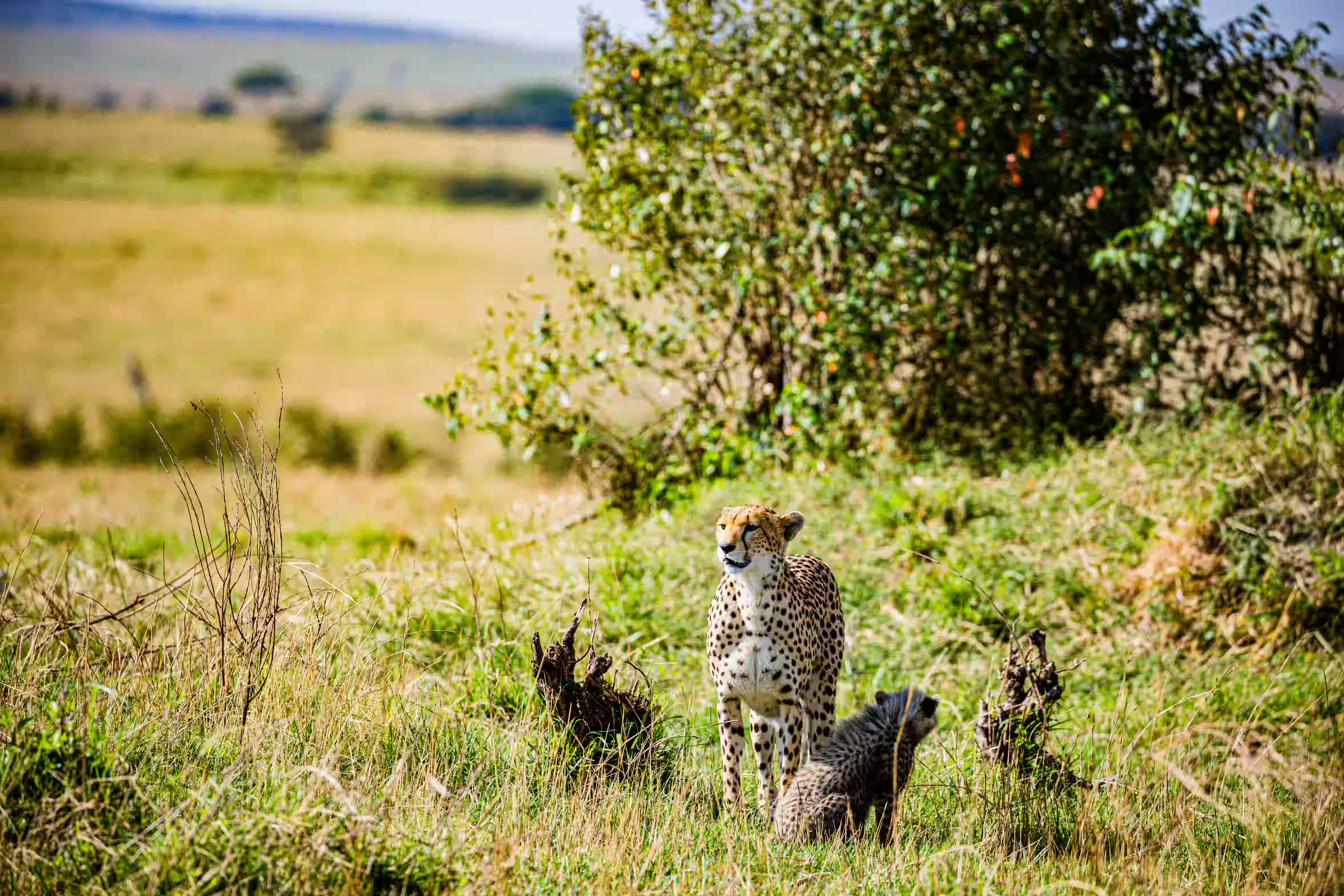
A specialized cardiovascular system supports this athletic performance. The cat possesses an oversized heart and enlarged lungs to move oxygen through a powerful arterial network. Unlike other cats, its semi-retractable claws act like running spikes to provide essential traction.
"The cheetah's anatomy is not a collection of parts, but a single, integrated system designed for the sprint."
The following measurements define the typical adult frame of this land animal:
| Feature | Standard Measurement |
|---|---|
| Body Weight | 75 to 125 pounds |
| Head-to-Hind Length | 40 to 60 inches |
| Shoulder Height | 28 to 36 inches |
| Tail Length | 24 to 32 inches |
This unique body structure allows for extreme flexibility. A supple spine enables the cheetah to cover up to seven meters in a single stride. Beyond being the fastest land animal, it remains the most specialized speed hunter, achieving its maximum speed through biological precision. It is a remarkable land animal.
Cheetah Speed Records: Measuring the Fastest Cat on Earth
Determining the true velocity of the world's fastest land mammal requires rigorous field data and precise timing. We rely on documented scientific studies rather than anecdotal evidence to understand these feline limits. Reliable data points help us distinguish between theoretical potential and operational reality in the wild.
Historical Speed Measurements and the 1965 Kenya Record
In 1965, a landmark study in Kenya provided the first rigorous measurement of cheetah speed. A tame female was trained to run a 200-meter straight course while chasing a Land Rover. Researchers used a handheld stopwatch to record the time over three flat-out attempts.
This cat averaged a top speed of 63.7 mph (102.5 km/h). During the tests, she received half-hour rest intervals between each sprint to ensure maximum effort. This remained the benchmark for the fastest land mammal for many decades.
Later, in 2015, a cheetah named Sarah from the Cincinnati Zoo set a new standard under controlled conditions. She achieved a peak of 61 mph over a 100-meter track. These figures remain more reliable than unverified claims of animals reaching 74.5 mph or 68 mph without proper gear.
Modern GPS Tracking and Technology-Based Studies
Recent studies in Botswana utilized high-tech GPS collars equipped with sensitive motion sensors. These collars tracked wild cheetahs across the wooded savanna. The data revealed that wild speeds rarely hit the theoretical maximum recorded in captivity.

While one wild animal reached 58 mph, the average hunting speed was significantly lower at 33 mph. Most hunts occur at this slower rate because terrain and pursuit angles require agility. Scientists also confirmed a reliable straight-line speed of 64.5 mph as a mean of three distinct runs.
Explosive Acceleration: Zero to 60 in Three Seconds
The most impressive feat of the cheetah is its rapid acceleration. It can transition from a standstill to 60 mph in under three seconds. This capability exceeds the performance metrics of many high-performance sports cars designed for the track.
Cheetahs use this power to close the gap on prey instantly before they can react. Extreme physical force is generated during these bursts, though reaching speeds of 65 mph is energy-intensive. Cheetahs prioritize this quick start over sustaining a 55 mph pace for long periods.
Environmental factors like vegetation density often dictate the maximum top speed during a chase. Open plains allow for speeds that wooded areas simply cannot support. Consequently, the top speed seen in the wild is a balance between physics and habitat necessity.
| Study Location | Subject Type | Peak Recorded Velocity | Measurement Tool |
|---|---|---|---|
| Kenya Field Study | Trained Female | 63.7 mph | Stopwatch/Pacer |
| Cincinnati Zoo | Sarah (Captive) | 61 mph | 100m Laser Track |
| Botswana Savanna | Wild Population | 58 mph | GPS Motion Collar |
| Hunting Average | Wild Population | 33 mph | GPS Telemetry |
| Acceleration Mark | General Study | 60 mph | Electronic Timing |
Anatomical Adaptations That Power Cheetah Speed
Evolution has sculpted the cheetah into a specialized sprinter. It removes extra mass to favor pure speed and kinetic efficiency. This species works as a single system where every part supports high-speed hunting.
The predator possesses a lightweight skeletal construction. It minimizes mass while keeping the strength needed for a sprint. This focus on efficiency allows for rapid movement across the African savanna.
Lightweight Frame and Skeletal Architecture
The body of this hunter features a thin frame with a narrow waist. A deep chest provides room for a large heart and lungs. This streamlined profile reduces wind resistance during a chase.
A unique feature is the shoulder blade. It does not attach to the collar bone. This allows the shoulders to rotate freely and extends the reach of the front legs.
The entire skeleton acts like a spring. It stores and releases energy with each motion. This mechanical advantage is vital for maintaining a high pace.
Long Limbs and Seven-Meter Stride Length
Long and slender limbs help cheetahs maximize their reach. Specialized muscles allow for a greater swing amplitude. This directly increases the rate of acceleration from a standstill.
At top speed, the stride length reaches an impressive seven meters. The hip joint pivots to allow the rear legs to stretch far apart. This happens when the body is fully extended mid-air.
Semi-Retractable Claws and Specialized Foot Pads
The feet of this animal differ from other cats. Their foot pads are hard and less rounded. They function like tire treads to provide increased traction during sharp turns.
The claws are short, blunt, and semi-retractable. They stay out even when the animal is walking. They work like track shoe cleats to grip the ground firmly.
This grip is essential for directional changes. Without it, the animal would slide out of control at high velocities. The interaction between the claw and the earth is a key factor in hunting success.
The Muscular Tail as a High-Speed Stabilizer
A long, muscular tail serves as a dynamic rudder. It measures between 24 and 32 inches in length. It acts as a counterbalance to the weight of the body.
Swinging the tail back and forth helps the animal adjust to prey movement. This allows for sudden, sharp turns without losing balance. It is a critical tool for navigating the terrain at seventy miles per hour.
The cheetah’s tail is the ultimate stabilizer, preventing the cat from spinning out during the most aggressive maneuvers.
| Anatomical Feature | Primary Function | Mechanical Benefit |
|---|---|---|
| Shoulder Blade | Free Rotation | Increased reach and stride length |
| Foot Pads | Surface Traction | Functions like high-performance tire treads |
| Blunt Claws | Ground Grip | Provides stability like track shoe cleats |
| Muscular Tail | Counterbalance | Acts as a rudder for sharp directional turns |
The Biomechanics Behind the Sprint
The mechanical efficiency of a cheetah's sprint depends on a unique skeletal structure and specialized energy pathways. This animal functions as a biological machine where every component serves the requirement of rapid acceleration. We observe these adaptations as a synthesis of formal precision and functional necessity.
Flexible Spine and Hip-Shoulder Extension
The spine of the cheetah acts like a high-tension spring. It coils and extends to maximize the distance covered in each movement. The shoulder blade does not attach to the collarbone, which allows the shoulders to move with absolute freedom during a chase.
The hips pivot to allow the rear legs to stretch far apart when the body is fully extended. Such extreme extension creates a stride length of six to seven meters per bound. This skeletal flexibility is a primary driver behind the explosive speed of the cat.
Enhanced Cardiovascular and Respiratory Systems
To sustain high speeds, the species requires an enhanced internal cooling and fueling system. The cat features an enlarged heart and expansive lungs connected to a reinforced arterial network. This system circulates oxygen through the bloodstream with remarkable efficiency.
Strong arteries and adrenal glands facilitate this rapid delivery of nutrients to the muscles. The efficient circulation of oxygen allows the cat to maintain its intensity throughout the chase. However, the physiological design prioritizes short-term power over long-distance endurance.
Anaerobic Energy Sources and Muscle Power
High-intensity bursts rely on anaerobic energy sources like glycogen and creatine phosphate. These chemical stores provide the power for the animal to reach peak speed in seconds. Because these resources are finite, the effort can only last for a short time, typically 30 to 45 seconds.
"The cheetah's physical form is a masterpiece of specialized engineering, where skeletal flexibility and metabolic power converge."
Once these anaerobic stores are depleted, the cat must stop to recover. The metabolic cost of such explosive power is substantial. This limitation defines the tactical nature of the hunt, requiring the predator to get as close as possible before launching.
Four Strides Per Second: The Running Cycle Explained
During a full sprint, the cat completes four full cycles every second. There are two specific times in one cycle when the body is completely off the ground. The first occurs when all four legs are fully extended in mid-air.
The second phase occurs when the limbs are bunched under the chest. This double-flight phase allows the cheetah to cover distance without the friction of contact. Maintaining top speed at these speeds requires the species to balance perfectly between these two states.
| Biomechanical Feature | Functional Advantage | Stride Impact |
|---|---|---|
| Flexible Spine | Spring-like energy return | Increases extension reach |
| Unattached Shoulders | Extended forelimb rotation | Maximizes ground coverage |
| Anaerobic Pathways | Rapid power output | Sustains peak velocity |
Cheetah Hunting Behavior and Speed Application
Unlike the nocturnal habits of lions, cheetahs utilize the clarity of daylight to secure their meals. These predators operate as visual hunters, relying on keen eyesight rather than scent to track movement. This strategic choice allows them to avoid direct competition with larger animals that dominate the landscape after dark.
Diurnal Hunting and Visual Prey Detection
Hunting efforts occur primarily during the early morning and late afternoon hours. During the heat of the day, these cats often seek out elevated vantage points to scan the surrounding landscape. We frequently observe them climbing termite mounds or low-hanging branches of "playtrees" to identify potential targets.
This elevation provides a clear view of potential prey across the flat horizon. In the wild, identifying a target from a distance is the first step in a high-stakes energy calculation. The hunting success of cheetahs depends heavily on this initial observation phase before the physical exertion begins.
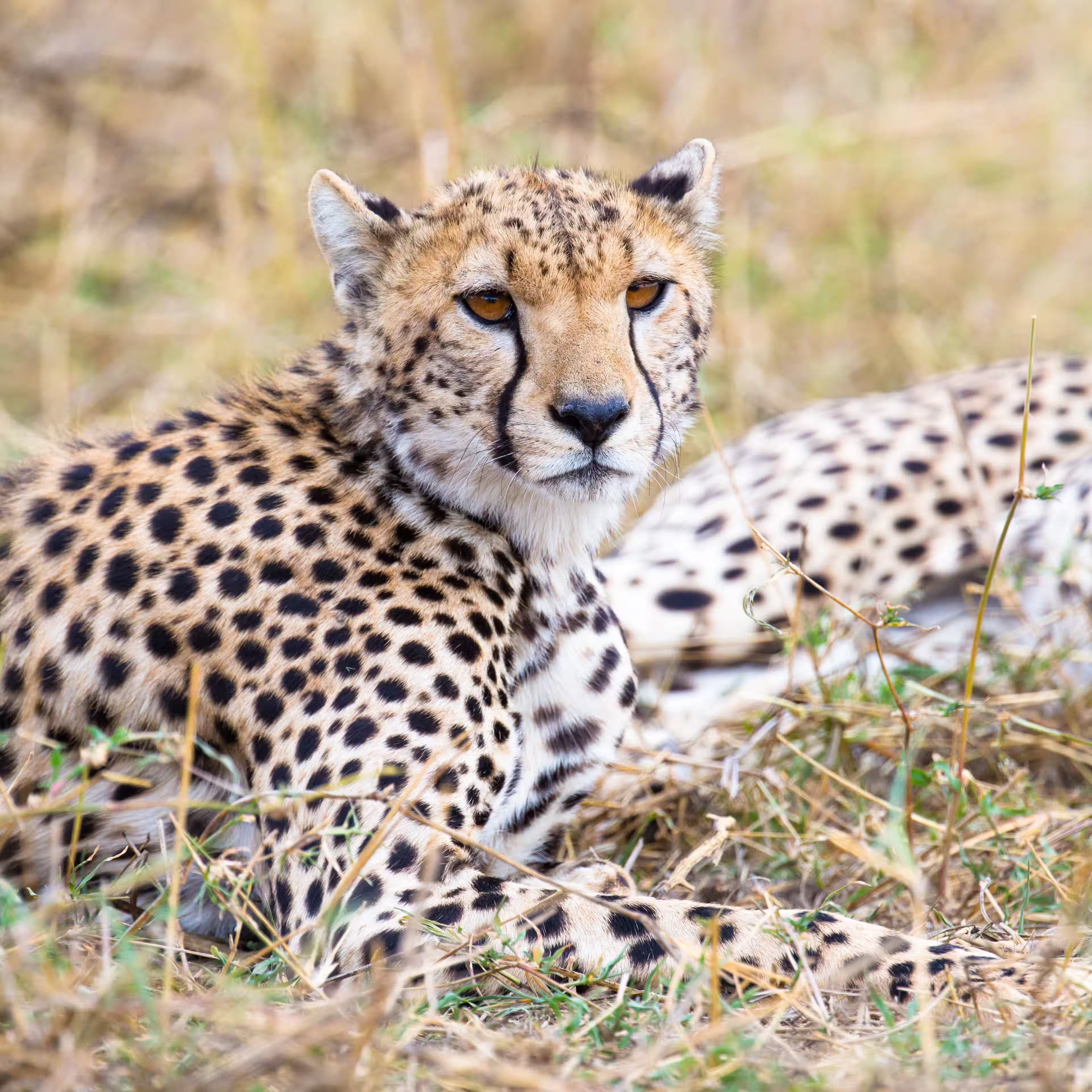
The Multi-Phase Chase Sequence
A successful hunt follows a disciplined sequence: visual detection, the approach stalk, the high-speed chase, and the final trip. The cheetah must move stealthily through tall grass to get within a functional striking distance. Once the sprint begins, the cat reaches incredible speeds to close the gap before the target can react.
The chase rarely exceeds 30 seconds due to the extreme physical toll of such speed. If cheetahs do not trip their target quickly, they must abandon the effort to prevent dangerous overheating. The hunting process ends with a precise suffocation bite to the throat once the animal is down.
| Target Species | Escape Strategy | Predation Risk |
|---|---|---|
| Thomson's Gazelles | High-endurance running | High |
| Impala | Agile leaping | Moderate |
| Hares & Birds | Erratic movement | Low |
| Young Calves | Proximity to herd | Moderate |
Preferred Prey: Thomson's Gazelles and Small Antelopes
The primary targets for these cats are Thomson's gazelles and other small to medium-sized antelopes. They also hunt hares and birds when larger targets are scarce. The prey escaping often depends on the terrain and the length of the initial rush.
"A cheetah must catch its meal in under a minute or risk total physical collapse from anaerobic exhaustion."
Thomson's gazelles represent a unique challenge because of their high-endurance capabilities and "stotting" behavior. While the cheetah is faster, the gazelle can maintain its pace for a much longer time. This dynamic between cheetahs and their prey illustrates a classic evolutionary struggle on the open savanna.
Speed Comparisons: Cheetahs Among the Animal Kingdom
The cheetah holds a distinct title, yet its specialized sprinting ability exists alongside diverse biological engineering in other species. While the cheetah is the fastest land animal over short bursts, we must look at the broader world of locomotion to see the full picture. Many animals have evolved unique ways to travel through their specific environments using varied speeds.
To understand these capabilities, we measure performance through both absolute velocity and endurance across different terrains. This comparative data reveals how evolution prioritizes either rapid acceleration or sustained movement based on the requirements of the habitat.
Cheetahs vs. Pronghorns and Other Fast Mammals
The fastest land pursuit requires more than just raw speed. On the African plains, cheetahs compete for survival alongside species like the Thomson’s gazelle, which hits 50.0 mph. Unlike lions, these cats rely on a narrow margin of velocity to secure a meal.
The pronghorn is a notable rival from the North American land. While the cat wins the sprint, the pronghorn maintains 35 mph for 6 km and 42 mph for 1.6 km. In peak conditions, the pronghorn can reach 60 mph, though 50 mph is more common for this animal.
"The survival of a species often rests on a few miles per hour difference between the hunter and the hunted."
| Species | Peak mph | Metric Type |
|---|---|---|
| Cheetah | 70 mph | Land Sprint |
| Pronghorn | 60 mph | Endurance |
| Springbok | 55 mph | Land Sprint |
| Ostrich | 60 mph | Avian Land |
Body Length Per Second: Relative Speed Metrics
Scaling the speed of an animal by its body size changes the perspective on who is truly the world fastest. The cheetah moves at 16 body lengths per second. In contrast, the Southern Californian mite covers 322 body lengths per second.
If humans could move at that relative rate, they would travel at 1,300 mph. The Australian tiger beetle is another small powerhouse. It reaches 4.2 mph, which equates to 171 body lengths per second, making it a record holder among small terrestrial animals.
Fastest Animals in Air, Land, and Sea
The animal kingdom crown for absolute velocity belongs to birds, specifically the peregrine falcon. During a specialized hunting dive, it exceeds 190 mph. In the water, reports of the black marlin suggest high speeds, though marine measurements often lack rigorous data protocols.
On the ground, the ostrich remains the world fastest bird on two legs. It can maintain between 38 mph and 60 mph. These varying records highlight how different birds and land creatures adapt their animal biology to conquer their respective domains.
Physical Limitations and the Cost of Speed
While reaching speeds of nearly 70 mph is impressive, the metabolic cost of such exertion dictates the daily rhythm of cheetahs. These predators operate on a narrow margin of energy. Every speed burst is a high-stakes gamble against physical exhaustion in the wild.
The 30-Second Rule: Endurance and Recovery
Muscle energy stores like glycogen power the short, violent sprint. This anaerobic system provides massive power but depletes in less than a minute. They must catch their prey within 30 to 45 seconds or stop the chase entirely.
The animal cannot maintain its peak rate of motion for long. After a hunt, the cat requires a long time to recover. This window of rest is critical for the species to avoid total physiological collapse.
Overheating and Thermoregulation Challenges
Excessive body heat is the primary enemy of the high-speed chase. Metabolic heat builds up faster than the body can shed it. Because of this, most of the day is spent under the protection of large, shady trees.
We observe that they avoid hunting during the hottest hours to prevent fatal overheating. This crepuscular pattern has served them well for many years. By moving in the morning and evening, they keep their body temperature stable.
Vulnerability to Larger Predators After Hunts
An exhausted hunter is a target for others. Once the chase ends, lions and hyenas often move in to steal the kill. The cat is frequently too tired to fight back against these larger predators.
Even the specialized tail used for steering cannot protect them during this recovery time. They often lose their meal because they must prioritize breathing over eating. This harsh reality of life on the land keeps their population in balance.
Terrain and Habitat Requirements for Maximum Speed
The habitat plays a major role in how fast the cat actually runs. In wooded areas, trees and brush limit their movement. A study in Botswana showed that they often hunt at a lower velocity than their maximum potential.
| Habitat Type | Typical Hunt (mph) | Peak Potential (mph) |
|---|---|---|
| Wooded Savanna | 33 mph | 58 mph |
| Open Grassland | 55 mph | 70 mph |
| Scrubland | 45 mph | 60 mph |
| Broken Ground | 30 mph | 55 mph |
| Average Environment | 40 mph | 65 mph |
The environment dictates whether the cat can use its full speed safely. Without open plains, the 68 or 70 bursts remain a theoretical limit rather than a daily tool. Despite these constraints, their role as a top hunter remains vital to the savanna ecosystem.
Conclusion
The IUCN lists the cheetah as a Vulnerable species today. These cats now live on only 9 percent of their old land. In the wild, researchers estimate that fewer than 7,100 adults remain to carry on the life of the lineage.
Thousands of years ago, cheetahs lived across the African continent and deep into Asia. This world fastest hunter even lived in North America before the Great Ice Age. Today, Namibia serves as the "Cheetah Capital of the World."
The legendary cheetah speed results from an integrated body system. It hits a top speed between 58 and 61 mph during active hunts in the savanna. Some older records from 1965 suggest a burst of 64 mph is possible under the right conditions.
This acceleration helps the animal catch agile prey like the Thomson's gazelle. A single stride covers up to 23 feet of ground. The animal uses its long legs to push off the dirt with incredible force.
Such speed requires immense amounts of oxygen and energy. Sprints usually last only 30 seconds before the fastest land animal must rest. During this time, larger predators like lions often steal the hard-earned meal.
Protecting the life of this land animal requires close work with humans. Most individuals live on rural farms rather than in protected parks. We must manage the habitat carefully over the next ten years to ensure this species survives interaction with humans.
| Performance Metric | Data Point | Operational Significance |
|---|---|---|
| Measured top speed | 63.7 mph | Maximum historical speed |
| Standard acceleration | 0 to 60 mph | Achieved in sub-three seconds |
| Stride length | 23 feet | Covers vast dry land |
| Sprint Velocity | 55 mph average | Cycles four times per second |
FAQ
What is the maximum recorded velocity of the fastest land animal?
The cheetah speed can reach 70 mph in short bursts. This top speed covers the ground when the cat pursues prey. Such reaching speeds occur over limited distances in its natural wild habitat. Navigating the terrain at these speeds requires immense physical precision.
How does the body support such high acceleration?
A long stride of 23 feet allows the species to maintain a rapid rate. The muscular tail acts as a stabilizer for the legs during sharp turns. These cats use semi-retractable claws to grip the earth better than other animals in the world.
How does this predator compare to lions or humans?
While lions hunt in groups, this cheetah hunts alone during the day. Compared to humans, the hunter achieves a much higher speed. While some birds are faster in flight, this animal remains the world fastest on land.
What are the primary targets and biological costs of hunting?
Preferred prey includes gazelles and small antelopes. The hunting process requires massive oxygen intake to fuel the muscles. After a chase, the felid needs time for rest and recovery to lower its heart rate.
How many times a day does the fastest land hunter pursue a target?
It may attempt several chases depending on energy levels. The length of the chase is usually short to prevent exhaustion. Throughout its life of 12 years, these cheetahs must avoid larger predators to ensure survival on the open land.