
Seven Summits: The Complete List and What It Takes to Climb Each One
Scaling the highest point on each continent is a measurable objective for modern mountaineers. These specific peaks span the seven major landmasses of the world. Precision and endurance define the long journey to these extreme locations.
Richard Bass set the standard for this historical challenge. On April 30, 1985, he successfully reached the top of all highest mountains on the list. His achievement established a framework that many adventure expedition teams follow today.
Each mountain requires specific planning and careful weather monitoring. The quest to reach these summits relies on logistical expertise and documented terrain data. Success rates remain modest despite the increased access to advanced climbing equipment.
Key Takeaways
- The challenge involves reaching the tallest point on all traditional continents.
- Richard Bass became the first person to complete the full set in 1985.
- Technical requirements and weather patterns differ greatly at each site.
- Climbers must commit significant time and financial resources to succeed.
- Fewer than 750 people have documented a successful completion of the list.
What Are the Seven Summits?
Mountaineering history defines the seven summits as a collection of the most elevated points across the globe's primary landmasses. This objective gained prominence between 1983 and 1985 when Richard Bass and Frank Wells pursued the zenith of every region. They established a framework that identified the highest mountain on each landmass based on geographical convention rather than technical climbing criteria.
Over four decades, the act of climbing seven summits has transitioned from a pioneering feat to a structured adventure objective. Completing the seven summits requires navigating terrain that ranges from non-technical trekking paths to hazardous alpine routes. Each expedition demands progressive skill development to manage unique geological and atmospheric conditions safely.
| Mountain Peak | Continent Location | Recorded Elevation |
|---|---|---|
| Mount Everest | Asia | 29,032 ft |
| Aconcagua | South America | 22,837 ft |
| Denali | North America | 20,310 ft |
Because geographical definitions vary across continents, climbers often encounter more than one version of the official list. Standing on the highest mountain of each continent remains a definitive pursuit for those seeking to master the Earth's diverse topography. This list continues to evolve, representing the pinnacle of high-altitude achievement for modern explorers.
Understanding the Different Seven Summits Lists
Defining the definitive seven summits requires navigating a complex landscape of tectonic plates and historical cartography. Geographical interpretations vary across different eras and academic circles. This leads to several versions of the list based on how we define a continent.

The Bass List vs. The Messner List
Richard Bass completed the first version of the list in 1985. He designated Mount Kosciuszko as the highest point for the Australian landmass. His choice reflected a traditional view of the mainland Australian borders.
Reinhold Messner later proposed a more challenging alternative for the seven summits. He argued that Puncak Jaya, located in Indonesia, represented the true high point of the Australasian shelf. This version gained favor among elite climbers due to the technical nature of the climb.
Patrick Morrow became the first person to complete the Messner version in 1986. He believed that Puncak Jaya offered a more authentic mountaineering objective. Most modern professionals now recognize the Messner version as the gold standard.
The Debate: Mont Blanc vs. Mount Elbrus
The European high point remains a subject of geological debate. Historically, many explorers regarded Mont Blanc as the highest mountain on the European landmass. This view stood firm throughout the mid-20th century.
The status changed when geographers redefined the Greater Caucasus watershed as the continental boundary. This shift placed Mount Elbrus within Europe, surpassing Mont Blanc in elevation. Most contemporary records now list Elbrus as the primary target for this region.
The Debate: Puncak Jaya vs. Mount Kosciuszko
The contrast between these two peaks is significant in terms of difficulty. Mount Kosciuszko stands at 2,228 meters and requires only a basic walk from a nearby parking area. It represents the highest point of the Australian mainland.
In contrast, Puncak Jaya reaches 4,884 meters and demands expert rock climbing skills. It sits on the Sahul Shelf, which many geologists consider part of the same continental structure. Many climbers choose to summit both to ensure they fulfill every seven summits interpretation.
| Peak Name | Elevation | List Version |
|---|---|---|
| Mount Kosciuszko | 2,228 m | Bass |
| Puncak Jaya | 4,884 m | Messner |
| Mont Blanc | 4,810 m | Historical |
| Mount Elbrus | 5,642 m | Modern |
The Seven Summits Complete List by Elevation
The vertical profile of the seven summits shows a massive disparity between high-altitude giants and technical peaks. The highest mountain on Earth, mount everest, leads the list at 8,849 meters. It represents the ultimate physical limit for climbers globally.
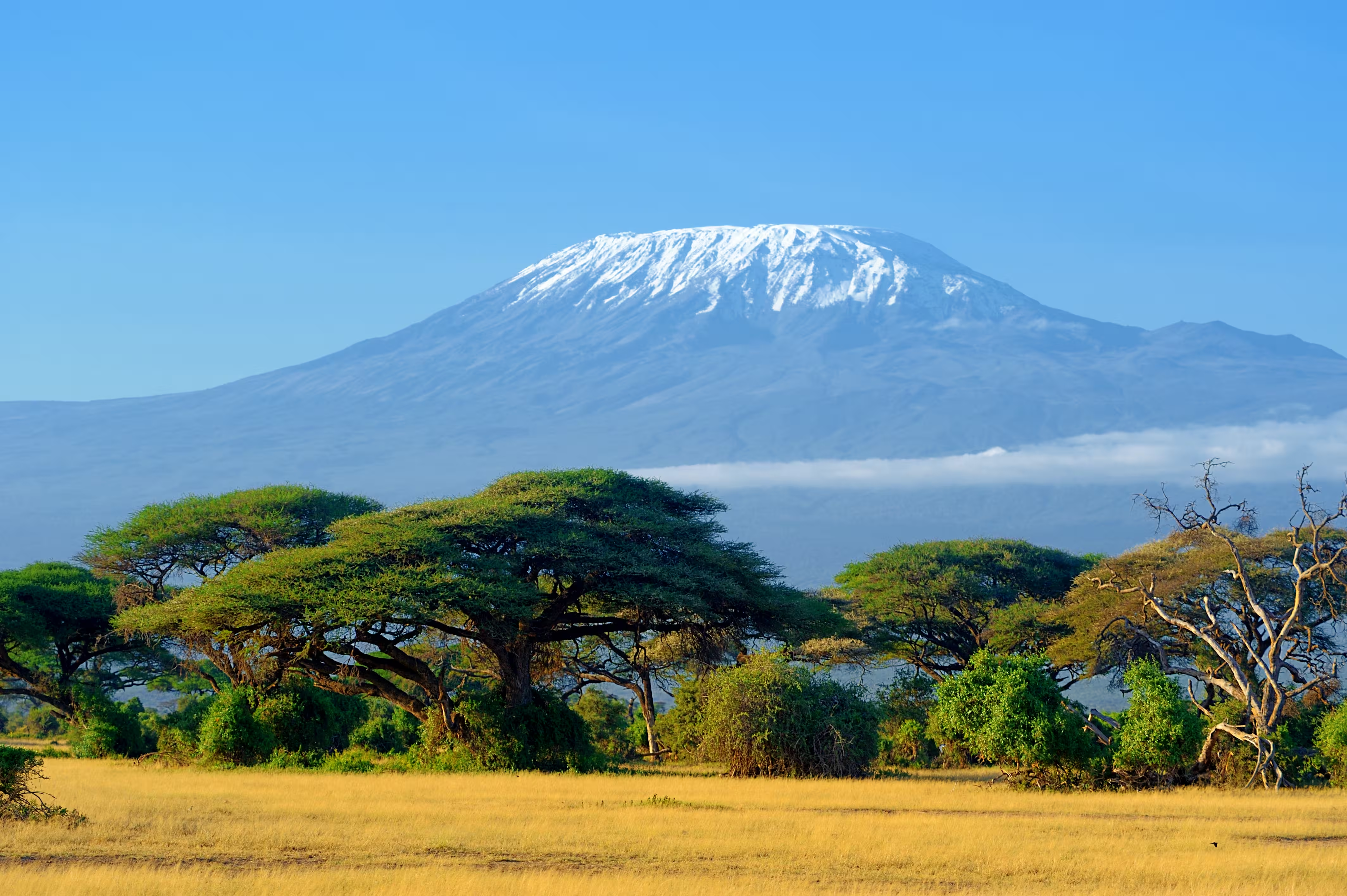
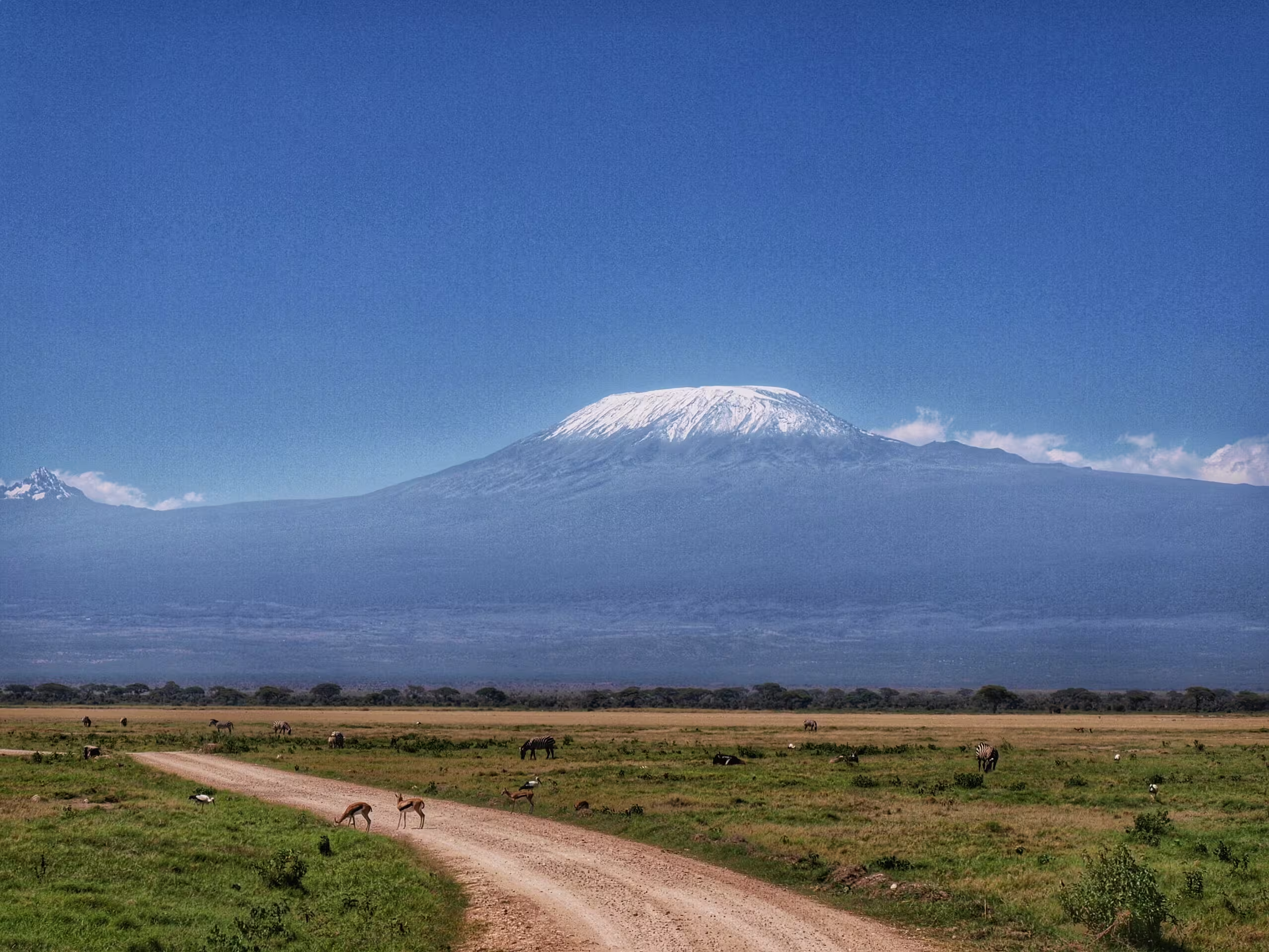
Aconcagua follows at 6,961 meters as the highest point in South America and the Western Hemisphere. In North America, Denali reaches 6,194 meters with a staggering 6,144 meters of prominence. Kilimanjaro stands as Africa's highest freestanding volcanic mass at 5,895 meters.
Mount Elbrus achieves 5,642 meters in the Greater Caucasus range. Mount Vinson rises 4,892 meters above the Antarctic ice in the Sentinel Range. Puncak Jaya measures 4,884 meters in Indonesia to complete the technical Messner summits.
The vertical gap between Everest and the lower peaks spans nearly 4,000 meters. This elevation range illustrates the diverse geographical and physiological challenges of the circuit. We observe that each peak requires specific acclimatization strategies and physical preparation.
| Mountain Name | Continent | Elevation (Meters) | Elevation (Feet) |
|---|---|---|---|
| Mount Everest | Asia | 8,849 m | 29,032 ft |
| Aconcagua | South America | 6,961 m | 22,837 ft |
| Denali | North America | 6,194 m | 20,310 ft |
| Kilimanjaro | Africa | 5,895 m | 19,341 ft |
| Mount Elbrus | Europe | 5,642 m | 18,510 ft |
| Mount Vinson | Antarctica | 4,892 m | 16,050 ft |
| Puncak Jaya | Australasia | 4,884 m | 16,024 ft |
| Mount Kosciuszko | Australia | 2,228 m | 7,310 ft |
Mount Everest: Asia's Highest Peak
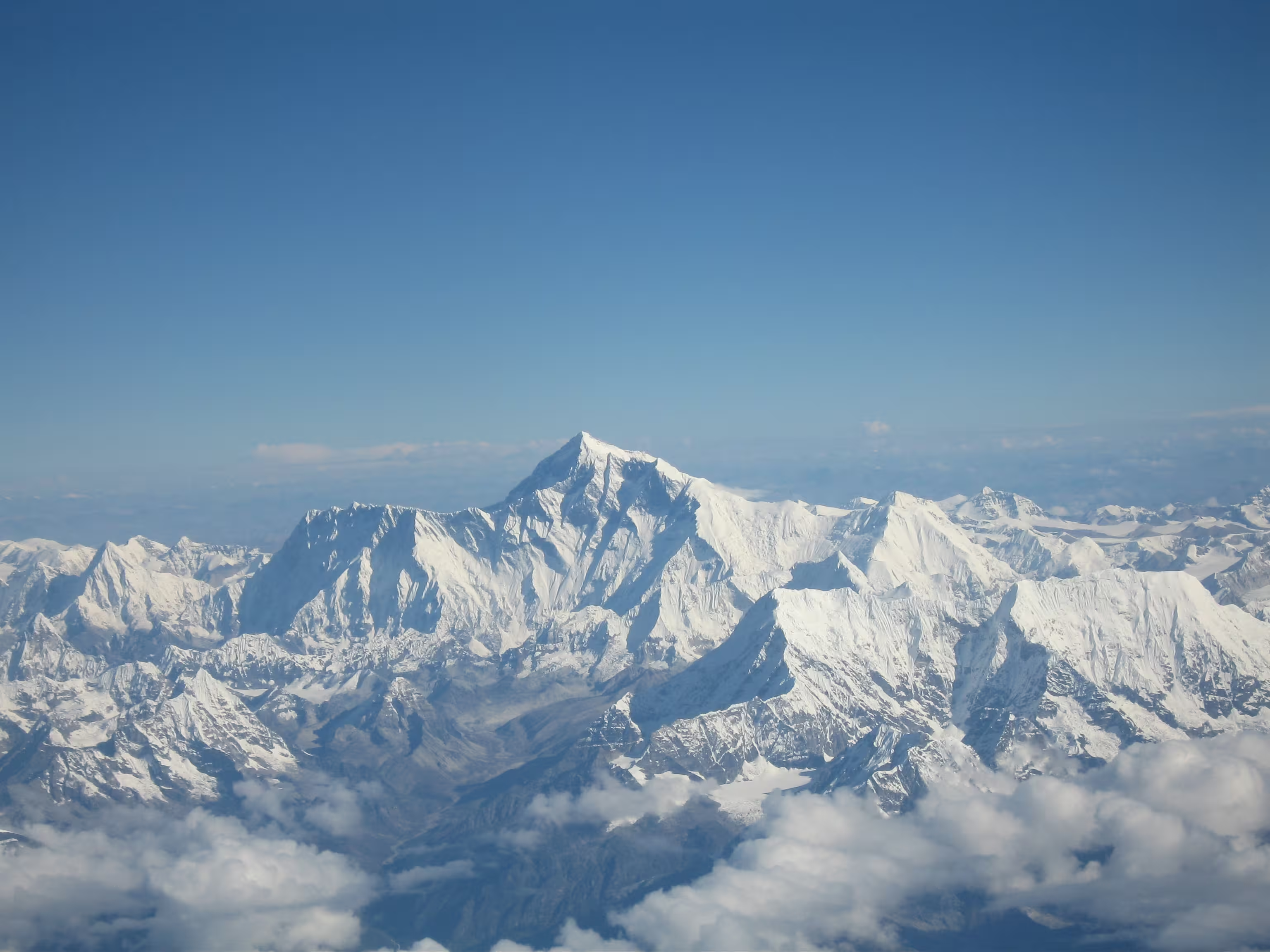
Mount Everest represents the highest geological point on the Earth’s crust. It stands directly on the border between China and Nepal in the Himalayan range. This peak defines the limits of human endurance and remains the primary goal for elite mountaineers.
The mountain first saw a documented human ascent in 1953. Since then, it has become the benchmark for high-altitude achievement. We view it as the most demanding test within the Seven Summits list.
Elevation and Location
The peak of Mount Everest reaches a verified elevation of 8,849 meters, or 29,029 feet. It is located at 27°59′17″N 86°55′30″E. This massive landform serves as a natural divider between the Tibetan Plateau and the Nepalese highlands.
Climbing Difficulty and Technical Requirements
The standard route requires moving through the Khumbu Icefall and the Western Cwm. Climbers must navigate several vertical stages, including Camp 2 and the steep slopes of Camp 3. The final push from the South Col demands extreme physical power to reach the summit.
Death Rate and Safety Considerations
The historical death rate on the mountain stays near 1.3%. Better weather forecasting and modern logistics help reduce these risks. Each expedition now relies heavily on precise oxygen management and updated safety equipment.
Duration and Climbing Season
A standard climbing cycle takes about two months to complete. Most teams reach the 5,300-meter base camp in late March. This schedule allows enough time for the body to adapt to the thin air at high altitude.
Cost and Success Rate
Operational costs for a full trip span from $40,000 to $85,000. Nepalese government permits alone cost more than $11,000 per person. Teams led by Western guides currently see a success rate of roughly 50%.
Aconcagua: South America's Highest Peak
Located in the Mendoza province of Argentina, Aconcagua represents the highest peak outside of the Himalayas. We observe this massif as a sentinel of the Andes, offering a gateway to high-altitude mountaineering for those seeking the roof of the Americas.
Elevation and Location
Aconcagua reaches an official elevation of 6,961 meters (22,838 ft) at coordinates 32°39′11″S 70°00′42″W. It dominates the landscape of western Argentina near the Chilean border. The 1897 first ascent established routes that remain standard approaches for modern teams today.
Climbing Difficulty and Technical Requirements
The standard routes involve non-technical climbing, meaning specialized rope work is rarely needed on the Normal Route. However, the extreme altitude poses a significant physiological challenge to every expedition member. Serious training of at least six weeks is essential to prepare the cardiovascular system for thin air.
High-velocity weather events can bring wind speeds exceeding 160 kilometers per hour. These storms often force teams to abandon their summit attempts to ensure survival. Physical conditioning remains the primary defense against the mountain's harsh environment.
Fatality Rate and Risk Assessment
Between 2001 and 2012, official data recorded 33 deaths among 42,731 summit attempts. This results in a fatality rate of 0.077%, which is relatively low compared to other major peaks. Most incidents stem from cold-related complications rather than technical climbing accidents.
Duration and Climbing Season
An Aconcagua climbing expedition Argentina typically spans 21 days to allow for safe acclimatization. The official season operates from November 15 to March 31. This window provides the necessary logistics for safe passage through the central Andes of south america.
The most stable conditions usually occur during the months of late November through late February. Outside of this period, extreme temperatures and heavy snow make the ascent significantly more dangerous. Planning during the peak season increases the safety margin for all participants.
Cost and Success Rate
Expedition costs range from $3,000 to $6,000 depending on the level of logistics and professional guide support. This price usually includes permits, base camp services, and mule transport for equipment. Preparation and weather stability significantly influence the success rate, which averages approximately 40%.
Denali: North America's Highest Peak
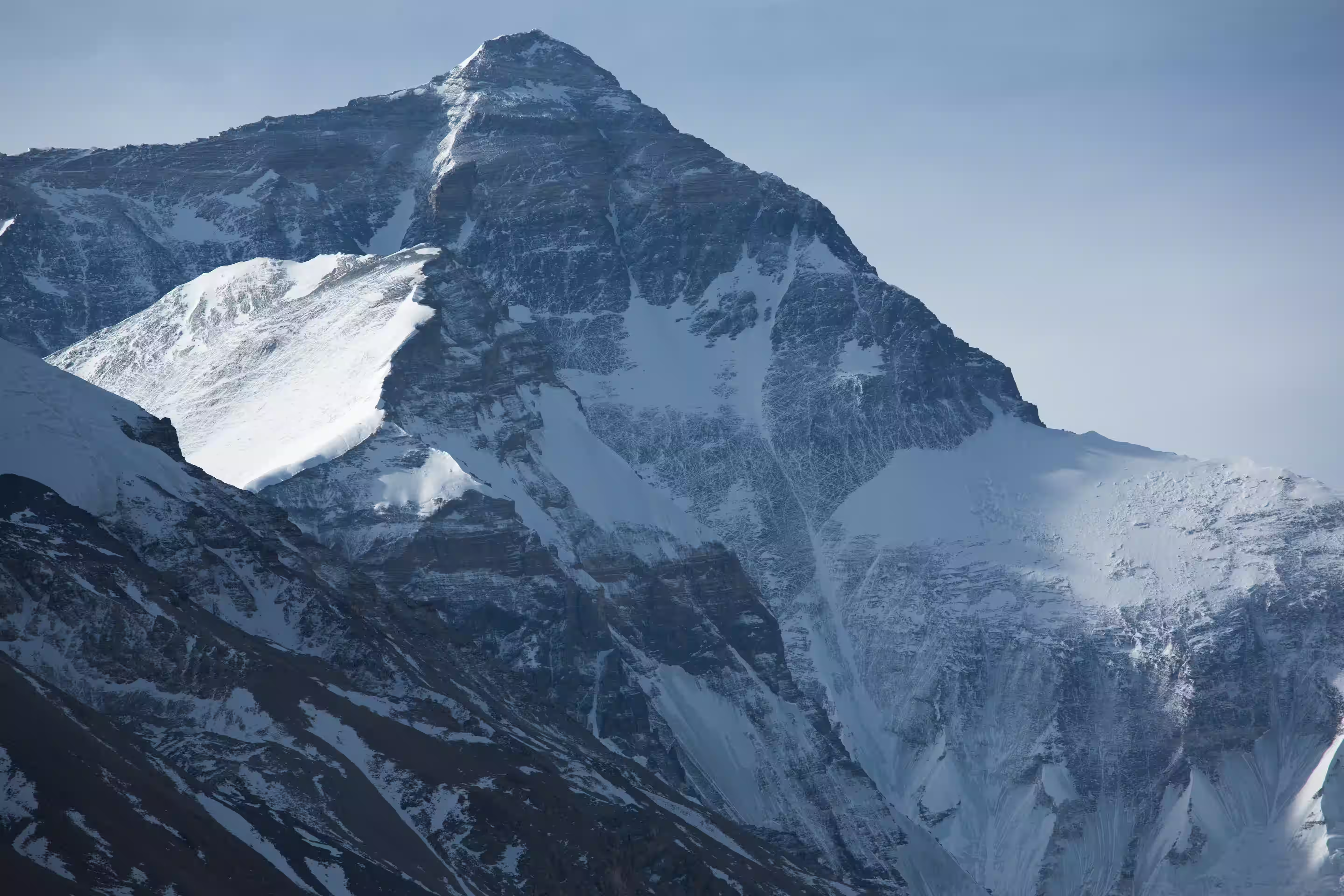
In the heart of the Alaskan interior, Denali commands respect as the most prominent peak in north america. This massive granite monolith presents an objective scale that rivals the great Himalayan giants. Its isolation creates a unique environment where self-reliance is the only currency.
The mountain represents a definitive test of cold-weather mountaineering. Success here requires tactical patience and a deep understanding of the arctic landscape. We view this expedition as a transition from trekking to true expeditionary life.
Elevation and Location
Denali measures 6,194 meters (20,322 ft) at coordinates 63°04′09″N 151°00′23″W. It is the central feature of the Alaska Range. The first recorded ascent occurred in 1913, opening the door for generations of climbers.
Climbing Difficulty and Technical Requirements
A climbing expedition on Denali demands intermediate mountaineering skills and prior experience in glacier travel. Most teams utilize the West Buttress route, which requires heavy load carrying and training in crevasse rescue. Reaching the summit is a matter of physical grit as much as technical ability.
Weather Challenges and Safety
Extreme weather defines the Denali character. Temperatures often drop below -40 degrees Celsius, and high winds can stall progress for many days at a time. Records show approximately 100 fatalities across 32,000 attempts, resulting in a 0.003% death rate.
Duration and Climbing Season
Expeditions typically last 16 days on the mountain. However, most teams budget three weeks to account for acclimatization and storms. The climbing window opens in early May and closes in late June before the summer heat destabilizes the lower glaciers.
Cost and Success Rate
Expedition costs range from $7,000 to $15,000 based on the level of logistical support. The success rate stays near 50% as of 2018 data. Standing at the top of north america remains one of the most respected achievements in the mountaineering world.
Mount Kilimanjaro: Africa's Highest Peak

Mount Kilimanjaro is a prominent volcanic massif in Tanzania and the tallest freestanding mountain on Earth. This dormant stratovolcano rises sharply from the surrounding savanna, creating a unique microclimate. It serves as a central pillar of the East African landscape and a significant milestone for global explorers.
Elevation and Location
The mountain stands at the coordinates 3°04′00″S 37°21′33″E in northeastern Tanzania. Its highest point reaches an official elevation of 5,895 meters (19,341 ft) above sea level. This peak remains one of the most recognizable geological features on the African continent.
Climbing Difficulty and Technical Requirements
Hans Meyer and Ludwig Purtscheller completed the first recorded ascent in 1889. Unlike many other Seven Summits, climbing this mountain requires no technical mountaineering skills or specialized hardware. The standard routes consist of high-altitude trekking through diverse ecological zones.
The terrain is accessible to individuals with a high level of natural fitness. No previous rope work or ice axe experience is necessary for the journey. However, the physical demand remains high due to the consistent vertical gain and rugged volcanic paths.
Altitude Sickness Considerations
The primary risk factor on this mountain is the rapid gain in altitude. This physiological challenge affects people regardless of their physical strength or training history. Proper pacing is essential to mitigate the symptoms of oxygen deprivation at nearly 6,000 meters.
Duration and Climbing Season
While some travelers attempt the ascent in four to five days, this rushed pace increases risk. Standard expeditions usually span six to seven days to facilitate better acclimatization. Following these longer schedules improves the safety of the overall expedition.
The optimal windows for travel occur from December to February and June to September each year. The December window often brings colder temperatures and a higher probability of snow. The June-to-September period generally offers clearer skies and drier trekking conditions.
Cost and Success Rate
Expedition costs typically range from $1,500 to $3,000 per person. These prices vary based on the chosen route and the standards of the guide service. Approximately 30,000 individuals attempt the mountain annually, with a death rate of only 0.03%.
Recent data indicates a success rate of approximately 70% for those attempting the summit. Factors such as weather conditions and individual acclimatization rates play the largest roles in a completed ascent. Reaching Uhuru Peak represents a significant achievement in non-technical high-altitude exploration.
Mount Elbrus: Europe's Highest Peak
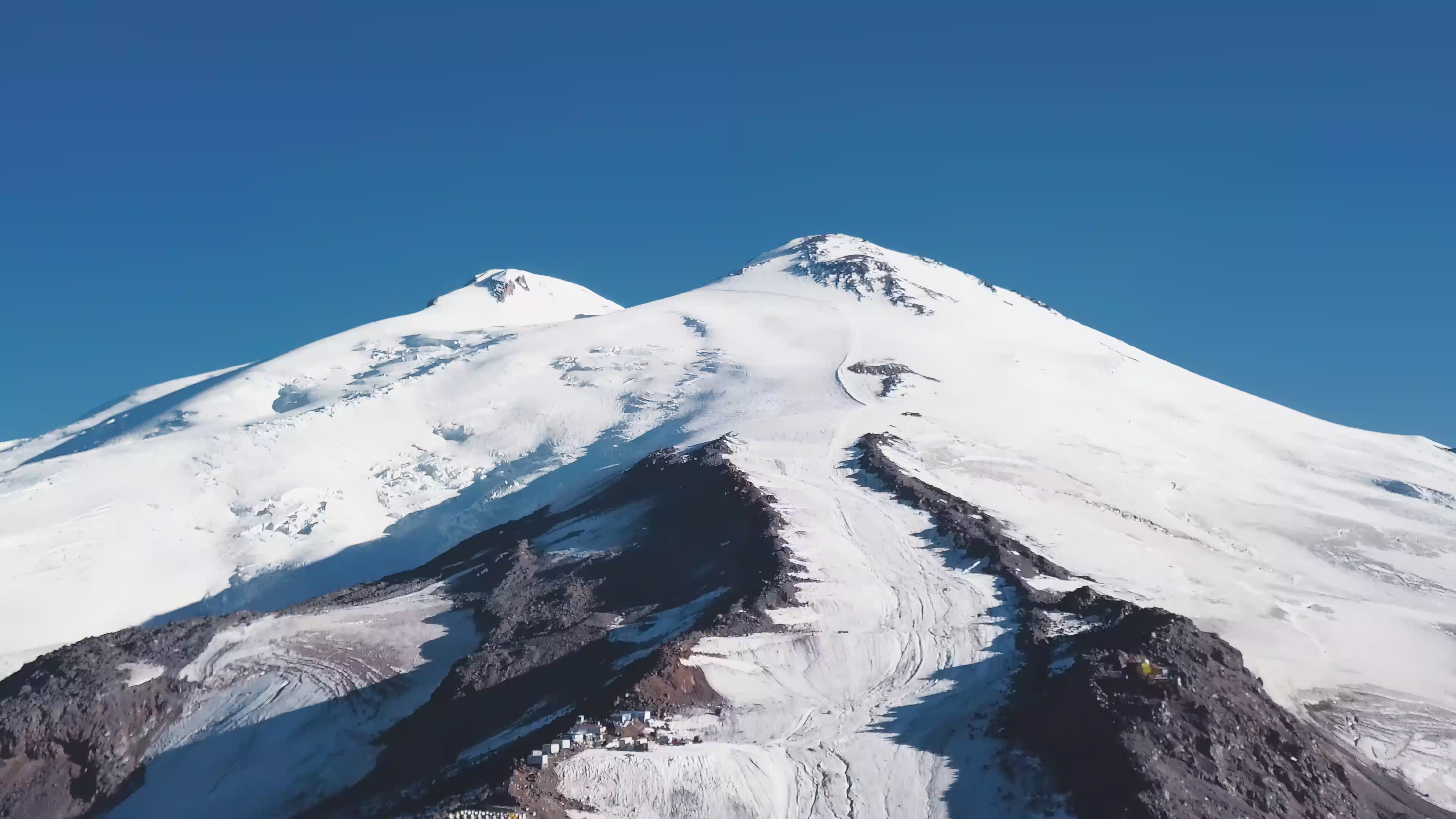
Mount Elbrus reaches 5,642 meters (18,510 ft) in the Russian Caucasus Mountains. This dormant volcano stands as the primary European peak for the Seven Summits. While some suggest mont blanc as the alternative, Elbrus remains the undisputed topographical leader. Today, the Russian invasion of Ukraine has restricted travel for many Western teams, altering the mountaineering landscape.
The first ascent in 1874 established a long history of high-altitude exploration in this region. We observe that current geopolitical tensions have made organizing expeditions more complex for international groups. Despite these hurdles, the mountain remains a core objective for global mountaineers.
Elevation and Location
The mountain sits at coordinates 43°21′09″N 42°26′16″E near the border of Georgia. It features a west and east summit, both holding permanent glaciers and snow. Its position within the Caucasus range provides a natural barrier between the Black and Caspian Seas.
The dual-coned structure is a distinctive landmark of the region's volcanic history. Geologically, the west peak is slightly higher than its eastern neighbor. This massive massif dominates the skyline for miles across the Russian steppe.
Climbing Difficulty and Technical Requirements
Teams find Elbrus technically straightforward, yet the mountain demands significant respect. We rate the South Side difficulty at 6/10 and the North Side at 7/10. Even without steep vertical rock, roughly 25 fatalities occur each year due to severe weather.
Low temperatures and high winds create a dangerous environment for the unprepared. Strong navigation skills are essential when clouds obscure the route. Physical endurance is the primary requirement for a safe return from the high slopes.
Route Options: South Side vs. North Side
The South Side route utilizes cable cars and snowcats to reach 4,800 meters. This infrastructure improves the physical success rate for many commercial groups. It allows for a shorter push to the top on the final morning.
In contrast, the North Side requires a traditional approach without any mechanical assistance. This path offers a more wilderness-oriented experience for experienced explorers. Success rates on the North Side drop to approximately 55% due to the increased physical demand.
Duration and Seasonal Windows
Standard expeditions typically last five or six days on the mountain. This timeline allows the body to adjust to the thinning air through active rotations. Short timelines often lead to altitude sickness, which can force an early retreat.
July and August provide the most stable weather windows for climbers to attempt the top. During these months, the snow is usually firm and the winds are less frequent. Outside this window, the Caucasus range becomes significantly more volatile and cold.
Cost and Success Rate
Prices for a guided expedition vary between $1,100 and $4,000 depending on the service level. This fee covers logistics, guiding, and necessary base camp support. While Elbrus is physically less demanding than mont blanc, it offers a gateway to the high-altitude world.
Success rates remain high on the South Side, often reaching 85% for those using transport support. The lower cost compared to other Seven Summits peaks makes it a popular choice for budget-conscious explorers. However, the technical ease should never lead to complacency in such a high-altitude environment.
Mount Vinson: Antarctica's Highest Peak
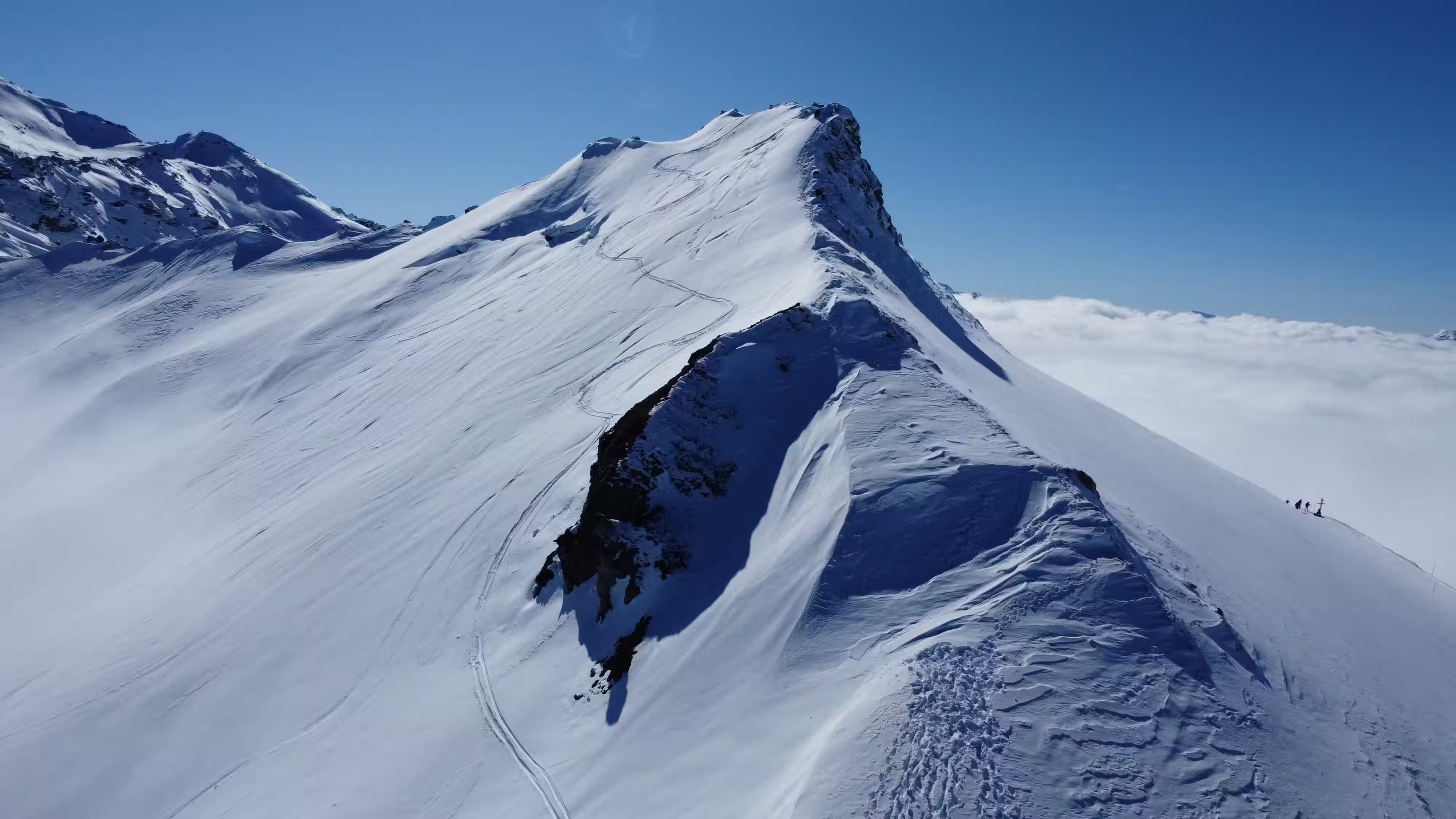
A Mount Vinson climbing expedition offers a singular experience in the most isolated wilderness on Earth. It is the most remote summit found on the Seven Summits circuit. This objective sits at the literal bottom of the world.
Elevation and Location
Mount Vinson reaches an elevation of 4,892 meters (16,050 feet). It is the highest peak in the Sentinel Range of the Ellsworth Mountains. The mountain is situated at coordinates 78°31′32″S 85°37′02″W.
Climbing Difficulty and Technical Requirements
The ascent rates a 7 out of 10 for physical difficulty. While it is technically moderate, it involves glacier travel and heavy sled pulling. We recommend at least three months of specialized fitness training before departure.
Physical preparation is vital for climbers who must endure sustained activity. This training ensures the body can manage high-altitude exertion in extreme cold. The technical skills required are basic compared to Everest or Denali.
Extreme Cold and Logistics
Temperatures on the ice frequently reach -40 degrees Celsius. An expedition here requires specialized layering systems to prevent frostbite. The remote nature of the site demands a self-sufficiency mindset similar to the 1966 first ascent.
Logistically, teams rely on deep-field aircraft from Punta Arenas, Chile. Statistically, Vinson is remarkably safe with no recorded fatalities to date. Professional support remains essential for survival in this environment.
Duration and Climbing Season
The trip typically takes 15 days from the departure point in Chile. The season is restricted to the Antarctic summer, specifically early December to late January. This is the only period when aviation is feasible.
Persistent Antarctic weather often delays flights and mountain movement. Teams must account for these variables when planning their return logistics. Flexibility is a requirement for anyone visiting the ice.
Cost and Success Rate
Expedition costs range from $40,000 to $60,000. This fee covers the complex transport required to reach the frozen continent. Many participants combine this ascent with a trip to the South Pole.
The success rate for this mountain is approximately 95%. This high percentage is due to professional guiding and the absence of technical rock climbing. Most well-prepared teams reach the top in good conditions.
Puncak Jaya (Carstensz Pyramid): Australasia's Highest Peak
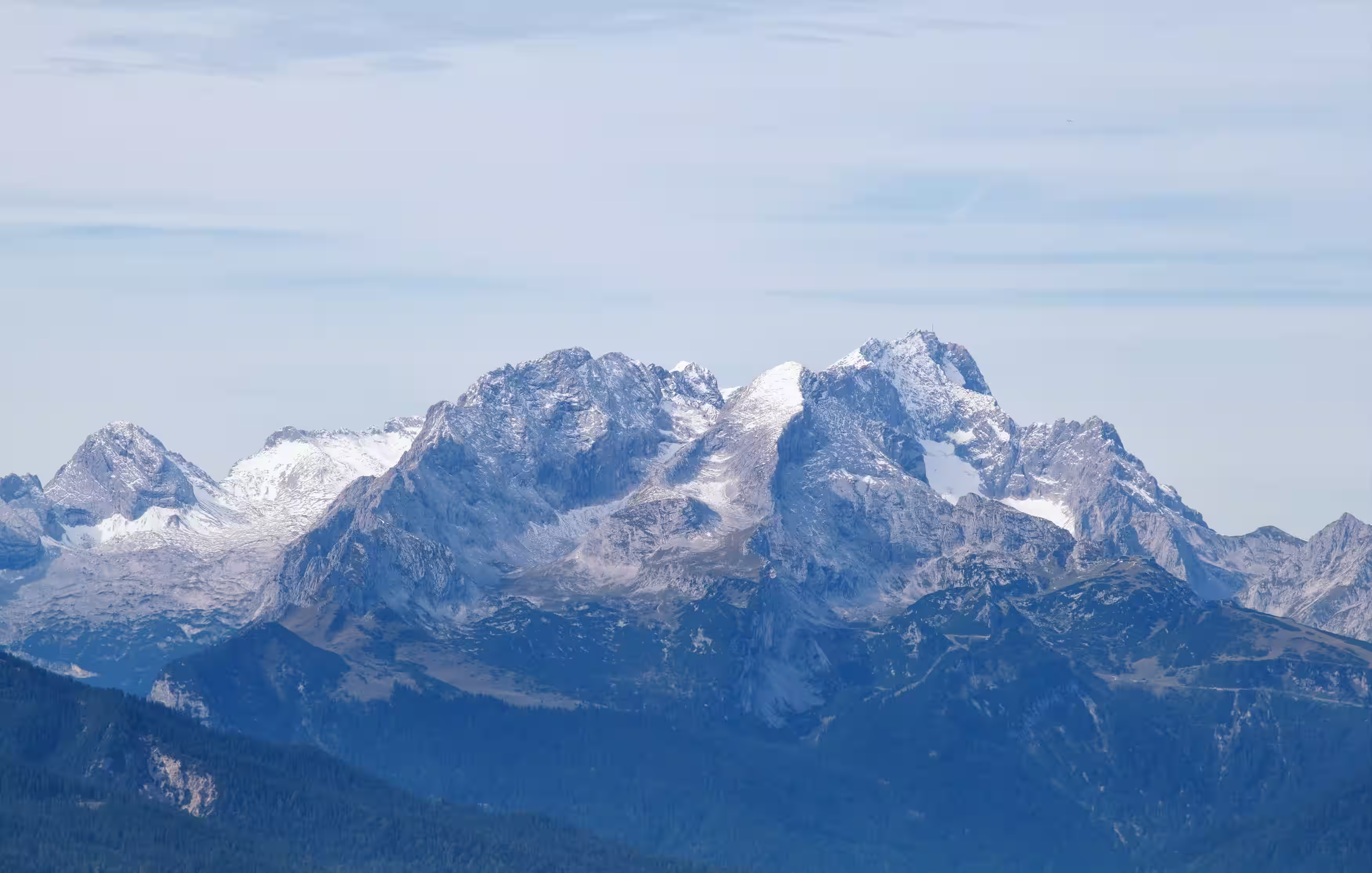
The rugged limestone ridge of Puncak Jaya serves as a stark reminder of the geological and political complexities found in Western Papua. This jagged summit offers a sharp contrast to the glaciated terrain found on other continents. Following the 1962 first ascent, this Carstensz Pyramid became a coveted objective for those following the Messner list.
Elevation and Location
This peak reaches 4,884 meters (16,024 ft) at coordinates 4°05′S 137°11′E. It sits deep within the Sudirman Range of Indonesia’s Central Papua province. The mountain is unique among the Seven Summits for its tropical, equatorial setting and sheer rock walls.
Climbing Difficulty and Technical Requirements
The Carstensz Pyramid is arguably the most technical climbing seven summits objective. Unlike the high-altitude snow slopes of Everest or Aconcagua, this mountain requires genuine rock climbing proficiency. Climbers must use fixed ropes to cross deep notches and ascend steep limestone faces that demand physical agility.
Access Challenges and Political Considerations
Security concerns have effectively halted any puncak jaya expedition since August 2019. Local tribal conflicts and large-scale mining operations near the Grasberg mine create significant safety risks for visitors.
The 2023 Nduga hostage crisis further complicated the regional situation. Rebel groups declared all foreigners targets, making travel to the interior highly inadvisable. Many operators have suspended their services until local authorities can guarantee safe passage.
Duration and Climbing Season
A full puncak jaya journey typically requires just under two weeks, with logistics often starting and ending in Bali. Because of its equatorial location, the carstensz pyramid allows for year-round attempts without the constraints of winter. However, heavy tropical rains frequently disrupt helicopter transport and the dense jungle approach.
Cost and Success Rate
The price for a carstensz pyramid expedition ranges from $13,000 to $20,000 per person. This high cost reflects the specialized logistics and complex permit requirements needed for Puncak Jaya. When access is open, success rates exceed 95%, making it one of the most reliable objectives in the world for prepared teams.
Training Requirements for Climbing the Seven Summits
Climbing seven summits requires a strict training plan that mirrors the hard reality of high mountains. This process builds a strong aerobic base over many years of consistent effort. Success on these peaks is often the result of physical preparation rather than luck.
Building Climbing-Specific Fitness
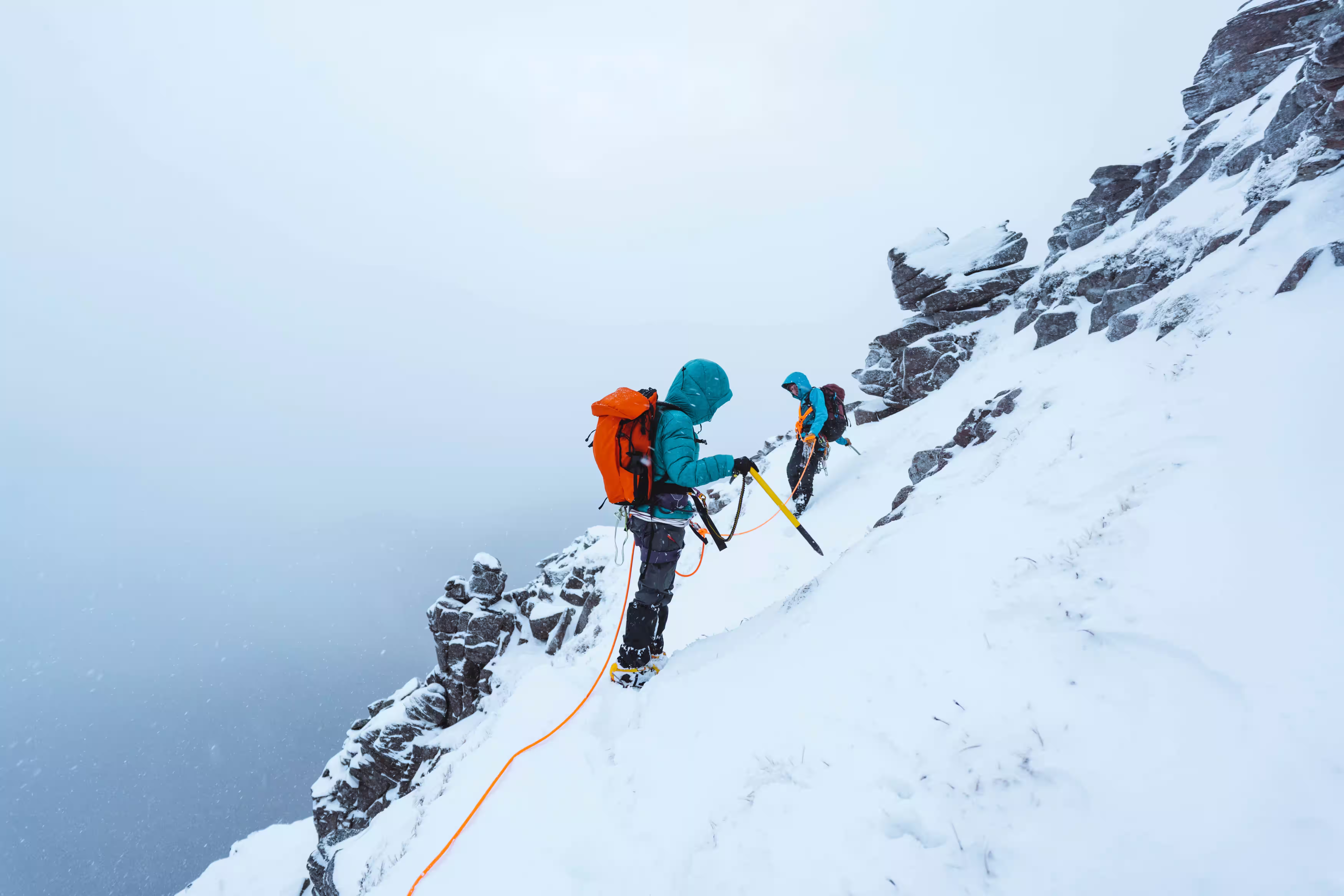
Generic gym workouts often fail to prepare climbers for the unique stress of a high-altitude expedition. Bodybuilding routines lack the specificity needed for sustained mountain performance. Fitness must focus on moving uphill for six to ten hours while carrying heavy gear.
Endurance and Aerobic Capacity Training
High-altitude climbing relies on endurance rather than short bursts of power. Summit days often involve elevation gains of 3,000 to 5,000 feet. This effort can last between 10 and 20 hours on a single push.
Effective training includes long hiking sessions with significant weight at least once a week. These sessions should last five to ten hours to simulate a mountain climb. You must become comfortable hiking 1,500 vertical feet per hour with a 20-pound pack.
Recommended Training Timeline and Weekly Commitment
Structured training should begin at least six months before the departure date. Commit to five or six days of work each week to build the necessary volume. Rest and tapering before the trip are also critical to avoid overtraining.
Mountain-Specific Preparation
Spending time in actual mountain environments is irreplaceable for developing essential skills. This experience allows an athlete to refine technical skills while adapting to real terrain. Mountaineering coaches can help tailor these plans to individual needs and goals.
| Training Metric | Target Performance Goal | Weekly Frequency |
|---|---|---|
| Vertical Pacing | 1,500 feet per hour | 2 sessions |
| Pack Weight | 20 to 50 pounds | 3 sessions |
| Endurance Volume | 5 to 10 hours | 1 session |
| Aerobic Base | Low-intensity effort | 5-6 days |
Total Cost of Climbing the Seven Summits
To successfully climb seven summits, an individual must prepare for a total financial commitment often surpassing $110,000 USD. This objective figure reflects the cumulative reality of high-altitude logistics and international guides over a multi-year period.
Breaking Down Expedition Costs
Every expedition carries specific price points dictated by geography and government permits. Mount Everest remains the most expensive one, with costs ranging from $40,000 to $85,000 depending on support levels.
| Peak Name | Estimated Cost (USD) | Primary Expense Drivers |
|---|---|---|
| Mount Everest | $40,000 – $85,000 | Permits, Oxygen, Logistics |
| Mount Vinson | $40,000 – $60,000 | Antarctic Aviation, Fuel |
| Puncak Jaya | $13,000 – $20,000 | Remote Access, Technical Support |
| Denali | $7,000 – $15,000 | Glacier Bush Flights, Equipment |
Additional Expenses to Consider
Beyond the base climb fees, personal travel and specialized medical insurance increase the total financial burden. High-altitude guides ensure safety, but climbers must also budget for specialized gear and intensive pre-summit training sessions.
Most mountaineers spread these costs over significant periods of time to manage the fiscal load. A multi-year expedition strategy allows for staggered payments while building the technical skills required for the more expensive, remote peaks.
What Order Should You Climb the Seven Summits?
Success in the high mountains depends on a strategic order that prioritizes skill acquisition before tackling extreme air. Most mountaineers develop a multi-year plan to ensure their bodies adapt to varying geological pressures. This methodical approach lowers objective risk and helps you reach your ultimate goal.
Recommended Progression for Beginners
Mount Kilimanjaro serves as the ideal initial climb for those who plan to climb seven of the world's highest points. It offers exposure to 5,895 meters without requiring technical rope work or ice axes. Climbers use this peak to establish their physiological baseline at altitude while moving at a steady pole pole (slow) pace.
| Peak Order | Difficulty | Primary Skill |
|---|---|---|
| 1. Kilimanjaro | Non-technical | Altitude Acclimatization |
| 2. Elbrus | Moderate | Basic Crampon Use |
| 3. Aconcagua | Strenuous | Cold Weather Stamina |
Building Experience Strategically
Expanding your technical skills requires moving into terrains that demand glacier travel and self-arrest techniques. Denali introduces heavy load hauling and extreme polar conditions, which are vital for survival in Antarctica. This experience proves invaluable when navigating the unpredictable weather of the Vinson Massif or the technical rock of Puncak Jaya.
"Proper sequencing ensures that the climber's technical ability matches the mountain's objective hazards."
- Denali: Focuses on glacier rope work and survival in the Alaskan wilderness.
- Puncak Jaya: Demands proficiency in technical rock climbing and rappelling.
- Mount Vinson: Tests logistics and movement in extreme sub-zero temperatures.
The final stage of the seven summits quest typically involves Mount Everest. This peak requires the combination of every lesson learned during previous climbs. By tackling one major objective every few seasons, you allow for full recovery before your next climbing seven summits challenge. Consistently refining your skills across different ranges prepares you for the high-altitude reality of the Himalayas.
Historical Milestones and Notable Climbers
The pursuit of the Seven Summits has produced a timeline of endurance records and technical achievements across four decades. Historically, fewer than 750 people have successfully navigated the varied terrain required to finish this global circuit. These climbers face distinct geological challenges, from the ice of Antarctica to the jungles of Oceania.
Many people spend several years preparing for the physical toll of these expeditions. Completing the journey requires technical proficiency and deep logistical planning across every continent.
First Ascents and Record Holders
Richard Bass defined the initial framework when he reached his final summit on April 30, 1985. His achievement established the original list focusing on Mount Kosciuszko in Australia. Shortly after, Patrick Morrow completed the Messner version in 1986 by reaching the top of Puncak Jaya.
Junko Tabei broke significant barriers in 1992 as the first woman to finish the seven summits. Earlier pioneers like William Hackett and Naomi Uemura reached five peaks but did not complete the full set. Reinhold Messner, a legendary figure in the climbing world, finished his final peak in 1986.
Modern Seven Summits Achievements
The intensity of these climbs increased as athletes focused on speed and youth records. In 1990, Rob Hall and Gary Ball finished all peaks in just seven months. Jordan Romero became the youngest to finish at 15 years of age in the year 2011.
Today, completing the seven summits remains a rare feat for any mountaineer. Speed records continued to fall in recent years as logistical planning improved. Henrik Kristiansen finished in 136 days during 2008, while Vern Tejas later reached the summits highest points in 134 days.
Each one of these climbers contributed to the legacy of high-altitude mastery. Their efforts proved that human endurance can overcome the most extreme environments on Earth.
| Milestone Type | Notable Individual | Key Date or Age |
|---|---|---|
| First Completion (Bass List) | Richard Bass | April 30, 1985 |
| First Messner List Completion | Patrick Morrow | 1986 |
| First Female Completion | Junko Tabei | May 1992 |
| Youngest Completion Record | Jordan Romero | 15 Years, 5 Months |
| Notable Speed Completion | Vern Tejas | 134 Days |
Conclusion
The journey across the seven summits serves as a rigorous multi-year project. It tests a climber's technical skill and financial resolve through diverse environments. This goal requires a measurable commitment to progressive skill development and high-altitude training.
Continental high points span from non-technical trekking peaks to technically demanding alpine routes. These mountains challenge different aspects of mountaineering competence in extreme conditions. Fewer than 750 climbers have officially documented completions since the circuit gained popularity in 1985.
Strategic expedition sequencing helps individuals gain the necessary experience to climb seven summits safely. Success depends on weather judgment, physical conditioning, and meticulous logistical planning. We note that the seven summits demand significant financial investment, often exceeding $110,000.
Geopolitical conditions currently affect access to specific summits like Mount Elbrus and Puncak Jaya. Navigating these regional security complexities is essential for reaching the top. Completing the seven summits remains a definitive goal for those seeking mastery of the world.
FAQ
Which version of the seven summits should climbers follow?
Professionals recognize two primary paths. Richard Bass reached every peak including Mount Kosciuszko. Reinhold Messner later named Puncak Jaya the true top of the continent. Active people often choose the Messner list for its technical mountain challenges.
What is the best order to climb these highest mountains?
Many begin with Mount Kilimanjaro or Aconcagua in South America. These trips build vital altitude experience. Later, climbers move to Denali in North America. Saving Mount Everest for the final goal allows for proper skills development over several years.
How much time is needed for a Carstensz Pyramid expedition?
A standard trip to this limestone peak lasts about 14 days. Remote travel and unpredictable weather in the Indonesian jungle often change the timeline. Expert guides manage the trek to the base of the rock wall to ensure a high success rate.
What training is required for a high-altitude climb?
Spend at least six months building aerobic capacity. Carry weighted packs on steep trails to mimic mountain conditions. This physical experience helps you reach the top safely. Proper preparation is the one factor that increases the success of any climbing expedition.
Is Mont Blanc considered the highest mountain in Europe?
In the professional world, Mount Elbrus holds that title. It stands higher than the French peaks. Most climbers travel to the Caucasus range to complete this requirement across the seven continents. It requires basic ice skills and physical stamina for the climbs.
How does a guide assist with the climb seven challenge?
A professional provides essential logistical support and safety oversight. They manage weather risks and technical rope work on difficult terrain. Every year, their expertise helps people reach the top of a massive peak while maintaining safety standards.